Creation Questions

Author: Wesley Coleman

  • Do Creationists Make Predictions?

    Do Creationists Make Predictions?

    A common criticism against scientists who espouse a young-age and global flood is that they don’t make testable predictions. However, a closer look reveals that creation science has a robust history of making predictions that challenge mainstream assumptions. To respond to the critic’s claim, we will look at eight predictions of note which are rooted in a biblical perspective of history, have been repeatedly validated, and prompt the need for a re-evaluation of the established paradigm.

    1. The Rapid Formation of Opals

    Dr. Len Crampton, a creationist geologist from New South Wales, Australia, dared to question the conventional timescale for opal formation. Mainstream geology posits that opals form over millions of years through slow, gradual processes. However, Crampton, drawing upon the catastrophic implications of the global Flood, predicted that opals could form rapidly under conditions of silica-rich solutions and rapid deposition. His experimental work demonstrated the feasibility of this rapid formation, challenging the long-age assumptions of conventional geology. While consensus geology made a story about opals which fit their narrative, creationists found the practical mechanism behind opal creation.

    2. Carbon-14 in “Ancient” Samples

    One of the most contentious areas of debate is the presence of Carbon-14 (C-14) in samples deemed millions of years old. Conventional radiometric dating assumes that C-14, with its relatively short half-life of 5,730 years, should be undetectable in samples older than 100,000 years. Yet, creation scientists, including those involved with the RATE (Radioisotopes and the Age of The Earth) project, have consistently predicted and found measurable C-14 in fossils, coal, and diamonds (Baumgardner, 2003). This finding directly challenges the long-age interpretations and raises questions about the assumptions underlying radiometric dating, but, significantly, it was predicted by creationists.

    3. Mature Galaxies and the Absence of Population III Stars

    In the realm of cosmology, Dr. Jason Lisle predicted that the James Webb Space Telescope (JWST) would reveal mature galaxies at great distances and a lack of Population III stars, the hypothetical first stars formed after the Big Bang. This prediction stands in stark contrast to standard cosmological models, which require long periods for galaxy formation and predict the existence of these primordial stars. The early JWST data has aligned with Lisle’s prediction, prompting a re-evaluation of current cosmological timelines. Another prediction in the bag.

    4. The Functionality of “Junk” DNA

    Evolutionary theory initially proposed that non-coding DNA was “junk,” remnants of evolutionary processes with no function. However, creation scientists, including Dr. Robert Carter, predicted that this “junk” DNA would be found to have important functions (Carter, 2010). The ENCODE project and subsequent research have demonstrated widespread biochemical activity within non-coding DNA, indicating its crucial roles in gene regulation and other cellular processes. This discovery challenges the notion of “junk” DNA and supports the concept of intelligent design.

    5. Helium Diffusion in Zircon Crystals

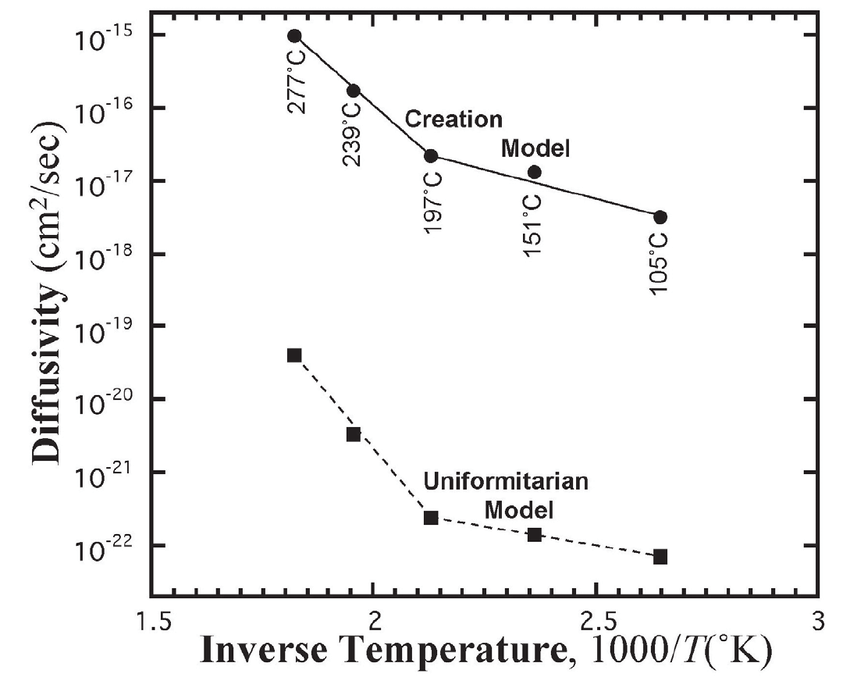
    Back to geology. In 1982, Dr. Robert Gentry discovered that the nuclear-decay-generated helium in little crystals in granites called zircons was too high for the rocks to have undergone a constant decay rate (Gentry, 1986). His observation lead to Dr. Russell Humphreys prediction during the early stages of the RATE project (Humphreys, 2000, p. 348, Figure 7), which were verified by an external laboratory, challenged the conventional radiometric dating assumptions. The high retention rates of helium in zircon crystals indicate that they cannot be millions of years old. The data fit his prediction, as shown below, perfectly.

    6. Cool Subducted Zones and Rapid Plate Tectonics

    Dr. John Baumgardner, a geophysicist, predicted that subducted lithospheric zones in the mantle would be cooler than expected (Baumgardner, 1994), due to rapid plate tectonics during the Flood. Observations have confirmed these cooler zones, supporting the Catastrophic Plate Tectonics (CPT) model.

    7. Lack of Metamorphosis in Folded Rock Layers

    Geologist Dr. Andrew Snelling predicted that Tapeats sandstone samples in bends would not exhibit metamorphic change to the minerals, despite the folding of the layers. This is because he predicted that all the sedimentary layers were laid down during the flood and that seismic activity below caused the layers to deform over the hardened faults below. Snelling et al. investigated the Tapeats and found no metamorphosing (Snelling, 2021). This evidence supports the prediction that these rocks were bent while still soft and it refutes the mainstream science prediction of ductile deformation (immense pressure and heat over time which should result in metamorphic changes), demonstrating that the folding occurred rapidly, before the rocks had time to metamorphose.

    8. Human Genetic Diversity

    Creation models predicted a relatively recent origin for humanity, with low genetic diversity. Genetic studies, including those on mitochondrial DNA and the Y chromosome, have supported this prediction, pointing to a relatively recent common ancestry.


    These are my top eight examples which highlight the predictive power of the creationist model. These predictions and their verifications dispel the myth that “creationists don’t make predictions” and, hopefully, give you a deeper appreciation for the robustness and explanatory power of the creationist worldview.

    Citations:

    1. John Baumgardner, J. R. (2003). Carbon-14 evidence for a recent global flood and a young age of the Earth. In Proceedings of the Fifth International Conference on Creationism (pp. 129-142). Creation Science Fellowship.
    2. Carter, R. W. (2010). The non-coding genome. Journal of Creation, 24(3), 116-123.
    3. Gentry, R. V. (1986). Radiohalos in polonium 218: evidence of a pre-cambrian granite. Science, 234(4776), 561-566.
    4. Humphreys, D. R. (2000). Accelerated nuclear decay: evidence for young-age radiocarbon dating. In Radioisotopes and the Age of The Earth: Results of a Young-Earth Creationist Research Initiative (pp. 333-379). Institute for Creation Research. p. 348, Figure 7.
    5. Baumgardner, J. R. (1994). Runaway subduction as the driving mechanism for the Genesis flood. In Proceedings of the Third International Conference on Creationism (pp. 63-75). Creation Science Fellowship.
    6. Snelling, A. A. (2021). The Petrology of the Tapeats Sandstone, Tonto Group, Grand Canyon, Arizona. Answers Research Journal, 14, 159–254.

  • Embryonic Similarities – Common Design, Not Common Descent

    Embryonic Similarities – Common Design, Not Common Descent

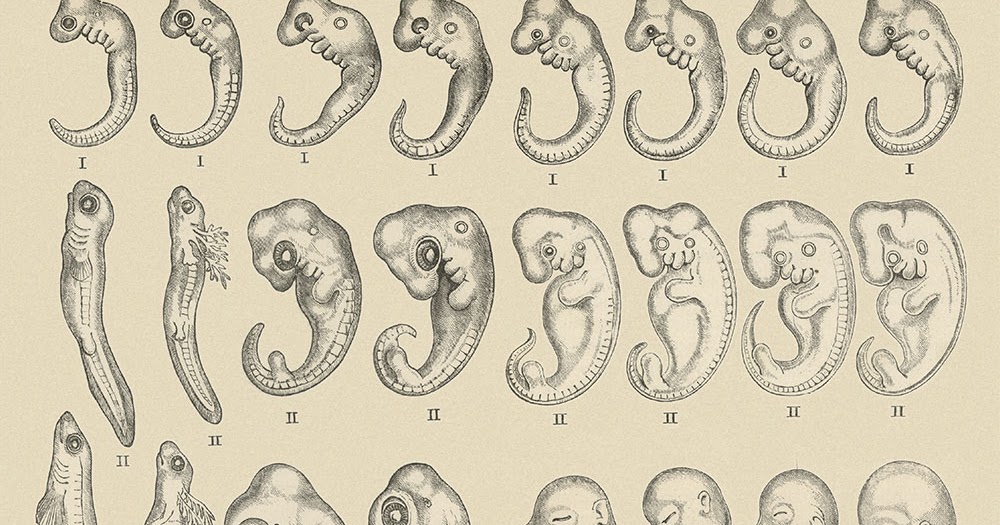
    For decades, textbook illustrations of Haeckel’s Embryos have been presented as a compelling visual argument for evolution. These side-by-side comparisons of vertebrate embryos, purportedly showing striking similarities in early developmental stages, have been used to argue for a shared evolutionary ancestry. However, a closer look reveals a story of misrepresentation and manipulation, rather than an accurate depiction of embryological evidence.

    Ernst Haeckel, a fervent supporter of Darwin’s theory, produced these drawings in the late 19th century. Yet, his illustrations were not faithful representations of actual embryos. He exaggerated similarities, omitted or altered developmental stages, and even used the same woodcut to represent different species. This deliberate manipulation aimed to bolster the concept of “recapitulation,” the now-discredited idea that embryonic development mirrors evolutionary history.

    The reality is that vertebrate embryos are far more distinct in their early stages than Haeckel portrayed. His illustrations were exposed as fraudulent even in his own time, yet they persisted in textbooks for generations, a testament to the power of visual propaganda in shaping scientific narratives.

    The argument that similarities in vertebrate embryos indicate a shared evolutionary history is challenged by several points.

    Challenging the “Recapitulation” Narrative

    One of the central tenets of the evolutionary argument is that embryonic development (“ontogeny”) reflects an organism’s evolutionary history (“phylogeny”). However, this concept, often summarized as “ontogeny recapitulates phylogeny,” is deeply flawed.

    • Embryonic Structures vs. Adult Structures: Embryonic features like pharyngeal slits and tails do not simply recapitulate the adult forms of ancestral organisms. Instead, they serve specific functions within the embryonic stage, often disappearing or transforming into entirely different structures in the adult. The embryonic mode of life is distinct from the adult mode.
    • “Recapitulation” is a Creationist Concept: The recognition of embryonic similarities predates Darwin. Creationists viewed these similarities as a “God-given ‘pattern of unification’ that reflected the unity of nature,” emphasizing a common Creator’s design rather than evolutionary lineage.
    • Unique Development: The unique eye development in lampreys, transitioning from larval eyespots to adult camera eyes, demonstrates that developmental pathways do not always follow a simple, linear evolutionary progression.
    • Order of Development: The occasional appearance of later-stage developmental features earlier in the embryonic process further complicates the evolutionary narrative.

    Genetic and Developmental Complexity

    The genetic and developmental complexity underlying embryonic similarities points to intelligent design:

    • Genetic Similarity: The fact that damage to the pax6 gene cascade results in the loss of a functional eye across diverse animal groups highlights a fundamental genetic similarity, but this similarity does not necessitate a shared evolutionary history. It speaks to a common design blueprint.
    • Complex Regulatory Systems: The development of complex structures like the eye involves thousands of interacting genes and intricate regulatory systems. Such complexity is more consistent with intelligent design than with random evolutionary processes.
    • Common Design: The similarities observed in vertebrate embryos can be readily explained as a reflection of a common design by an intelligent Creator. Just as an engineer might use similar design principles in different models, a Creator might employ common developmental strategies across various organisms.

    A Creationist Interpretation

    From a creationist perspective, the similarities in vertebrate embryos are not evidence of evolutionary transitions but rather manifestations of a unified design plan. The Creator used common design elements to achieve diverse functions in different organisms. This approach aligns with the concept of baraminology, which studies created kinds and acknowledges variations within those kinds.

    The argument that embryonic similarities exclusively support evolution overlooks the possibility of intelligent design. By recognizing the complexity of developmental processes and the historical context of these observations, we can appreciate the power of a creationist explanation.

  • The Flood: A Brief Outline

    The Flood: A Brief Outline

    The biblical account of a global flood, as described in Genesis, provides a powerful and coherent framework for understanding the Earth’s geological history. This model challenges the conventional uniformitarian timescale and offers compelling explanations for numerous geological phenomena. Today I will provide an outline of some of the most interesting lines of evidence for a worldwide flood.

    I. Rapid Sedimentation & Fossilization

    The fossil record and sedimentary formations reveal evidence of rapid burial and deposition, indicative of catastrophic processes:

    • Delicate & Detailed Preservation: Exquisite fossils (Solnhofen Limestone) and fragile charcoal preservation indicate swift burial.
    • Mass Burial Graveyards: Massive fossil graveyards (Siberian mammoths, Redwall Limestone nautiloids) suggest events within hours, not millennia.
    • Absence of Decay and Scavenging: Preserved soft tissues (collagen, DNA) defy millions of years, requiring rapid burial.
    • Polystrate Fossils: Upright trees spanning multiple layers demand swift sediment accumulation.
    • Paleohydraulic Evidence and Bedding Plane Concentrations: Rapid depositional events and undisturbed charcoal layers support quick burial.
    • Lack of Bioturbation: Sharp layer boundaries and minimal biological disturbance indicate rapid burial.
    • Turbulent Deposition and High Energy Transport: Mixed sediments and hydrodynamic models support high-energy, rapid deposition.
    • Pulsed deposition: Multiple layers indicate multiple rapid events.
    • Turbidites: Underwater landslides indicate rapid sediment deposition.
    • Folded sedimentary layers (with no metamorphosing): Layers folded while still soft indicate rapid formation.
    • Sand injectites: Rapid liquefaction and deposition of sand.
    • Iodine retention: Volatile element presence indicates rapid burial.

    II. Marine Transgression, Fossil Distribution, & Geological Formations Are Global

    The global distribution of marine fossils and geological formations indicates a worldwide flood:

    • Extensive Deposits: Lateral continuity of formations (Morrison, Coconino) suggests rapid, continent-wide deposition.
    • Lateral continuity: Sedimentary layers that spread across continents indicate rapid and large-scale deposition.
    • Indicators of Marine Deposition in All Sediments: Marine fossils and structures throughout the geological column.
    • Water Levels Exceeding Terrestrial Plates Globally: Scale of deposits indicates water levels far exceeding current boundaries.
    • High energy transport: Size of transported sediments is impossible to explain with slow processes.
    • Clear turbulent deposition: Many sedimentary layers show evidence of high-energy water flow.
    • Mega-sequences correlating as extremes of known mechanisms: The size and scope of these deposits are best explained by a global flood.
    • No erosion between layers: The absence of erosional channels is best explained by rapid sequential deposition.
    • Universal evidence of marine deposited sandstones: Continents once covered by water.

    III. Rapid Erosion & Post Flood Events

    Post-flood geological features reveal rapid erosion and catastrophic water action:

    • Channel Scablands: Vast channels in the Pacific Northwest indicate powerful, rapid water flow.
    • Underfit Rivers and Meltwater Channels: Massive channels with small rivers suggest immense post-flood meltwater flows.
    • Erosional Features and Missoula Floods Evidence: Gigantic potholes and evidence of massive floods demonstrate post-flood water action.
    • Geological Structures and Erratics: Structures influencing flood flow and erratic boulders indicate dynamic post-flood processes.
    • Massive interconnected surface channels: Large water flows across continents.
    • Massive erosion events like the Grand Staircase: Best explained by a global flood.
    • Laminated canyon edges: Indicate rapid canyon formation.

    IV. Rapid Chemical Processes & Young-Age Indicators

    Chemical processes and age indicators challenge conventional timelines, supporting a young Earth:

    • Radiometric Dating Assumptions: Unverifiable assumptions in dating methods question deep-time estimates.
    • Radiohalos in Zircon Crystals and Helium Diffusion: Polonium radiohalos and helium retention indicate rapid formation and a young Earth.
    • Shoreline and Terrestrial Erosion: Current erosion rates are inconsistent with millions of years.
    • C14 in Fossils and Soft Tissue: Detectable C14 and preserved soft tissue challenge conventional timelines.
    • Lithosphere Subduction Temperatures: Thermal models point to a much younger subduction event.
    • Magnetic Field Decay: Earth’s decaying magnetic field suggests a younger age.
    • Ocean Salinity: Current salinity levels are too low for billions of years.

    In conclusion, the geological evidence, when viewed through a biblical lens, overwhelmingly supports the reality of a global flood and a young Earth. This framework provides a coherent and compelling explanation for the Earth’s geological history, challenging the conventional uniformitarian paradigm.

  • Beyond Naturalism and Towards True Knowledge

    Beyond Naturalism and Towards True Knowledge

    The very definition of science has undergone a subtle yet significant shift. Historically, science was understood as the pursuit of knowledge, a quest to understand the world around us through observation and reason. This pursuit inherently necessitates certain presuppositions: that the universe operates with causal connections, that truth is knowable, and that we can have confidence in our ability to discern it. However, modern science has often become synonymous with methodological naturalism, a philosophy that restricts scientific inquiry to natural causes, excluding any possibility of non-natural or supernatural agency. The RationalWiki page on Methodological Naturalism introduces the concept like so:

    Methodological naturalism is the label for the required assumption of philosophical naturalism when working with the scientific method. Methodological naturalists limit their scientific research to the study of natural causes, because any attempts to define causal relationships with the supernatural are never fruitful, and result in the creation of scientific “dead ends” and God of the gaps-type hypotheses. To avoid these traps, scientists assume that all causes are empirical and naturalistic, which means they can be measured, quantified, and studied methodically.

    However, this assumption of naturalism need not extend beyond an assumption of methodology. This is what separates methodological naturalism from philosophical naturalism — the former is merely a tool and makes no truth claim, while the latter makes the philosophical — essentially atheistic — claim that only natural causes exist.

    The distinction between methodological and ontological naturalism, while often presented as this clear boundary, is, in practice, a strategic rhetorical move. Methodological naturalism purports to be a neutral, non-ontological framework for scientific inquiry. It claims to be a mere rule of engagement—that science should only investigate natural phenomena using natural explanations. Yet, in its application, it inexorably leads to ontological conclusions. By systematically excluding the possibility of non-natural causes a priori, science creates a worldview in which naturalism appears to be the only viable explanation for everything. This isn’t a discovery; it’s a foregone conclusion derived from the very rules of the game.


    The assumptions underpinning science are the most glaring example of this flawed logic. Science demands that phenomena be testable, repeatable, and observable, yet it rests on a foundation of unproven, non-empirical assumptions. We must assume logic, order, and consistency in nature—presuppositions that are not themselves testable by the scientific method. This creates a paradox: science, in its pursuit of knowledge, relies on foundational truths that are, by its own criteria, unscientific.


    This arbitrary limitation is particularly problematic when we consider the concept of agent causation. In fields like forensics, we readily distinguish between natural and volitional causes. We can conclude, based on empirical evidence, that an event was caused by an agent’s intent or will, even though that intent is not a physical object we can measure. There is already a precedent for including non-material causes in our models of reality. Science, as a system for making models that account for data, should be open to all potential causal explanations, not just those that fit within a pre-approved, naturalist box. By artificially fixing its scope to exclude supernatural causes, science pre-determines its own conclusions and, in doing so, sacrifices the pursuit of a more complete truth about reality. It becomes a system for confirming its own biases, rather than an open-ended quest for knowledge.


    Further, this limitation creates a profound epistemological problem. Consider the analogy of a painting: while analyzing the physical components of the paint and canvas can provide valuable information, it does not explain the origin or intent of the artwork. Even if we limit the inquiry to all natural processes and we found how the components could have been put together in this fashion through totally naturalistic processes, that doesn’t mean that this is the only explanation nor the most parsimonious explanation.
    Again forensics, but not just forensics, but archaeology, information theory, search for extraterrestrial intelligence (SETI), and geography. We routinely investigate both natural and non-natural causes. Embedded within these fields is the idea of agent causation, intentionality, and will. Archaeology examines artifacts to understand the cultural and intellectual agency of past civilizations. Information theory can examine material, in respect to its environment, which is high in free energy. This is usually simply described as complex and specified information. The Search for Extraterrestrial Intelligence (SETI) demonstrates that science can test for non-natural causes, such as intelligent signals from distant galaxies. Geography can also seek an understanding of how humans have impacted the natural processes and landforms of their environments through various farming and infrastructure.


    Why, then, is natural science uniquely restricted?


    The claim that science will eventually explain all phenomena through natural processes creates a logical contradiction. Methodological naturalism, by its very nature, cannot detect non-natural causes. Therefore, any conclusions drawn from this limited methodology are inherently incomplete. Scientific methodology is rooted in epistemological assumptions, and flawed assumptions lead to incomplete or inaccurate conclusions. Pragmatism, while useful, is insufficient for pursuing truth if it ignores potential causal factors.


    Counterexamples abound, highlighting that science is not always confined to strict naturalism. Studies on prayer and near-death experiences, for instance, explore non-natural influences. These examples underscore the fact that the a priori rejection of non-natural causes is a philosophical position that requires justification, especially given the prevalence of dual-causal investigations in other fields.


    From a creationist perspective, excluding supernatural processes as potential causal explanations is not only unscientific but also detrimental to the pursuit of true knowledge. The goal of science should be to determine the causes and mechanisms underlying observed phenomena, regardless of whether they are natural or involve intelligent agency. The term “supernatural” refers to causes that are not due to physical laws and chemistry, such as programming or other information input. Excluding these potential causes compromises the integrity of scientific inquiry.


    A true scientist must follow all leads and consider all possibilities to ensure that the most accurate and comprehensive model is upheld. Science is grounded in the principles of evidence-based reasoning, and the evidence may lead to non-natural or supernatural causes. If naturalism is to be a consistent and reliable methodology, it must be applied across all scientific disciplines, including forensics and historical sciences.


    In conclusion, the pursuit of knowledge should not be constrained by arbitrary philosophical limitations. By embracing a broader definition of science that includes the possibility of non-natural causes, we can move closer to a more complete and accurate understanding of the universe. This approach aligns with the creationist worldview, which recognizes the intelligent design and purpose inherent in the natural world.

  • Heisenberg, Kant, and the Limits of Science

    Heisenberg, Kant, and the Limits of Science

    In the realm of scientific inquiry, the intersection of epistemology (the study of knowledge) and physics often leads to profound philosophical debates. One such debate, highlighted by the clash between Kant’s universal claims and Heisenberg’s quantum observations, raises critical questions about the nature of causality and the limits of scientific knowledge.

    Kant posited universal axioms about metaphysics and epistemology, suggesting that certain principles, like causality, are a priori—foundational to all experience. Heisenberg, however, proposed that these principles might not apply in the quantum realm, where observations seem to reveal phenomena without clear causal explanations. This divergence raises a fundamental question: Can scientific theories, particularly those in quantum physics, challenge or redefine the very foundations of how we understand knowledge?

    The Challenge to Universal Causality

    Heisenberg, in his work “Physics and Beyond,” recounts a conversation with Grete Hermann, a Kantian philosopher, who argued that causality is not an empirical assertion but a necessary presupposition for all experience. Hermann emphasized that without a strict relationship between cause and effect, our observations would be mere subjective sensations, lacking objective correlates. She questioned how quantum mechanics could “relax” the causal law and still claim to be a branch of science.

    Heisenberg countered that in quantum mechanics, we only have access to statistical averages, not underlying processes. He cited the example of Radium B atoms emitting electrons, where the timing and direction of emission appear stochastic. He argued that extensive research reveals behaviors with no discernible causes, suggesting that causality breaks down at the quantum level.

    Creationist Perspectives on Causality and Randomness

    From a creationist perspective, the concept of randomness must be carefully examined. As David Bohm suggests in “Causality and Chance in Modern Physics,” random processes can exist within objects that are nonetheless real and independent of observation. This aligns with the idea that even seemingly random events may be governed by underlying, complex causal laws, perhaps beyond our current comprehension.

    Consider the Created Heterozygosity Hypothesis, which posits that organisms were created with “front-loaded” genomes, containing a high degree of genetic variation. This variation can manifest as apparent randomness in biological processes, but it does not negate the existence of underlying design and purpose.

    Furthermore, the concept of information theory, a key aspect of intelligent design, emphasizes that information is always the product of intelligent agency. The complexity and specificity observed in quantum phenomena may point to an underlying intelligence that operates beyond the limitations of our current scientific models.

    Addressing the Limits of Scientific Knowledge

    Hermann rightly pointed out that the absence of a discovered cause does not imply the absence of a cause. She argued that physicists should continue searching for underlying causes rather than abandoning the principle of causality altogether. This aligns with the creationist view that our understanding of the natural world is incomplete, and that further investigation may reveal deeper levels of design and purpose.

    The debate between Heisenberg and Hermann highlights the limitations of science. As creationists, we acknowledge that science is a powerful tool for understanding the natural world, but it is not the ultimate arbiter of truth. Methodological naturalism, the assumption that all phenomena can be explained by natural causes, arbitrarily excludes the possibility of non-natural agency.

    The Necessity of Universal Presuppositions

    Kant’s emphasis on universal presuppositions, like causality, underscores the importance of a solid epistemological foundation. Without these foundational beliefs, our ability to claim objective knowledge about the world is undermined. As Friedrich clarified, “Every perception refers to an observational situation that must be specified if experience is to result. The consequence of a perception can no longer be objectified in the manner of classical physics.” However, this does not mean that Kant’s principles are wrong, but that our understanding of observation has changed.

    The creationist worldview recognizes that the universe is the product of an intelligent Creator, whose design and purpose are evident in the natural world. Therefore, the search for causal explanations should not exclude the possibility of non-natural or intelligent causes.

    Conclusion: A Call for Intellectual Honesty

    The philosophical tension between Kant and Heisenberg reveals a fundamental issue at the intersection of epistemology and quantum physics. Heisenberg’s challenge to universal causality, while based on observed phenomena, ultimately undermines the foundation of scientific knowledge.

    As creationists, we advocate for intellectual honesty and a comprehensive approach to scientific inquiry. We acknowledge the limits of science and the importance of universal presuppositions, such as causality. We recognize that our understanding of the universe is incomplete and that further investigation, guided by both scientific rigor and a biblical worldview, may reveal deeper levels of design and purpose.

    The debate over causality in quantum mechanics should remind us that scientific advances, while valuable, should not lead us to abandon the foundational principles that make knowledge possible. Instead, we should embrace a holistic approach that integrates scientific observations with a robust epistemological framework, recognizing the limits of human understanding and the possibility of non-natural causes.

    Sources:

    Bohm, D. (1957). Causality and Chance in Modern Physics. Routledge & Kegan Paul.

    Heisenberg, W. (1971). Physics and Beyond: Encounters and Conversations. Harper & Row.