Creation Questions


A Response to an Eastern Orthodox Critique of Young Earth Creation
Long-time readers of this blog may have noticed that I have been relatively quiet over the past few months. Part of that has simply been a matter of being busy, but another part is that very little…
Keep reading
An Empathetic Epistemology
Wesley Coleman Paul Garner’s The New Creationism (2009) is, in its own right, a competent book. Coming to it from within a young-earth creationist framework, I don’t think it’s dishonest or lazy. Garner sets out a defined…
Keep reading
Is Young Earth Creationism Irrational and Harmful?
Recently the popular creation skeptic Randal Rauser, who goes by the Youtube moniker of “The Tentative Apologist,” posted a video titled, “Why Young Earth Creationism is Irrational and Harmful.” In it, he laid out his case for…
Keep reading
Elucidating the Initial Heterozygous Gene Families
PREVIEW ARTICLE Excerpts from ABSTRACT, INTRO, & PART IV Abstract The Created Heterozygosity and Natural Processes (CHNP) model, proposed by Nathaniel Jeanson (Jeanson, 2016), suggests that a significant amount of genetic diversity in originally created organisms was…
Keep reading
The Idealist Argument from Contingency
Introduction: Observing Ex Nihilo Creation As I have been promoting the Kalam cosmological argument, I’ve been thinking deeply about its particular criticisms. To be clear, most criticisms of Craig’s Kalam fail, however some are fascinating and get…
Keep reading
Introduction To Created Heterozygosity
Introduction Evolution by natural selection is a foundational theory in biology, observable in bacteria developing resistance, finch beak size changes, and populations adapting to environments. These microevolution examples are experimentally verified and widely accepted. A deeper question…
Keep reading
The Irreducibility of Life
In his paper “Life Transcending Physics and Chemistry,” Michael Polanyi examines biological machines in a way that illuminates the explanatory failures of materialism. The prevailing materialist paradigm that life can be fully explained by the laws of…
Keep reading
Human Eyes – Optimized Design
Is the human eye poorly designed? Or is it optimal? If you ask most proponents of modern evolutionary theory, you will often hear that the eye is a pinnacle of unfortunate evolutionary history and dysteleology. There are…
Keep reading
Mutation is not Creation
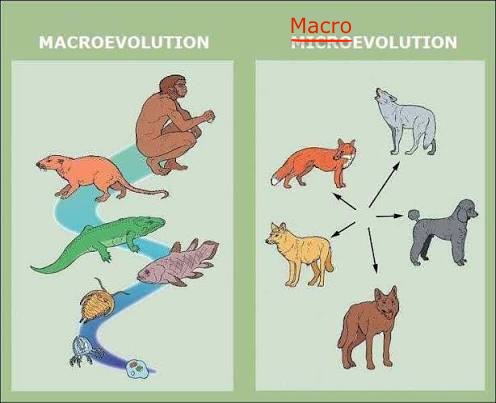
Evolution is certainly a tricky word. For a creationist, it’s clear as day why. There are two equivocal definitions being used which blur the lines and convolute any attempt at productive dialogue. “Change in allele frequencies in…
Keep reading
Jesus Is The Logos
Based on a cross-sectional analysis of Revelation, John, Hebrews, Colossians, and 1 Timothy, the conclusion that the Logos is a pre-existent, divine person, Jesus Christ, is not merely suggested, but is textually inescapable. Let me explain: The…
Keep reading
Specious Extrapolations in Origin of Species
In The Origin of Species, Darwin outlines evidence against the contemporary notion of species fixity, i.e., the idea that species represent immovable boundaries. He first uses the concepts of variations alongside his introduced mechanism of natural selection…
Keep reading
The Five Major Challenges To Hume’s Skepticism
In David Hume’s book A Treatise of Human Nature, he constructs what he calls the science of man. One cannot rightly understand any other species of science before this foundational science. The most radical and paradigm-shifting realization,…
Keep reading
The Agnostic Nature of Phylogenetic Trees and Nested Hierarchies
The evidence typically presented as definitive proof for the theory of common descent, the nested hierarchy of life and genetic/trait similarities, is fundamentally agnostic. This is because evolutionary theory, in its broad explanatory power, can be adapted…
Keep reading
Evidence for an Active Alternative Promoter in the Human DDX11L2 Gene
Abstract The human genome contains numerous regulatory elements that control gene expression, including canonical and alternative promoters. While DDX11L2 is annotated as a pseudogene, its functional relevance in gene regulation has been a subject of interest. This…
Keep reading
J. Budziszewski’s Natural Theology of Sex: A Pathway to Biblical Understanding
J. Budziszewski, in his insightful work On the Meaning of Sex, presents a compelling natural theological framework that grounds sexual ethics in the inherent design and purpose of human beings. This approach, by meticulously analyzing the given…
Keep reading
The Pagan Can Be Saved?
Wesley Coleman In Søren Kierkegaard’s Concluding Unscientific Postscript to Philosophical Fragments, Johannes Climacus breaks down notions, based on objective and speculative interpretations, of Christianity, arguing instead that authentic religious truth is fundamentally subjective. As exemplified in his…
Keep reading
The Nature of Society: Where We Stand as Individuals
From my perspective, society isn’t some grand, top-down invention or a purely artificial construct. Instead, it’s a natural outgrowth of human interaction, an organic creation. This organic origin gives society a fascinating, dualistic nature: it’s both a…
Keep reading
The Incoherence of Naturalism
Introduction Naturalism—the philosophical position that reality consists entirely of natural entities governed by natural laws—presents itself as the most rational and empirically grounded worldview. Yet despite its scientific veneer, naturalism suffers from foundational incoherence that undermines its…
Keep reading
An Argument for Agent Causation in the Origin of DNA’s Information
NOTE: This is a design argument inspired by Stephen Meyer’s design argument from DNA. Importantly, specified complexity is changed for semiotic code (which I feel is more precise) and intelligent design is changed to agent causation (which is…
Keep reading
Chromosome 2 Fusion: Evidence Out Of Thin Air?
The story is captivating and frequently told in biology textbooks and popular science: humans possess 46 chromosomes while our alleged closest relatives, chimpanzees and other great apes, have 48. The difference, evolutionists claim, is due to a…
Keep reading
