

Long-time readers of this blog may have noticed that I have been relatively quiet over the past few months. Part of that has simply been a matter of being busy, but another part is that very little has crossed my desk that I felt both qualified and motivated to address. That changed when I watched a recent two-part series on the Nathan Jacobs Podcast.
Nathan Jacobs is an Eastern Orthodox Christian who regularly engages contemporary issues and Orthodox theology with a calm, thoughtful, and inviting style. He is one of the Orthodox apologists I most admire because he does not seem interested in scoring debate points or constructing strawmen. Instead, he comes across as someone genuinely committed to pursuing the truth. When someone like that raises substantial questions, it has a way of drawing people like me out of a self-imposed hiatus.
In broad strokes, Jacobs’ critique of traditional Young Earth Creationism rests on several central claims:
- Death, however defined, existed prior to the Fall.
- The 24-hour-day reading of Genesis is not the most faithful literary interpretation.
- Young Earth Creationism ultimately requires an “appearance of age” view that makes God deceptive.
- Young Earth Creationists misuse the Church Fathers in their exegesis.
In the second part of the series, Jacobs also presents an argument against evolutionary theory itself—not from the usual scientific angle, but from an Orthodox philosophical critique centered on realism and nominalism.
In this article, I will respond to each of Jacobs’ five criticisms of Young Earth Creationism. I will also explain why, despite agreeing with many Orthodox critiques of modern philosophy, I do not believe his nominalist argument succeeds as a valid refutation of evolutionary theory. My goal is not to caricature his position, but to encourage further good-faith dialogue. So without further ado, here we go.
1. Death Existed Prior to the Fall
Jacobs’ argument here rests on four possible definitions of death and three alleged examples of death before the Fall. He defines death as meaning essentially (1) decomposition, (2) separation of soul from body, (3) distortion of nature, and (4) moral/spiritual corruption. At first glance, none of these categories strike me as especially controversial. Depending on what precisely is meant by “distortion of nature” or by the separation of soul and body, I might have some qualifications. For the purposes of this discussion, however, I am willing to grant Jacobs’ definitions. The strength of Jacobs’ case lies less in these definitions than in the examples he uses to defend them. They are worth presenting in some detail because, at least on first hearing, they carry considerable intuitive force.
Jacobs first introduces the concept of plant consumption. He argues that the plant is decomposing in the digestive system of the organism within the garden. The plant itself is composed of living cells that are broken down during digestion. From the standpoint of modern biology, the intuition seems straightforward: those cells are alive, and therefore they die. Second, he introduces the concept of the animal soul being essentially mortal, in contrast to the human soul. Are we to say that the lower animals share a nature with humans nowhere else described in the Bible? Even the typical source-text “the lion will lie down with the lamb”—which is probably a metaphor, but imagine that it is a literal description of animals—by no means suggests that animals are or ever were immortal. Likewise, Scripture offers no explicit indication that animals possess an immortal existence apart from the body. Third, he argues that even spiritual death is found prior to the fall of man in that Satan exists to tempt Adam and Eve. This implies that Satan has already fallen, and therefore spiritually died, before there seems to be any change in the relationship of man, Earth, God, etc. Taken together, these examples lead Jacobs to conclude that death, however it is defined, is a necessary component of creation and of the Edenic state.
These examples are, I’ll admit, genuinely compelling on first hearing—I remember being struck by arguments very much like these the first time I encountered them. But I think all three rest on a common equivocation. In each case, categories that are related get quietly treated as though they were identical. Once those distinctions are maintained, none of the three examples demonstrates that death, in the relevant theological sense, existed within the created order before the Fall.
Take the plant example first. It is certainly true that plant cells are living by modern biological standards, and that cells are broken down during digestion. But this observation does not settle the question being asked. A cell within a multicellular organism is not alive in the same sense that the organism itself is alive. Biology recognizes multiple levels of organization, each possessing properties that cannot simply be reduced to the level beneath it. Individual cells routinely die throughout the lifetime of healthy organisms, yet we do not ordinarily conclude that the organism itself is therefore dying. Programmed cell death is, in fact, essential to the flourishing of many forms of life.
This distinction becomes even more significant if we are to take realism seriously. Jacobs himself is critical of nominalism, arguing that distinctions in nature correspond to realities rather than merely human conventions. If that is the case, then the distinction between a cell and the organism of which it is a part is not merely linguistic—they possess genuinely different natures. Consequently, the death of a constituent cell cannot simply be equated with the death proper to the organism itself. The argument only succeeds if these categories are quietly collapsed into one another.
The second example concerns the mortality of animals. Here, too, an important distinction is overlooked. Even if one grants that animals lack the kind of immaterial, rational soul possessed by mankind, it does not follow that they must therefore be subject to death. Mortality is not simply another word for materiality. Scripture nowhere teaches that an immaterial soul is the necessary condition for bodily immortality. Adam himself was created from the dust, and his continued life was ultimately dependent upon God’s sustaining provision. The possibility that God might preserve animal life indefinitely is therefore not ruled out merely because animals are wholly physical creatures.
Several biblical considerations seem at least compatible with such a view, in fact. Genesis presents both man and beast as originally receiving vegetation for food. Later developments in redemptive history—notably the permission to eat meat after the Flood and the dietary distinctions under the Mosaic Law—suggest that the created order underwent meaningful changes following mankind’s fall into sin. Likewise, prophetic passages describing predators dwelling peacefully with their prey, whether interpreted literally or symbolically, consistently portray peace rather than violence as the ideal toward which creation is moving. None of these passages independently proves animal immortality in Eden, but together they caution against assuming that animal mortality was always an intrinsic feature of creation.
The least persuasive of the three examples is Jacobs’ appeal to Satan’s temptation of Adam and Eve as evidence that spiritual death must already have existed before the Fall. The argument assumes that because a spiritually fallen being enters the garden, spiritual death must therefore already characterize the garden itself. But this does not follow. Scripture nowhere requires us to believe that Satan fell during the creation week, nor does it establish any essential connection between his rebellion and the original condition of Eden prior to mankind’s sin.
More importantly, the presence of evil is not identical to its dominion. Satan approaches humanity from outside the covenantal life of the garden. His temptation introduces the possibility of rebellion, but spiritual death does not become the condition of mankind until Adam and Eve freely participate in that rebellion. Until that moment, Eden remains the place of God’s fellowship with humanity, untouched by the corruption that Satan himself embodies. Spiritual death stands at the door, so to speak, but it has no authority within creation until mankind opens the door through disobedience.
So I do not think Jacobs has demonstrated that death, under any of his four definitions, was necessarily present within the Edenic order. Each example depends on identifying concepts that are genuinely related while overlooking distinctions that are every bit as real. Cells are not organisms. Materiality is not mortality. External temptation is not internal corruption. Recognizing these distinctions does not by itself prove the Young Earth position, but it does substantially weaken one of the principal philosophical arguments offered against it.
2. The 24-Hour-Day Reading of Genesis Is Not the Most Faithful Literary Interpretation
Jacobs next turns his attention to the literal-day interpretation of Genesis by raising a familiar objection—one that reaches back at least as far as Origen of Alexandria. Critics of the traditional six-day reading have long pointed out that one of the defining features of an ordinary day is the cycle of day and night, a cycle ordinarily understood to depend upon the sun and the earth’s rotation. If the sun is not created until the fourth day, then what exactly are the first three “days”?
What strikes me about this objection is not its novelty, but its age. It is sometimes presented as though early Christian literalists simply overlooked the problem until thinkers such as Origen exposed an obvious contradiction. Historically, that is not what happened. The question has been recognized and debated for nearly two millennia. Christians who defended a literal reading of Genesis were well aware of the objection, and many offered thoughtful responses to it.
This is where I would genuinely like to press Nathan Jacobs—and, for that matter, other thoughtful Old Earth Creationists such as Gavin Ortlund. Given their evident appreciation for the history of Christian interpretation, I would like to see greater engagement with those early literalist responses. Too often, the discussion seems to end with the objection itself, as though merely raising the question settles the matter. But historical theology did not stop with Origen’s critique, and neither should our evaluation of the issue.
One early example comes from Theophilus of Antioch, who died only a few years before Origen was born. Theophilus was fully aware of the apparent discrepancy surrounding the first three days of creation. Yet rather than abandoning a literal reading of Genesis, he proposed that the Word of God Himself served as the source of light prior to the creation of the heavenly bodies, likening His activity to “a lamp in an enclosed chamber.”
For Theophilus, this ordering was not an embarrassment to be explained away but a deliberate feature of the creation account. God created vegetation on the third day and the sun, moon, and stars on the fourth precisely to undermine the tendency of pagan philosophy and religion to attribute life’s ultimate source to the heavenly bodies rather than to God Himself. The point of Genesis is that life does not depend upon the sun. The sun itself depends upon the Creator.
I find Theophilus’ interpretation remarkably profound, actually. Even today, our scientific descriptions often speak of stars as the furnaces from which the chemical elements necessary for life are forged, and our cosmological narratives naturally place stellar processes near the center of the universe’s story. Theophilus reminds us that, whatever secondary causes God may employ, Scripture consistently directs our attention beyond creation to the Creator. The heavenly bodies are not life’s ultimate source; they are themselves creatures.
Theophilus also sees theological significance in the broader pattern of creation. God does not create haphazardly but in a manner that reflects His own wisdom and order. He first prepares realms and then fills them with their inhabitants. The progression of Genesis reveals not merely a sequence of events but something of God’s own character: the Father creating through His Word and in His Wisdom, bringing creation into being according to a deliberate and meaningful design.
The discussion did not end with Theophilus. Some of the strongest opposition to Origen’s approach came from later Fathers who believed that his treatment of Genesis threatened the integrity of the Christian faith itself.
One notable example is Methodius of Olympus, a fourth-century bishop and martyr whose writings frequently challenged Origen’s theology. In his treatise On Things Created, Methodius directly cites Origen’s position before offering an unambiguous rebuke. Quoting Origen, he writes:
“Nor yet from Adam, as some say, did man, previously not existing, first take his existence and come into the world. Nor again did the world begin to be made six days before the creation of Adam.”
Methodius responds with striking brevity:
“This is what Origen says seriously, and mark how he trifles.”
The sharpness of his reply is difficult to miss. More importantly, Methodius explains why he regarded Origen’s interpretation as so dangerous.
In The Banquet of the Ten Virgins, during the discourse of Thaleia, Methodius establishes what amounts to a hermeneutical boundary:
“For it is a dangerous thing wholly to despise the literal meaning… especially of Genesis, where the unchangeable decrees of God for the constitution of the universe are set forth.”
For Methodius, the opening chapters of Genesis do more than provide theological symbolism. They describe the historical acts by which God established the order, beauty, and governing principles of the created world. While he was by no means opposed to recognizing spiritual or typological meanings in Scripture, he insisted that such meanings must arise from history rather than replace it. Allegory was a legitimate method of interpretation, but only when built upon the foundation of real historical events.
This concern extended far beyond the interpretation of Genesis itself. Methodius believed that the opening chapters of Scripture formed the indispensable foundation for the entire drama of redemption. His theology rested heavily on the apostolic parallel between the first Adam and Christ, the second Adam. If Adam’s creation, Eve’s formation from his side, or the Fall itself were reduced to mere allegory, then the theological force of St. Paul’s comparison between Adam and Christ would be profoundly weakened. The physical union of Christ and His Church would no longer rest upon the physical union established at creation, but upon a literary symbol.
The same concern applied to the doctrine of the resurrection. Methodius consistently argued that Christ came to redeem the very flesh that had fallen in Adam. The Incarnation was not the redemption of an abstraction but of real human nature. If the creation and fall of that nature were no longer historical realities, then the historical reality of the Incarnation and the bodily resurrection likewise became increasingly difficult to defend. In Methodius’ view, the entire biblical narrative—from creation to fall, from incarnation to resurrection—stood or fell together as a unified history of God’s work in the world.
Whether one ultimately agrees with Methodius or with Origen is not the immediate point. The significance of his writings is historical: they demonstrate that Origen’s objections to a literal reading of Genesis were neither novel nor universally persuasive. They were recognized, answered, and vigorously contested within the early Church itself. The patristic conversation was not one of unanimous agreement but of genuine theological debate, and any appeal to “the Fathers” should acknowledge that complexity.
3. Young Earth Creationism Ultimately Requires an “Appearance of Age” View That Makes God Deceptive
This is perhaps the point in Jacobs’ presentation with which I find myself simultaneously the most sympathetic and the most critical. I understand why the argument carries such intuitive force. If the universe appears to be billions of years old while it is, in fact, only thousands of years old, does that not make God deceptive? It is an important question and one that deserves to be taken seriously.
My disagreement runs deeper than the surface question, though. I believe the argument rests upon an epistemological assumption that is so deeply embedded in modern Western thought that it often goes unnoticed—namely, it assumes that age is something we directly observe rather than something we infer.
The question I would ask is a simple one: What does age actually look like?
The moment we attempt to answer that question, we are no longer describing raw observation. We are interpreting observations through a broader framework of assumptions. Rocks do not present themselves to our senses announcing, “I am four billion years old.” Light arriving from distant galaxies does not carry a label identifying how long it has been traveling. Tree rings, sedimentary layers, radioactive isotopes, and starlight are all observable phenomena, but “age” is an interpretation of those phenomena rather than one of the phenomena itself.
This distinction is philosophically significant. Our senses provide us with impressions; they do not provide us with metaphysical conclusions. To move from observation to age necessarily requires a model of the world that relates present evidence to an unobserved past. In other words, age is not perceived—it is calibrated. That calibration depends upon prior assumptions concerning the regularity of nature, causal history, and the relationship between present processes and past events.
Whether those assumptions are ultimately justified is a separate question. My point here is simply that the appearance-of-age objection often presents its conclusion as though it were immediately given in experience, when in reality it already depends upon a substantial interpretive framework. Before we can claim that creation “looks old,” we must first establish what oldness means and how it can be reliably inferred from the evidence before us. There is much more evidence and argument to unpack here, but for the sake of time I’ll move on—this argument, in short, rests on highly questionable assumptions.
4. Young Earth Creationists Misuse the Church Fathers in Their Exegesis
This objection is particularly interesting because, by this point in the article, I have already appealed to several of the Church Fathers myself. At first glance, that might appear inconsistent. If I am arguing that the Fathers supported a literal reading of Genesis, am I not doing precisely what Jacobs cautions against?
As I understand it, Jacobs’ argument is essentially this: the Church Fathers were not divinely inspired with special knowledge of astronomy, biology, chemistry, physics, or any other natural science. Their authority rested not in scientific expertise but in the guidance of the Holy Spirit concerning the truths of the Christian faith. Consequently, appealing to the Fathers as authorities on questions such as the age of the earth or the history of the cosmos is a category mistake. To treat their scientific opinions as binding would inevitably lead to conclusions that neither they nor the Church intended.
I largely agree with this assessment. The Fathers were not infallible scientists, nor should they be treated as though they possessed privileged knowledge of the natural world unavailable to later generations. They interpreted nature through the best scientific understanding available to them, just as we do today.
This principle is visible throughout Christian history. The apostles and the Fathers frequently employed illustrations and assumptions drawn from the natural philosophy of their own age—the classical theory of the four elements, ancient medical concepts, or other premodern models of the physical world. Yet few Christians would argue that the theological truth of their writings depends upon the scientific accuracy of every analogy they employed. The enduring message remains true even when the scientific framework through which it was expressed is later refined or abandoned.
The same principle can reasonably be applied to Genesis itself, Jacobs argues. The creation narrative was revealed to people who understood the world through the conceptual categories available to them. God accommodated His revelation to human language and human understanding without diminishing the truth He intended to communicate. The theological message does not stand or fall on whether the Israelites possessed modern astronomy, geology, or biology.
Here is where my conclusion parts ways from his, though. Throughout this article, I have not appealed to the Fathers because I believe they possessed hidden scientific knowledge about the age of the earth. Rather, I have appealed to them as historical witnesses to the Church’s exegetical tradition. My point has never been that Theophilus or Methodius settle modern scientific questions—it is that they demonstrate something historically significant: the objections commonly raised against a literal reading of Genesis were recognized, debated, and answered within the early Church itself. The historical record is therefore far more diverse than is often acknowledged.
I do not cite the Fathers, in other words, to establish scientific conclusions. I cite them to establish historical ones. They tell us how Christians interpreted Genesis, how they understood the relationship between history and theology, and how they responded to competing hermeneutical approaches long before the rise of modern science. Those are precisely the questions for which the Fathers remain indispensable witnesses.
One important caution is worth adding here, though. While I agree that God often accommodates His revelation to the language, concepts, and scientific understanding of its original audience, we should not too quickly conclude that such accommodation extends to the historical events the text records. There is an important distinction between God communicating through the conceptual framework of ancient people and God intending to communicate that the events themselves were merely figurative or ahistorical.
The apostles and the Church Fathers could employ scientifically imperfect analogies without compromising the theological truths they intended to convey. That is very different from claiming that the historical acts of God recorded in Scripture are themselves products of an outdated scientific worldview. Throughout both the Old and New Testaments, the creation of Adam and Eve, the Fall, and the early chapters of Genesis are repeatedly treated as real events in redemptive history by the prophets, by Christ Himself, and by the apostles.
For that reason, I believe we should be careful not to conflate two distinct issues. One is the use of culturally conditioned language and scientific assumptions in the communication of divine truth. The other is the historicity of the events God declares to have taken place. Acknowledging the former does not automatically require us to surrender the latter. Accommodation may explain how revelation is communicated, but it does not by itself determine what Scripture intends us to understand as historical.
5. Nathan’s Realist Argument Against Evolution
The final major argument Jacobs presents shifts away from Young Earth Creationism itself and toward evolutionary theory more broadly. Interestingly, his objection is not primarily scientific but philosophical. It rests upon the relationship between two competing metaphysical systems: realism and nominalism.
In broad outline, Jacobs’ argument proceeds as follows.
First, classical Christian realism holds that things possess real natures or essences. A human being is not merely a collection of accidental properties but belongs to a real kind with an objective nature. While accidental features—such as height, color, or countless other incidental characteristics—may vary, these variations do not alter the underlying essence of the thing itself.
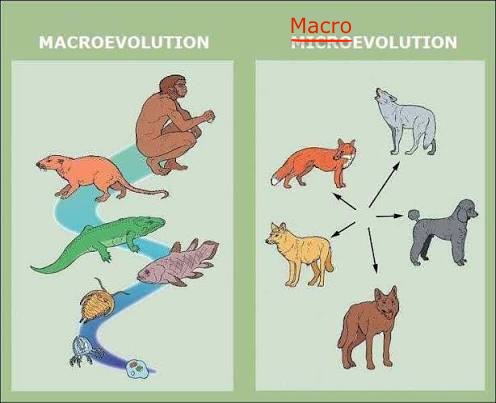
Second, evolutionary theory explains the origin of new species through the gradual accumulation of small changes over vast periods of time. According to Jacobs, this presents a philosophical difficulty. If each individual change is merely accidental, then no amount of accumulated accidental change should ever be capable of producing a new essential nature. Quantitative variation, he argues, cannot by itself account for qualitative transformation. Thus, within a realist metaphysic, gradual macroevolution appears impossible.
Jacobs then draws an analogy from embryological development. During development, an embryo gradually acquires recognizable structures—arms, legs, a heart, and a tail—not because these features emerge from an entirely different nature, but because they are the progressive actualization of potentials already contained within the organism’s essence. Development is therefore understood as the movement from potentiality to actuality rather than the acquisition of a new nature.
Evolution, however, proposes a different kind of transition. It asks us to understand how structures that were not previously present gradually become genuinely new biological features over many generations. Jacobs argues that this creates a dilemma. Either one must posit a genuine qualitative leap from one nature to another—abandoning gradualism—or one must deny that there are objective boundaries between such structures in the first place. On this latter view, distinctions such as “growth” and “tail,” or ultimately one species and another, become matters of human convention rather than reflections of real natures.
From there, Jacobs extends the argument beyond biology. If biological categories are ultimately conventional rather than real, then the universals upon which scientific reasoning depends also become unstable. Scientific investigation routinely makes universal claims about organisms, species, and natural kinds. Jacobs contends that if these categories possess no objective reality, the logic of scientific induction itself is undermined. In his view, an evolutionary account grounded in nominalism ultimately erodes the very philosophical foundations upon which science depends.
Finally, Jacobs argues that this conclusion is especially significant for Eastern Orthodox theology. Orthodox doctrine has historically embraced a realist metaphysics. The Church’s understanding of the Trinity, the Incarnation, participation in the divine energies, and even the doctrine of creation according to distinct kinds all presuppose that real natures exist independently of human thought. If realism is indispensable to Orthodox theology, and if macroevolution ultimately depends upon nominalism, Jacobs concludes that evolutionary theory is fundamentally incompatible with the philosophical commitments of historic Eastern Orthodoxy.
Whether this argument succeeds is another matter entirely. Before evaluating it, it’s worth appreciating that Jacobs is not merely raising a scientific objection to evolution. He is attempting to show that evolution rests upon metaphysical assumptions fundamentally at odds with the philosophical tradition of the Eastern Church.
The part of Jacobs’ argument I find hardest to accept is the assumption that realism and nominalism form a strict dichotomy. On his account, a category must either correspond to an immutable essence or else be reduced to an arbitrary human convention. I don’t believe the metaphysical landscape is so simple.
Realism has long recognized that reality is structured hierarchically. Not every distinction we make carries the same metaphysical weight. Some classifications describe fundamental kinds, while others describe the organization, interaction, or development of those kinds. The existence of these different levels does not imply that the higher levels are merely nominal.
Consider life itself. A living organism possesses a genuine nature that distinguishes it from non-living matter. Yet many of the features that characterize particular organisms—DNA sequences, protein structures, anatomical features, and physiological processes—can vary without thereby abolishing the reality of life as such. The accidental modification of these features does not make life itself an arbitrary concept.
The same observation extends throughout biology. Proteins are real kinds of molecules that participate in biochemical processes. Molecular machines are genuine organizations of proteins. Organelles are genuine organizations of molecular machines. Cells are genuine organizations of organelles. Tissues are genuine organizations of cells. Organs are genuine organizations of tissues. At every level we encounter real structures possessing objective properties and causal powers, even though each level emerges from the organization of the one beneath it.
Consequently, increasing complexity should not be mistaken for nominalism. A distinction may arise gradually through the organization of lower-level realities while still corresponding to something objectively real. The fact that the boundaries between such structures are sometimes difficult to specify does not entail that the structures themselves are merely products of language.
If one wishes to describe some of these higher-order categories as nominal, they are nominal only in a qualified sense. They are not arbitrary inventions imposed upon reality but abstractions grounded in more fundamental realities that genuinely exist. They participate in, and derive their intelligibility from, those more basic kinds. In that respect, the relationship is not one of fiction versus reality but of higher-order classification resting upon a real metaphysical foundation.
So I don’t think Jacobs has shown that accepting gradual biological change commits one to philosophical nominalism. At most, he has shown that certain biological categories may not correspond to immutable essences in precisely the same way as more fundamental kinds. That conclusion is considerably weaker than the one his argument ultimately requires.
Conclusion
Having worked through each of Jacobs’ major criticisms, I find myself appreciating his project even more than when I began. He raises important questions that deserve careful consideration, and he does so with a spirit that is refreshingly thoughtful and charitable. If more theological disagreements were conducted in this manner, the Church would undoubtedly benefit.
I remain unconvinced by the arguments themselves, though. My concern is not that Jacobs asks the wrong questions, but that his answers frequently depend on collapsing distinctions that ought to remain distinct. A cell dying is not the same thing as an organism dying. Being made of matter is not the same thing as being mortal. Being tempted from outside is not the same thing as being corrupted within. And using the science of one’s own era to illustrate a truth is not the same thing as denying that the events being illustrated actually happened. Citing the Fathers as historical witnesses is not the same thing as treating them as scientific authorities—and recognizing degrees of biological organization does not, by itself, force us to trade realism for nominalism.
These distinctions aren’t semantic games. They’re exactly the kind of thing realism itself should train us to notice: that reality is layered, ordered, and hierarchical, and that seeing the layers clearly makes the whole picture richer rather than flatter.
None of this proves Young Earth Creationism. I haven’t tried to demonstrate that every Young Earth argument succeeds, or that every Old Earth argument fails. My aim has been considerably narrower: the principal objections Jacobs raises against the Young Earth position don’t, in my judgment, accomplish what they set out to prove. They deserve thoughtful responses, but they aren’t decisive.
I hope this article is received in the spirit in which it was written. Nathan Jacobs is someone whose work I continue to respect, even where I disagree. My purpose has not been to diminish his contributions but to continue a conversation that Christians have been having for nearly two thousand years. If this essay encourages that conversation to proceed with greater historical awareness, philosophical precision, and mutual charity, then it will have accomplished exactly what I hoped.
Primary source discussed
Jacobs, Nathan. Why I Reject Evolution | An Orthodox Christian Perspective. Nathan Jacobs Podcast, Jul 23, 2026.
Jacobs, Nathan. Do the Church Fathers Reject Evolution? Nathan Jacobs Podcast, Jul 2, 2026
Patristic sources
Theophilus of Antioch. To Autolycus, Book II.— Source of the “lamp in an enclosed chamber” language regarding light preceding the creation of the sun.
Methodius of Olympus. On Things Created (fragment).— Contains the quotation from Origen (“Nor yet from Adam…”) and Methodius’s reply (“This is what Origen says seriously…”).
Methodius of Olympus. The Banquet of the Ten Virgins (also known as The Symposium), Discourse of Thaleia.— Source of “For it is a dangerous thing wholly to despise the literal meaning…”
Referenced but not directly quoted
Ortlund, Gavin. Truth Unites Youtube Channel, cited as another example of a thoughtful Old Earth Creationist voice engaging patristic sources.


Leave a comment