Creation Questions

Tag: bible

  • A Response to an Eastern Orthodox Critique of Young Earth Creation

    A Response to an Eastern Orthodox Critique of Young Earth Creation

    Long-time readers of this blog may have noticed that I have been relatively quiet over the past few months. Part of that has simply been a matter of being busy, but another part is that very little has crossed my desk that I felt both qualified and motivated to address. That changed when I watched a recent two-part series on the Nathan Jacobs Podcast.

    Nathan Jacobs is an Eastern Orthodox Christian who regularly engages contemporary issues and Orthodox theology with a calm, thoughtful, and inviting style. He is one of the Orthodox apologists I most admire because he does not seem interested in scoring debate points or constructing strawmen. Instead, he comes across as someone genuinely committed to pursuing the truth. When someone like that raises substantial questions, it has a way of drawing people like me out of a self-imposed hiatus.

    In broad strokes, Jacobs’ critique of traditional Young Earth Creationism rests on several central claims:

    • Death, however defined, existed prior to the Fall.
    • The 24-hour-day reading of Genesis is not the most faithful literary interpretation.
    • Young Earth Creationism ultimately requires an “appearance of age” view that makes God deceptive.
    • Young Earth Creationists misuse the Church Fathers in their exegesis.

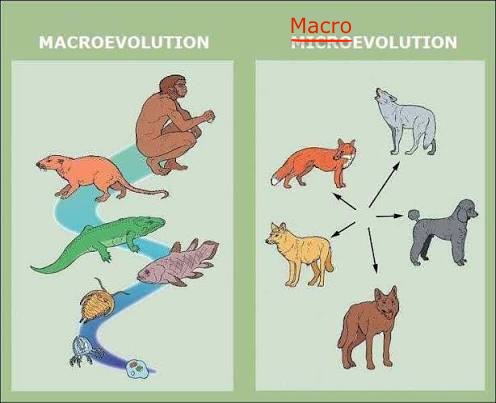
    In the second part of the series, Jacobs also presents an argument against evolutionary theory itself—not from the usual scientific angle, but from an Orthodox philosophical critique centered on realism and nominalism.

    In this article, I will respond to each of Jacobs’ five criticisms of Young Earth Creationism. I will also explain why, despite agreeing with many Orthodox critiques of modern philosophy, I do not believe his nominalist argument succeeds as a valid refutation of evolutionary theory. My goal is not to caricature his position, but to encourage further good-faith dialogue. So without further ado, here we go.

    1. Death Existed Prior to the Fall

    Jacobs’ argument here rests on four possible definitions of death and three alleged examples of death before the Fall. He defines death as meaning essentially (1) decomposition, (2) separation of soul from body, (3) distortion of nature, and (4) moral/spiritual corruption. At first glance, none of these categories strike me as especially controversial. Depending on what precisely is meant by “distortion of nature” or by the separation of soul and body, I might have some qualifications. For the purposes of this discussion, however, I am willing to grant Jacobs’ definitions. The strength of Jacobs’ case lies less in these definitions than in the examples he uses to defend them. They are worth presenting in some detail because, at least on first hearing, they carry considerable intuitive force.

    Jacobs first introduces the concept of plant consumption. He argues that the plant is decomposing in the digestive system of the organism within the garden. The plant itself is composed of living cells that are broken down during digestion. From the standpoint of modern biology, the intuition seems straightforward: those cells are alive, and therefore they die. Second, he introduces the concept of the animal soul being essentially mortal, in contrast to the human soul. Are we to say that the lower animals share a nature with humans nowhere else described in the Bible? Even the typical source-text “the lion will lie down with the lamb”—which is probably a metaphor, but imagine that it is a literal description of animals—by no means suggests that animals are or ever were immortal. Likewise, Scripture offers no explicit indication that animals possess an immortal existence apart from the body. Third, he argues that even spiritual death is found prior to the fall of man in that Satan exists to tempt Adam and Eve. This implies that Satan has already fallen, and therefore spiritually died, before there seems to be any change in the relationship of man, Earth, God, etc. Taken together, these examples lead Jacobs to conclude that death, however it is defined, is a necessary component of creation and of the Edenic state.

    These examples are, I’ll admit, genuinely compelling on first hearing—I remember being struck by arguments very much like these the first time I encountered them. But I think all three rest on a common equivocation. In each case, categories that are related get quietly treated as though they were identical. Once those distinctions are maintained, none of the three examples demonstrates that death, in the relevant theological sense, existed within the created order before the Fall.

    Take the plant example first. It is certainly true that plant cells are living by modern biological standards, and that cells are broken down during digestion. But this observation does not settle the question being asked. A cell within a multicellular organism is not alive in the same sense that the organism itself is alive. Biology recognizes multiple levels of organization, each possessing properties that cannot simply be reduced to the level beneath it. Individual cells routinely die throughout the lifetime of healthy organisms, yet we do not ordinarily conclude that the organism itself is therefore dying. Programmed cell death is, in fact, essential to the flourishing of many forms of life.

    This distinction becomes even more significant if we are to take realism seriously. Jacobs himself is critical of nominalism, arguing that distinctions in nature correspond to realities rather than merely human conventions. If that is the case, then the distinction between a cell and the organism of which it is a part is not merely linguistic—they possess genuinely different natures. Consequently, the death of a constituent cell cannot simply be equated with the death proper to the organism itself. The argument only succeeds if these categories are quietly collapsed into one another.

    The second example concerns the mortality of animals. Here, too, an important distinction is overlooked. Even if one grants that animals lack the kind of immaterial, rational soul possessed by mankind, it does not follow that they must therefore be subject to death. Mortality is not simply another word for materiality. Scripture nowhere teaches that an immaterial soul is the necessary condition for bodily immortality. Adam himself was created from the dust, and his continued life was ultimately dependent upon God’s sustaining provision. The possibility that God might preserve animal life indefinitely is therefore not ruled out merely because animals are wholly physical creatures.

    Several biblical considerations seem at least compatible with such a view, in fact. Genesis presents both man and beast as originally receiving vegetation for food. Later developments in redemptive history—notably the permission to eat meat after the Flood and the dietary distinctions under the Mosaic Law—suggest that the created order underwent meaningful changes following mankind’s fall into sin. Likewise, prophetic passages describing predators dwelling peacefully with their prey, whether interpreted literally or symbolically, consistently portray peace rather than violence as the ideal toward which creation is moving. None of these passages independently proves animal immortality in Eden, but together they caution against assuming that animal mortality was always an intrinsic feature of creation.

    The least persuasive of the three examples is Jacobs’ appeal to Satan’s temptation of Adam and Eve as evidence that spiritual death must already have existed before the Fall. The argument assumes that because a spiritually fallen being enters the garden, spiritual death must therefore already characterize the garden itself. But this does not follow. Scripture nowhere requires us to believe that Satan fell during the creation week, nor does it establish any essential connection between his rebellion and the original condition of Eden prior to mankind’s sin.

    More importantly, the presence of evil is not identical to its dominion. Satan approaches humanity from outside the covenantal life of the garden. His temptation introduces the possibility of rebellion, but spiritual death does not become the condition of mankind until Adam and Eve freely participate in that rebellion. Until that moment, Eden remains the place of God’s fellowship with humanity, untouched by the corruption that Satan himself embodies. Spiritual death stands at the door, so to speak, but it has no authority within creation until mankind opens the door through disobedience.

    So I do not think Jacobs has demonstrated that death, under any of his four definitions, was necessarily present within the Edenic order. Each example depends on identifying concepts that are genuinely related while overlooking distinctions that are every bit as real. Cells are not organisms. Materiality is not mortality. External temptation is not internal corruption. Recognizing these distinctions does not by itself prove the Young Earth position, but it does substantially weaken one of the principal philosophical arguments offered against it.

    2. The 24-Hour-Day Reading of Genesis Is Not the Most Faithful Literary Interpretation

    Jacobs next turns his attention to the literal-day interpretation of Genesis by raising a familiar objection—one that reaches back at least as far as Origen of Alexandria. Critics of the traditional six-day reading have long pointed out that one of the defining features of an ordinary day is the cycle of day and night, a cycle ordinarily understood to depend upon the sun and the earth’s rotation. If the sun is not created until the fourth day, then what exactly are the first three “days”?

    What strikes me about this objection is not its novelty, but its age. It is sometimes presented as though early Christian literalists simply overlooked the problem until thinkers such as Origen exposed an obvious contradiction. Historically, that is not what happened. The question has been recognized and debated for nearly two millennia. Christians who defended a literal reading of Genesis were well aware of the objection, and many offered thoughtful responses to it.

    This is where I would genuinely like to press Nathan Jacobs—and, for that matter, other thoughtful Old Earth Creationists such as Gavin Ortlund. Given their evident appreciation for the history of Christian interpretation, I would like to see greater engagement with those early literalist responses. Too often, the discussion seems to end with the objection itself, as though merely raising the question settles the matter. But historical theology did not stop with Origen’s critique, and neither should our evaluation of the issue.

    One early example comes from Theophilus of Antioch, who died only a few years before Origen was born. Theophilus was fully aware of the apparent discrepancy surrounding the first three days of creation. Yet rather than abandoning a literal reading of Genesis, he proposed that the Word of God Himself served as the source of light prior to the creation of the heavenly bodies, likening His activity to “a lamp in an enclosed chamber.”

    For Theophilus, this ordering was not an embarrassment to be explained away but a deliberate feature of the creation account. God created vegetation on the third day and the sun, moon, and stars on the fourth precisely to undermine the tendency of pagan philosophy and religion to attribute life’s ultimate source to the heavenly bodies rather than to God Himself. The point of Genesis is that life does not depend upon the sun. The sun itself depends upon the Creator.

    I find Theophilus’ interpretation remarkably profound, actually. Even today, our scientific descriptions often speak of stars as the furnaces from which the chemical elements necessary for life are forged, and our cosmological narratives naturally place stellar processes near the center of the universe’s story. Theophilus reminds us that, whatever secondary causes God may employ, Scripture consistently directs our attention beyond creation to the Creator. The heavenly bodies are not life’s ultimate source; they are themselves creatures.

    Theophilus also sees theological significance in the broader pattern of creation. God does not create haphazardly but in a manner that reflects His own wisdom and order. He first prepares realms and then fills them with their inhabitants. The progression of Genesis reveals not merely a sequence of events but something of God’s own character: the Father creating through His Word and in His Wisdom, bringing creation into being according to a deliberate and meaningful design.

    The discussion did not end with Theophilus. Some of the strongest opposition to Origen’s approach came from later Fathers who believed that his treatment of Genesis threatened the integrity of the Christian faith itself.

    One notable example is Methodius of Olympus, a fourth-century bishop and martyr whose writings frequently challenged Origen’s theology. In his treatise On Things Created, Methodius directly cites Origen’s position before offering an unambiguous rebuke. Quoting Origen, he writes:

    “Nor yet from Adam, as some say, did man, previously not existing, first take his existence and come into the world. Nor again did the world begin to be made six days before the creation of Adam.”

    Methodius responds with striking brevity:

    “This is what Origen says seriously, and mark how he trifles.”

    The sharpness of his reply is difficult to miss. More importantly, Methodius explains why he regarded Origen’s interpretation as so dangerous.

    In The Banquet of the Ten Virgins, during the discourse of Thaleia, Methodius establishes what amounts to a hermeneutical boundary:

    “For it is a dangerous thing wholly to despise the literal meaning… especially of Genesis, where the unchangeable decrees of God for the constitution of the universe are set forth.”

    For Methodius, the opening chapters of Genesis do more than provide theological symbolism. They describe the historical acts by which God established the order, beauty, and governing principles of the created world. While he was by no means opposed to recognizing spiritual or typological meanings in Scripture, he insisted that such meanings must arise from history rather than replace it. Allegory was a legitimate method of interpretation, but only when built upon the foundation of real historical events.

    This concern extended far beyond the interpretation of Genesis itself. Methodius believed that the opening chapters of Scripture formed the indispensable foundation for the entire drama of redemption. His theology rested heavily on the apostolic parallel between the first Adam and Christ, the second Adam. If Adam’s creation, Eve’s formation from his side, or the Fall itself were reduced to mere allegory, then the theological force of St. Paul’s comparison between Adam and Christ would be profoundly weakened. The physical union of Christ and His Church would no longer rest upon the physical union established at creation, but upon a literary symbol.

    The same concern applied to the doctrine of the resurrection. Methodius consistently argued that Christ came to redeem the very flesh that had fallen in Adam. The Incarnation was not the redemption of an abstraction but of real human nature. If the creation and fall of that nature were no longer historical realities, then the historical reality of the Incarnation and the bodily resurrection likewise became increasingly difficult to defend. In Methodius’ view, the entire biblical narrative—from creation to fall, from incarnation to resurrection—stood or fell together as a unified history of God’s work in the world.

    Whether one ultimately agrees with Methodius or with Origen is not the immediate point. The significance of his writings is historical: they demonstrate that Origen’s objections to a literal reading of Genesis were neither novel nor universally persuasive. They were recognized, answered, and vigorously contested within the early Church itself. The patristic conversation was not one of unanimous agreement but of genuine theological debate, and any appeal to “the Fathers” should acknowledge that complexity.

    3. Young Earth Creationism Ultimately Requires an “Appearance of Age” View That Makes God Deceptive

    This is perhaps the point in Jacobs’ presentation with which I find myself simultaneously the most sympathetic and the most critical. I understand why the argument carries such intuitive force. If the universe appears to be billions of years old while it is, in fact, only thousands of years old, does that not make God deceptive? It is an important question and one that deserves to be taken seriously.

    My disagreement runs deeper than the surface question, though. I believe the argument rests upon an epistemological assumption that is so deeply embedded in modern Western thought that it often goes unnoticed—namely, it assumes that age is something we directly observe rather than something we infer.

    The question I would ask is a simple one: What does age actually look like?

    The moment we attempt to answer that question, we are no longer describing raw observation. We are interpreting observations through a broader framework of assumptions. Rocks do not present themselves to our senses announcing, “I am four billion years old.” Light arriving from distant galaxies does not carry a label identifying how long it has been traveling. Tree rings, sedimentary layers, radioactive isotopes, and starlight are all observable phenomena, but “age” is an interpretation of those phenomena rather than one of the phenomena itself.

    This distinction is philosophically significant. Our senses provide us with impressions; they do not provide us with metaphysical conclusions. To move from observation to age necessarily requires a model of the world that relates present evidence to an unobserved past. In other words, age is not perceived—it is calibrated. That calibration depends upon prior assumptions concerning the regularity of nature, causal history, and the relationship between present processes and past events.

    Whether those assumptions are ultimately justified is a separate question. My point here is simply that the appearance-of-age objection often presents its conclusion as though it were immediately given in experience, when in reality it already depends upon a substantial interpretive framework. Before we can claim that creation “looks old,” we must first establish what oldness means and how it can be reliably inferred from the evidence before us. There is much more evidence and argument to unpack here, but for the sake of time I’ll move on—this argument, in short, rests on highly questionable assumptions.

    4. Young Earth Creationists Misuse the Church Fathers in Their Exegesis

    This objection is particularly interesting because, by this point in the article, I have already appealed to several of the Church Fathers myself. At first glance, that might appear inconsistent. If I am arguing that the Fathers supported a literal reading of Genesis, am I not doing precisely what Jacobs cautions against?

    As I understand it, Jacobs’ argument is essentially this: the Church Fathers were not divinely inspired with special knowledge of astronomy, biology, chemistry, physics, or any other natural science. Their authority rested not in scientific expertise but in the guidance of the Holy Spirit concerning the truths of the Christian faith. Consequently, appealing to the Fathers as authorities on questions such as the age of the earth or the history of the cosmos is a category mistake. To treat their scientific opinions as binding would inevitably lead to conclusions that neither they nor the Church intended.

    I largely agree with this assessment. The Fathers were not infallible scientists, nor should they be treated as though they possessed privileged knowledge of the natural world unavailable to later generations. They interpreted nature through the best scientific understanding available to them, just as we do today.

    This principle is visible throughout Christian history. The apostles and the Fathers frequently employed illustrations and assumptions drawn from the natural philosophy of their own age—the classical theory of the four elements, ancient medical concepts, or other premodern models of the physical world. Yet few Christians would argue that the theological truth of their writings depends upon the scientific accuracy of every analogy they employed. The enduring message remains true even when the scientific framework through which it was expressed is later refined or abandoned.

    The same principle can reasonably be applied to Genesis itself, Jacobs argues. The creation narrative was revealed to people who understood the world through the conceptual categories available to them. God accommodated His revelation to human language and human understanding without diminishing the truth He intended to communicate. The theological message does not stand or fall on whether the Israelites possessed modern astronomy, geology, or biology.

    Here is where my conclusion parts ways from his, though. Throughout this article, I have not appealed to the Fathers because I believe they possessed hidden scientific knowledge about the age of the earth. Rather, I have appealed to them as historical witnesses to the Church’s exegetical tradition. My point has never been that Theophilus or Methodius settle modern scientific questions—it is that they demonstrate something historically significant: the objections commonly raised against a literal reading of Genesis were recognized, debated, and answered within the early Church itself. The historical record is therefore far more diverse than is often acknowledged.

    I do not cite the Fathers, in other words, to establish scientific conclusions. I cite them to establish historical ones. They tell us how Christians interpreted Genesis, how they understood the relationship between history and theology, and how they responded to competing hermeneutical approaches long before the rise of modern science. Those are precisely the questions for which the Fathers remain indispensable witnesses.

    One important caution is worth adding here, though. While I agree that God often accommodates His revelation to the language, concepts, and scientific understanding of its original audience, we should not too quickly conclude that such accommodation extends to the historical events the text records. There is an important distinction between God communicating through the conceptual framework of ancient people and God intending to communicate that the events themselves were merely figurative or ahistorical.

    The apostles and the Church Fathers could employ scientifically imperfect analogies without compromising the theological truths they intended to convey. That is very different from claiming that the historical acts of God recorded in Scripture are themselves products of an outdated scientific worldview. Throughout both the Old and New Testaments, the creation of Adam and Eve, the Fall, and the early chapters of Genesis are repeatedly treated as real events in redemptive history by the prophets, by Christ Himself, and by the apostles.

    For that reason, I believe we should be careful not to conflate two distinct issues. One is the use of culturally conditioned language and scientific assumptions in the communication of divine truth. The other is the historicity of the events God declares to have taken place. Acknowledging the former does not automatically require us to surrender the latter. Accommodation may explain how revelation is communicated, but it does not by itself determine what Scripture intends us to understand as historical.

    5. Nathan’s Realist Argument Against Evolution

    The final major argument Jacobs presents shifts away from Young Earth Creationism itself and toward evolutionary theory more broadly. Interestingly, his objection is not primarily scientific but philosophical. It rests upon the relationship between two competing metaphysical systems: realism and nominalism.

    In broad outline, Jacobs’ argument proceeds as follows.

    First, classical Christian realism holds that things possess real natures or essences. A human being is not merely a collection of accidental properties but belongs to a real kind with an objective nature. While accidental features—such as height, color, or countless other incidental characteristics—may vary, these variations do not alter the underlying essence of the thing itself.

    Second, evolutionary theory explains the origin of new species through the gradual accumulation of small changes over vast periods of time. According to Jacobs, this presents a philosophical difficulty. If each individual change is merely accidental, then no amount of accumulated accidental change should ever be capable of producing a new essential nature. Quantitative variation, he argues, cannot by itself account for qualitative transformation. Thus, within a realist metaphysic, gradual macroevolution appears impossible.

    Jacobs then draws an analogy from embryological development. During development, an embryo gradually acquires recognizable structures—arms, legs, a heart, and a tail—not because these features emerge from an entirely different nature, but because they are the progressive actualization of potentials already contained within the organism’s essence. Development is therefore understood as the movement from potentiality to actuality rather than the acquisition of a new nature.

    Evolution, however, proposes a different kind of transition. It asks us to understand how structures that were not previously present gradually become genuinely new biological features over many generations. Jacobs argues that this creates a dilemma. Either one must posit a genuine qualitative leap from one nature to another—abandoning gradualism—or one must deny that there are objective boundaries between such structures in the first place. On this latter view, distinctions such as “growth” and “tail,” or ultimately one species and another, become matters of human convention rather than reflections of real natures.

    From there, Jacobs extends the argument beyond biology. If biological categories are ultimately conventional rather than real, then the universals upon which scientific reasoning depends also become unstable. Scientific investigation routinely makes universal claims about organisms, species, and natural kinds. Jacobs contends that if these categories possess no objective reality, the logic of scientific induction itself is undermined. In his view, an evolutionary account grounded in nominalism ultimately erodes the very philosophical foundations upon which science depends.

    Finally, Jacobs argues that this conclusion is especially significant for Eastern Orthodox theology. Orthodox doctrine has historically embraced a realist metaphysics. The Church’s understanding of the Trinity, the Incarnation, participation in the divine energies, and even the doctrine of creation according to distinct kinds all presuppose that real natures exist independently of human thought. If realism is indispensable to Orthodox theology, and if macroevolution ultimately depends upon nominalism, Jacobs concludes that evolutionary theory is fundamentally incompatible with the philosophical commitments of historic Eastern Orthodoxy.

    Whether this argument succeeds is another matter entirely. Before evaluating it, it’s worth appreciating that Jacobs is not merely raising a scientific objection to evolution. He is attempting to show that evolution rests upon metaphysical assumptions fundamentally at odds with the philosophical tradition of the Eastern Church.

    The part of Jacobs’ argument I find hardest to accept is the assumption that realism and nominalism form a strict dichotomy. On his account, a category must either correspond to an immutable essence or else be reduced to an arbitrary human convention. I don’t believe the metaphysical landscape is so simple.

    Realism has long recognized that reality is structured hierarchically. Not every distinction we make carries the same metaphysical weight. Some classifications describe fundamental kinds, while others describe the organization, interaction, or development of those kinds. The existence of these different levels does not imply that the higher levels are merely nominal.

    Consider life itself. A living organism possesses a genuine nature that distinguishes it from non-living matter. Yet many of the features that characterize particular organisms—DNA sequences, protein structures, anatomical features, and physiological processes—can vary without thereby abolishing the reality of life as such. The accidental modification of these features does not make life itself an arbitrary concept.

    The same observation extends throughout biology. Proteins are real kinds of molecules that participate in biochemical processes. Molecular machines are genuine organizations of proteins. Organelles are genuine organizations of molecular machines. Cells are genuine organizations of organelles. Tissues are genuine organizations of cells. Organs are genuine organizations of tissues. At every level we encounter real structures possessing objective properties and causal powers, even though each level emerges from the organization of the one beneath it.

    Consequently, increasing complexity should not be mistaken for nominalism. A distinction may arise gradually through the organization of lower-level realities while still corresponding to something objectively real. The fact that the boundaries between such structures are sometimes difficult to specify does not entail that the structures themselves are merely products of language.

    If one wishes to describe some of these higher-order categories as nominal, they are nominal only in a qualified sense. They are not arbitrary inventions imposed upon reality but abstractions grounded in more fundamental realities that genuinely exist. They participate in, and derive their intelligibility from, those more basic kinds. In that respect, the relationship is not one of fiction versus reality but of higher-order classification resting upon a real metaphysical foundation.

    So I don’t think Jacobs has shown that accepting gradual biological change commits one to philosophical nominalism. At most, he has shown that certain biological categories may not correspond to immutable essences in precisely the same way as more fundamental kinds. That conclusion is considerably weaker than the one his argument ultimately requires.

    Conclusion

    Having worked through each of Jacobs’ major criticisms, I find myself appreciating his project even more than when I began. He raises important questions that deserve careful consideration, and he does so with a spirit that is refreshingly thoughtful and charitable. If more theological disagreements were conducted in this manner, the Church would undoubtedly benefit.

    I remain unconvinced by the arguments themselves, though. My concern is not that Jacobs asks the wrong questions, but that his answers frequently depend on collapsing distinctions that ought to remain distinct. A cell dying is not the same thing as an organism dying. Being made of matter is not the same thing as being mortal. Being tempted from outside is not the same thing as being corrupted within. And using the science of one’s own era to illustrate a truth is not the same thing as denying that the events being illustrated actually happened. Citing the Fathers as historical witnesses is not the same thing as treating them as scientific authorities—and recognizing degrees of biological organization does not, by itself, force us to trade realism for nominalism.

    These distinctions aren’t semantic games. They’re exactly the kind of thing realism itself should train us to notice: that reality is layered, ordered, and hierarchical, and that seeing the layers clearly makes the whole picture richer rather than flatter.

    None of this proves Young Earth Creationism. I haven’t tried to demonstrate that every Young Earth argument succeeds, or that every Old Earth argument fails. My aim has been considerably narrower: the principal objections Jacobs raises against the Young Earth position don’t, in my judgment, accomplish what they set out to prove. They deserve thoughtful responses, but they aren’t decisive.

    I hope this article is received in the spirit in which it was written. Nathan Jacobs is someone whose work I continue to respect, even where I disagree. My purpose has not been to diminish his contributions but to continue a conversation that Christians have been having for nearly two thousand years. If this essay encourages that conversation to proceed with greater historical awareness, philosophical precision, and mutual charity, then it will have accomplished exactly what I hoped.

    Primary source discussed

    Jacobs, Nathan. Why I Reject Evolution | An Orthodox Christian Perspective. Nathan Jacobs Podcast, Jul 23, 2026.

    Jacobs, Nathan. Do the Church Fathers Reject Evolution? Nathan Jacobs Podcast, Jul 2, 2026

    Patristic sources

    Theophilus of Antioch. To Autolycus, Book II.— Source of the “lamp in an enclosed chamber” language regarding light preceding the creation of the sun.

    Methodius of Olympus. On Things Created (fragment).— Contains the quotation from Origen (“Nor yet from Adam…”) and Methodius’s reply (“This is what Origen says seriously…”).

    Methodius of Olympus. The Banquet of the Ten Virgins (also known as The Symposium), Discourse of Thaleia.— Source of “For it is a dangerous thing wholly to despise the literal meaning…”

    Referenced but not directly quoted

    Ortlund, Gavin. Truth Unites Youtube Channel, cited as another example of a thoughtful Old Earth Creationist voice engaging patristic sources.

  • Is Young Earth Creationism Irrational and Harmful?

    Is Young Earth Creationism Irrational and Harmful?

    Recently the popular creation skeptic Randal Rauser, who goes by the Youtube moniker of “The Tentative Apologist,” posted a video titled, “Why Young Earth Creationism is Irrational and Harmful.” In it, he laid out his case for why evangelicals should not embrace young earth creation as well as a general methodology for laymen wherein they conform to the expert opinion—specifically the expert majority opinion. While I do believe he is good-hearted and well meaning, the video exemplified the innate depravity of the modern “scientismist” view. He covered the bases so well and so thoroughly that I thought it apt to do an in-depth exegesis and logical analysis of the claims he made. My hope is that this case study can be instructive on how to critically think, this is not meant to be a dunk on Rauser.

    Argument #1: Social Contingency

    He begins his criticism of the young earth creationist movement by citing the book “The Creationists” by Ronald Numbers. Dr. Numbers is a historian of science who was the son of a fundamentalist Seventh-day Adventist preacher and later left becoming a self-proclaimed agnostic. Numbers’ thesis is that the modern movement of creationism began as an Adventist movement. Rauser notes:

    “The modern creationist movement actually comes from Seventh Day Adventism and particularly young earth creationist George McCready Price… As a result, young earth creationism became the mainstream view held by the emerging fundamentalist movement of the 1920-30s which was a reaction to the growth and perceived compromise of mainstream denominations and university-based divinity schools.”

    The real beginnings of modern creationism started not by an Adventist in the 20s but by Baptists in the 60s. Although Rauser acknowledges this, he points out that “The Genesis Flood” by Morris and Whitcomb was heavily influenced by Price’s work several decades earlier. While it is true that Price played a large role in the model put forth in the 60s, it is important to note that Price, Morris, and Whitcomb were not writing in a vacuum. 

    Who was Price influenced by? And if we are to say (rightly) not by Adventists, then you cannot simply argue that modern young earth creationism is an adventist movement.

    Price was citing Anglicans, Presbyterians, Congregationalists, Baptists, and Reformed geologists. To name a few non-adventist geologists: Thomas Burnet (Telluris Theoria Sacra, 1681), John Woodward (An Essay Toward a Natural History of the Earth, 1695), William Whiston, Granville Penn, George Fairholme, Sharon Turner, George Young, George Bugg, John Murray, David Lord, and Tayler Lewis.

    Seventh-Day Adventism wasn’t alone in holding to young earth creationism at that time, either. Many traditional Christian denominations—including Anglicans, Lutherans, and Eastern Orthodox all held semi-official doctrines or official dogmas on the young age of the earth. Figures like the Anglican Bishop James Ussher, Lutheran doctrines and dogmas such as the Westminster Standards (1643–1649) and the 1967 resolution of the LCMS affirmed the six day creation and young earth, and the Orthodox Anno Mundi calendar (held as the official calendar in most Eastern traditions) dates creation to approximately 5508 BC. Some modern Orthodox theologians argue that a literal reading of Genesis 1–2 remains the historic teaching of the church up until the 19th century.

    While it is true, Price definitely filtered the former creationist flood models and understandings through his adventist interpretive framework, yet Morris and Whitcomb filtered Price through their Baptist/Evangelical framework.

    This is all very important to bring up because Ronald Numbers’ view of the history of creationism is a very prevalent one in current culture and it is told by people who either fallaciously aim to discredit the movement as a prophetic fad or seek to over emphasize credit to Price, likewise to dismiss the important work of early creationist field geologists. Both of which count as genetic fallacies, of which we will cover shortly.

    So, then, why does Rauser, himself, open with this remark (of all remarks)?

    His answer:

    “It doesn’t make young earth creationism right or wrong—it doesn’t tell you anything per se about the science, but it does show you the social contingent historical origins of the young earth creationist movement. And for people who are taught, then, that young earth creationism just is the standard historical orthodox christian perspective to understand and see through the lenses of a historian just how contingent and limited the origins of this modern movement are, really helps to contextualize it and raise the level of prima facie skepticism that one should have about this movement.”

    Rauser is being fair when he points out this cannot be evidence of the truth of young earth creationism. And, for a second, I just want you to pause on that.

    He has realized that if he were to do so, it would be a genetic fallacy. That is, it would be a dismissal of the arguments and evidence of creationism, not on the basis of evidence, but on the basis of source or origin.

    Unfortunately for Rauser, the point he ends up making is likewise… a genetic fallacy. To argue that a movement, especially and particularly of the movement of scientific inquiry, can be discredited because the scientists who penned it were unorthodox is to deny the entire enterprise of science altogether.

    He argues fallaciously to what end?

    In order to “raise the level of prima facie skepticism.” Prima facie is latin for “at first sight.” What Rauser is communicating to us is that we should make a prior commitment to the falsity of the creationist movement. 

    Based on what grounds? 

    On the fallacious grounds of a socially contingent historical analysis, that is moreover historiographically asymmetric and based on the presuppositions of a former seventh day agnostic critical scholar. This is essentially a non-attempt to engage with any evidence (apart from pseudo history). In the philosophy of science, all movements are socially contingent.

    To his credit he mentions Bishop James Ussher, however methinks he doth protest too much.

    “And just to be cautious here, I do clarify that this is modern. There have been young earth creationists throughout history. The most famous example is Arch Bishop James Ussher, a British theologian and Bishop who attempted to date the origins of the universe to 4004 BC, writing in the seventeenth century. But his views aren’t the same as the modern young earth creationist movement that really traces to this influx of seventh day adventist prophetic theology into modern fundamentalism.”

    Well, I’ve got exciting news, Rauser! Modern creationists don’t hold to Price’s view either. In fact, modern flood geology is based on models of catastrophic plate tectonics (CPT) which were exposited by Dr. John Baumgardner in the 90s. The model has been refined since then, but it is the model of neither Price nor Morris and Whitcomb.

    This is what’s often called, in philosophy, a symmetry-breaker. You see, Rauser wanted so badly to articulate that early creationists, that are not Adventists, don’t count because they have different models. But if that rule were applied evenly, the start of the modern creationist movement would be pushed to the late 90s! If Rauser defines a movement by its specific mechanics (e.g., Price’s specific model), then he cannot logically link Morris and Whitcomb to Price while simultaneously distancing Ussher from Morris.

    Argument #2: Appeal To Experts

    Rauser begins his next line of argument with a question:

    “The first thing I want to ask whenever people come up with a minority view is: ‘what do the experts say on a particular issue?’ This is true across the board. We should be very careful about engaging in special pleading where we apply a different standard in one area than another just because that suits our bias.”

    The first thing I would like to ask Rauser is: what is an expert?

    To evaluate who the experts are and which experts to defer to, you already need independent critical judgment. Yet, to say that we should rely on experts is an explicitly uncritical statement.

    Rauser warns against special pleading, yet his own methodology treats historical science as if it were identical to operational science. We defer to “experts” like surgeons or pilots because their expertise is constantly validated by immediate, repeatable results. If a surgeon is “irrational,” the patient dies; if a pilot is “irrational,” the plane crashes.

    In contrast, “experts” in historical geology or evolutionary biology are constructing narratives about the unobservable past. There is no immediate “feedback loop” from reality to verify their conclusions. By demanding the same level of uncritical deference for historical narrative as we give to operational technology, Rauser is the one engaging in a form of special pleading.

    This is not to say Geologists don’t make predictions about, say, where to find oil, what rock strata will look like in unexplored regions, which fossils should exist in which layers… and those predictions get tested. But these are distinct from the narrative they tell about the data. The framework is what is in question in the origins debate, not the facts on the ground.

    To make Rauser’s argument clear, we can formulate it in a syllogism:

    Premise 1: Most minority views are wrong.

    Premise 2: Creationism is a minority view.

    Conclusion: Therefore, it is rational to assume Creationism is wrong.

    While, you might suppose premise one to be statistically probable generally, the problem is that it’s an extremely weak inference that does almost no epistemic work, especially when the minority view comes with substantive arguments that need engaging on their merits.

    It only takes a few history books to see that in every case, the maverick was right and the credentialed majority was wrong. Wegener had his continental drift theory rejected for decades by the geological establishment despite compelling evidence, Galileo was faced against ecclesiastical and academic authority simultaneously, Fleming was largely ignored for over a decade after discovering penicillin, and J Harlen Bretz proposed a massive catastrophic flood event which was ridiculed by the geological establishment for roughly 40 years. Other examples which we more readily accepted, but still independent thinkers are Copernicus, Bacon, Newton, Einstein, Pasteur, McClintock, Marshall and Warren with H. pylori.

    That’s not to mention the founders of the mainstream paradigm: Hutton, Lyell, Darwin, Wallace, and Mendel. Hutton and Lyell had to fight tooth and nail against flood geology in intense philosophical debate. Darwin and Wallace spent decades contesting the theory of natural selection. Mendel was entirely ignored for 35 years and only rediscovered posthumously. Yet, these are their icons. This is literally historical amnesia. How can Rauser seriously be saying that we should just default to the consensus? How could any science be done that way?

    This is not to say that creationism is right or that the minority is right. I only claim the epistemically humble position: the experts aren’t always right. However, can we embrace his less abrasive claims?

    “Experts are not infallible, but all things being equal, you want to go with the experts… You don’t want to go, all things being equal, with the very significant minority.”

    This is a particular and different claim. Notice that in the equation he’s drawn, there are no non-experts. But he argues, the majority of experts will be a better place to hang one’s hat—all things being equal.

    All things being equal.

    I want to highlight a couple angles on this qualifying phrase that Rauser uses. First, what does it mean for all else to be equal? How is that metric reached?

    In order to evaluate equality, we need some metric to evaluate the models in question. This means evaluating their explanatory power, internal consistency, relation to the data, and presuppositions. Yet, by the time you’ve done this, you are no longer relying on the experts, you are doing the work of an expert. 

    Rauser is asking the layman to exercise a form of meta-expertise. He is suggesting that while a layman isn’t qualified to judge the geology, they are qualified to judge the geologists.

    This is a precarious position. If a layman is not equipped to understand the nuances of Catastrophic Plate Tectonics (CPT) vs. Uniformitarianism, how are they equipped to judge the social and institutional pressures that produce a “majority”?

    What’s more, in the origins debate, “all else” is never equal because the starting presuppositions are diametrically opposed. You can’t even get any kind of equality when the foundations of either edifice cannot be compared to begin with.

    Argument #3: You Have To Teach!

    He closes that section off with a criterion for engagement:

    “Here’s a basic way to test your expertise: how prepared are you right now to give a one hour introductory lecture to any of these fields… geochemistry, or geochronology, or molecular biology?… The ability to give a one hour lecture is at least a minimal threshold to even have a further conversation.”

    Rauser’s “one-hour lecture” rule is an elitist filter that ignores how human knowledge actually functions. You do not need a degree in geochemistry to identify a logical contradiction in a geochemist’s paper, nor do you need to be a molecular biologist to understand the statistical impossibility of certain evolutionary transitions.

    Take the example of a court of law. In a court of law, we do not require jurors to be able to give a one-hour lecture on DNA sequencing or ballistics. We expect them to use their independent critical judgment to weigh the testimony of competing experts.

    Furthermore, most experts are hyper-specialized. A molecular biologist might not be able to give a one-hour lecture on geochronology, yet Rauser would likely still accept their “expert” opinion on the age of the earth simply because they belong to the same “consensus club.”

    Argument #4: You Have To Explain!

    “If you are a young earth creationist and you’re dismissing 98-99% of experts, you then have to give an explanation for how 98-99% experts could be wrong about some significant issue like the age of the universe, the age of earth, and the origin of species upon the planet. And this is where we’re going to tend to come into accounts which are boarding in the dangerous area of conspiracy theories.”

    Rauser says you “have to give an explanation” for how the experts could be wrong. The explanation is actually quite simple and historically grounded: Science is not a democracy. Truth is not determined by the number of PhDs who agree, but by the correspondence of a model to the physical data.

    When the majority holds to a flawed paradigm, they will consistently interpret all new data to fit that paradigm (a process called “epicyclic adjustment”). It takes a maverick to step outside the circle and show that the data actually fits a different, more robust model—like Catastrophic Plate Tectonics.

    By labeling this “conspiratorial,” Rauser is effectively saying that the only rational choice is to never challenge a majority. This is the very definition of historical amnesia.

    “Maybe you’re influenced by Thomas Kuhn’s historical understanding of the progress of science and you say ‘all these evolutionists are just locked into a naturalistic paradigm and they can’t see all the evidence for young earth creationism.’ But what that effectively does is it’s going to breed skepticism about expertise generally which is probably going to spill into other areas… in favor of various conspiracy theories.”

    Please, reader, take a big gulp of the irony here. There is enough to go around.

    The skeptic is worried about skepticism. The very people who will argue that Christianity or theism are ridiculous. The very people who can hold much incredulity to the largest consensus belief in the world are now going to explain why skepticism is a bad methodology.

    By warning against skepticism, Rauser is effectively discouraging the very “critical thinking” he claims to promote. To be “critically minded” is, by definition, to be skeptical of claims—especially those that demand uncritical deference.

    If an expert cannot explain the data to a thinking layman without resorting to “trust me, I’m an expert,” then their expertise has become a form of sophistry.

    Argument #5: The Harmful Belief

    “All of this means that allowing young earth creationism to proliferate unchallenged among the evangelical and fundamentalist protestant Christian subculture does enormous damage to the integrity and the witness of Christianity in North America.”

    This last point is supremely interesting. Does he think, first of all, that creationism has gone unchallenged in Western society? Even among evangelical and fundamentalist movements, there is a clear pressure to conform to the infallible doctrine of scientism.

    Does he think the Christians will gain ground in culture, if we give up ground? Will we convert more to the truth, if we tell lies?

    Let’s call out this appeal to the harm of young earth creationism for what it is—eurocentric scientific elitism. This argument only carries weight in the West, and it should really carry weight nowhere, because it is simply not an argument.

    Final Thoughts:

    Rauser’s case study is a masterclass in Scientism—the belief that the methods and conclusions of the natural sciences are the only source of genuine knowledge. His methodology requires the layman to be a passive consumer of institutional output rather than an active, critical thinker.

    By deconstructing his arguments, we’ve shown that:

    1. His history is socially contingent and misses the broader tradition and trends.
    1. His “Expert Appeal” is circular and ignores the history of scientific revolutions.
    1. His “Lecture Test” is elitist gatekeeping which ignores how we evaluate data.
    1. His “Harm” argument prioritizes social comfort over consistency and truth.

    To summarize, we should evaluate each model based on the evidence, parsimony, predictive success, presuppositions, coherence, consilience, etc—take your pick. We should not be evaluating the models on external factors such as perceived harm, individual comprehension, appeals to consensus, appeals to experts, and appeals to novelty or social contingency. These in the latter list do not help us in the project of “how to think.” And the project of “who to trust” has always been a very dangerous game.

  • Jesus Is The Logos

    Jesus Is The Logos

    Based on a cross-sectional analysis of Revelation, John, Hebrews, Colossians, and 1 Timothy, the conclusion that the Logos is a pre-existent, divine person, Jesus Christ, is not merely suggested, but is textually inescapable.

    Let me explain:

    The argument begins with the most direct statement of identity and nature:

    “In the beginning was the WORD, and the Word was with God, and the Word was God.” — John 1:1

    This verse establishes two critical facts: The Word is eternal and the Word is distinct in personhood but shares divinity.

    This divine person is definitively named at the climactic moment of Christ’s return:

    “He was clothed with a robe dipped in blood, and His name is called The Word of God.” — Revelation 19:13

    Jesus is explicitly named the “Word of God.” Jesus is linked to the Word across multiple apostolic authors. John introduces the concept immediately:

    “All things were made through Him, and without Him nothing was made that was made.” — John 1:3

    The Apostle Paul and the author of Hebrews use the identical theological framework to describe Jesus:

    Colossians 1:16: “For by Him all things were created that are in heaven and that are on earth… All things were created through Him and for Him.”

    1 Corinthians 8:6: “…one Lord Jesus Christ, through whom are all things, and through whom we live.”

    Hebrews 1:2: “…spoken to us by His Son, through whom also He made the worlds.”

    Jesus is the sole, ultimate agent “through whom all things consist and were created.” Jesus of Nazareth must, therefore, be the Logos of John 1:1-3. This divine Creator is also the perfect revelation of the Father, known through the Incarnation.

    “The WORD became flesh and made his dwelling among us. We have seen his glory, the glory of the one and only Son, who came from the Father…” — John 1:14

    The mystery of godliness, that God appeared in the flesh (1 Timothy 3:16), is explained by the Logos taking on humanity. Furthermore, He is defined by His relationship to the invisible God:

    “He is the image of the invisible God…” — Colossians 1:15

    “[He is] the brightness of His glory and the express image of His person, and upholding all things by the word of His power…” — Hebrews 1:3

    The Greek word for “express image” in Hebrews 1:3 is charaktēr, meaning an exact replica or the imprint left by a stamp or engraving tool. This confirms that the person of Jesus (the Word) is the precise, perfect, and essential representation of the invisible Father.

    The evidence forms an irrefutable loop: The one who is called the Word of God (Revelation) is the one who is God (John 1:1). This same figure is the one through whom all things were created (John 1:3, Colossians 1:16, 1 Corinthians 8:6). Finally, this divine Creator became flesh (John 1:14) to reveal the exact image of God (Hebrews 1:3). The biblical testimony is unified, establishing the inescapable truth that Jesus Christ is the eternal, divine WORD (Logos).

  • The Pagan Can Be Saved?

    The Pagan Can Be Saved?

    Wesley Coleman

    In Søren Kierkegaard’s Concluding Unscientific Postscript to Philosophical Fragments, Johannes Climacus breaks down notions, based on objective and speculative interpretations, of Christianity, arguing instead that authentic religious truth is fundamentally subjective. As exemplified in his assertion on page 201 regarding truth in prayer, Climacus posits that the manner of an individual’s infinite, passionate relation to the eternal—even in the face of objective uncertainty or perceived untruth—is paramount, superseding intellectual assent to dogma or historical fact and revealing the inherent limitations of any detached, disinterested approach to faith. This stance foregrounds the lived reality of faith as a personal, strenuous endeavor, fundamentally separate from and perhaps at odds with objective inquiry.

    Kierkegaard, through Climacus, opens the Postscript by challenging what he identifies as problematic approaches to understanding Christianity: the historical, the speculative, and the superficial religiousness prevalent in his time. From the very start, Kierkegaard has separated the objective issue of the truth of Christianity from the subjective issue of the subjective individual’s relation to the truth of Christianity (Kierkegaard 22). Climacus contends that the objective point of view, whether focusing on historical or philosophical truth, is inherently flawed when applied to Christianity. An objective inquiry is characterized as “disinterested,” seeking to establish truth through critical consideration of reports or the relation of doctrine to eternal truth. However, for an individual concerned with their eternal happiness, historical certainty, being merely an “approximation,” is profoundly insufficient. This is because “an approximation is too little to build his happiness on and is so unlike an eternal happiness that no result can ensue” (Kierkegaard 22). The scholarly pursuit, while commendable in its erudition, ultimately “distracts” from the issue of an individual’s faith (Kierkegaard 14) and “suppresses” the vital dialectical clarity required for true understanding (Kierkegaard 11).

    The fundamental problem with objectivity, as Climacus elaborates, is its inherent detachment from the individual’s existence. The “objective subject” is too “modest” and “immodest” to include himself in the inquiry; he is interested but “not infinitely, personally, impassionedly interested in his relation to this truth concerning his own eternal happiness” (Kierkegaard 22). This detachment leads to a comical self-deception: “Precisely this is the basis of the scholar’s elevated calm and the parroter’s comical thoughtlessness” (Kierkegaard 22). Christianity, Climacus asserts, is spirit; spirit is inwardness; inwardness is subjectivity; subjectivity is essentially passion, and at its maximum an infinite, personally interested passion for one’s eternal happiness. Therefore, as soon as subjectivity is taken away, and passion from subjectivity, and infinite interest from passion, there is no decision whatsoever. The objective approach, by sacrificing this infinite, personal, impassioned interestedness, paradoxically makes one too objective to have eternal happiness. The speculative point of view fares no better, attempting to permeate Christianity with thought and and make it eternal thought. Yet, if Christianity is truly subjectivity, a matter of inward deepening, then objective indifference cannot come to know anything whatsoever. Like is understood only by like; thus, the knower must be in the requisite state of infinite, passionate interest. Speculative thought, in its objectivity, is “totally indifferent to his and my and your eternal happiness” (Kierkegaard 55), making its “happiness” an illusion as it attempts to be “exclusively eternal within time” (Kierkegaard 56).

    This critique of objective and speculative approaches, which Climacus gradually unfolds finally builds to a climax on page 201 with the passage at hand to be dealt with. The chapter titled “Subjective Truth, Inwardness; Truth Is Subjectivity” in Part Two directly introduces the core concept that “truth becomes appropriation, inwardness, subjectivity, and the point is to immerse oneself, existing, in subjectivity” (Kierkegaard 192). Climacus establishes that for an existing person, “the question about truth persists” not as an abstract definition, but as something to “exist in” (Kierkegaard 191). He dismisses mediation and the abstract “subject-object” as reverting to abstraction (Kierkegaard 192), emphasizing that “an existing person cannot be in two places at the same time, cannot be subject-object” (Kierkegaard 199). The “I-I” is explicitly called a “mathematical point that does not exist at all” (Kierkegaard 197), making it clear, for Climacus, that it is an impossibility for an existing human being to transcend their individual, passionate existence and achieve this abstract oneness. For Climacus, “only ethical and ethical-religious knowing is essential knowing” (Kierkegaard 198), and such knowing is always essentially related to the knower’s own existence.

    The critical distinction, immediately preceding the paragraph in question, is articulated as: “When the question about truth is asked objectively, truth is reflected upon objectively as an object to which the knower relates himself…When the question about truth is asked subjectively, the individual’s relation is reflected upon subjectively. If only the how of this relation is in truth, the individual is in truth, even if he in this way were to relate himself to untruth” (Kierkegaard 199). This prioritizes the mode of relation over the object of relation in its abstracted form separate from engagement.

    Then, the force of Climacus’s argument is finally catalyzed. He starts with an aggressive remark, “now, if the problem is to calculate where there is more truth…then there can be no doubt about the answer for anyone who is not totally botched by scholarship and science” (Kierkegaard 201). The harsh remark is true, it is intuitive for all those not steeped in abstraction. Those who are incapable of grasping the truth are those which have been immersed in a harmful way of thinking, and Climacus’s words are meant to provoke that truth. The phrase “botched by scholarship and science” in particular is reminiscent of the “infinite, personal, impassioned interestedness” which exists in the person practicing the objective issue (Kierkegaard 27).

    Climacus then explicitly rules out any notion of a neutral, balanced approach: “(and, as stated, simultaneously to be on both sides equally is not granted to an existing person but is only a beatifying delusion for a deluded I-I)” (Kierkegaard 201). This re-emphasizes that an existing human being cannot inhabit the abstract “subject-object” or “I-I,” which is a phantom of pure thought (Kierkegaard 192). To attempt such a mediation between objective and subjective approaches is a “delusion,” a fantastical escape from the concrete reality of existing. An existing person is always in a process of becoming (Kierkegaard 192), and this inherent motion precludes the static, all-encompassing view of the “I-I” (Kierkegaard 199).

    The core of the paragraph is the deep dichotomy presented: “whether on the side of the person who only objectively seeks the true God and the approximating truth of the God-idea or on the side of the person who is infinitely concerned that he in truth relate himself to God with the infinite passion of need” (Kierkegaard 201). The dichotomy is on one hand, “the true God” and “approximating truth of the God-idea” and on the other, “infinite passion of need.” The objective seeker remains stuck in approximate knowledge, which, as established earlier, is insufficient for eternal happiness. In contrast, the “infinite passion of need” signifies the highest subjectivity, where the individual’s “eternal happiness” is at stake. This passion brings true existential importance to the individual which is impossible through speculation.

    The paragraph then presents a provocative thought experiment: “If someone who lives in the midst of Christianity enters, with knowledge of the true idea of God, the house of God, the house of the true God, and prays, but prays in untruth, and if someone lives in an idolatrous land but prays with all the passion of infinity, although his eyes are resting upon the image of an idol—where, then, is there more truth?” (Kierkegaard 201). This scenario is incredibly hard for many who view Christianity as something true that one believes about God. This analogy turns that presumption on its head drawing a distinction between the “what” and the “how” of faith (Kierkegaard 199). The person who is a Christian by birth or culture or even intellectually “knows the true idea of God” and prays in the “house of the true God” (Kierkegaard 201) represents the objective approach that assumes faith is an afterthought and something that can be taken for granted. Such an individual may possess all the outward forms and correct doctrines, but their prayer is “in untruth” if it lacks the “infinite passion of inwardness” (Kierkegaard 201). This coincides with Climacus’s earlier assertion that objective Christianity is pagan (Kierkegaard 43), and to know a creed by rote is paganism, because Christianity is inwardness. Their knowledge, being disinterested, is merely a vanishing, unrecognizable atom of objective understanding, not transformative truth.

    Conversely, the individual in an “idolatrous land” who prays “with all the passion of infinity” to an idol, despite the objective untruth of the object, possesses “more truth” (Kierkegaard 201). The passion itself, the subjective “how” of their relation, is the determining factor. This is because the passion of the infinite is the very truth. Their worship, even of an objectively false god, carries the weight of authentic, boundless engagement.

    The conclusion of the paragraph drives the point home: “The one prays in truth to God although he is worshiping an idol; the other prays in untruth to the true God and is therefore in truth worshiping an idol” (Kierkegaard 201). This is not a relativistic dismissal of God’s objective existence, but a radical redefinition of what constitutes truth in the context of an individual’s religious life. The person who prays passionately to an idol is, in their inwardness, genuinely seeking the divine, and this “infinite passion of need” (Kierkegaard 201) creates a true “God-relation” (Kierkegaard 199). Their relation, despite the objective error, is in truth. This is, perhaps, a shocking revelation to the one who calls the heretic ‘unsaved’. Conversely, the person who prays to the true God without this infinite passion effectively turns the true God into an “idol”—an object of detached, intellectual assent rather than a living, transforming presence. This intellectual understanding without passionate inwardness is merely an illusion. It reduces the divine to an object for intellectual scrutiny, precisely what objective thought does to Christianity (Kierkegaard 52).

    Other possible interpretations of this passage, primarily objective or speculative, fail to grasp its radical thrust. An objective interpretation would likely focus on the factual untruth of idol worship, concluding that the idolater is in untruth regardless of their passion. This perspective, however, completely misses Climacus’s central argument that objective knowledge is “indifferent” to the knower’s existence and thus cannot engage with the truth of the infinite (Kierkegaard 193). For an objective approach, the truth is merely “an object to which the knower relates himself” (Kierkegaard 199), failing to recognize that “the individual’s relation is reflected upon subjectively” and the “how” is truth (Kierkegaard 199). This kind of detached, “disinterested” knowledge simply “distracts” from the issue of faith (Kierkegaard 28).

    A speculative interpretation might attempt to mediate between the two positions, arguing that the true understanding lies in a higher synthesis where both the object and the subjective relation are reconciled. However, Climacus explicitly rejects such mediation for an existing person, stating that to be in mediation is to be finished; to exist is to become. Speculative thought, in its quest for a “system” (Kierkegaard 14), “promises everything and keeps nothing at all” for the existing individual. It assumes a “presuppositionless” beginning and ultimately “dissolves into a make-believe” of understanding faith (Kierkegaard 14). By attempting to “explain and annul” the paradox, speculative thought implicitly “corrects” Christianity instead of explaining it. The absolute paradox, which is the eternal truth coming into existence in time, cannot be understood but only believed “against the understanding” (Kierkegaard 217). Any attempt to rationally encompass or explain it is “volatilization” and a return to paganism (Kierkegaard 217). The speculative thinker, in trying to become “objective” and “disappear from himself” (Kierkegaard 56), cannot grasp the existential truth of faith, which is grounded in passion and the “utmost exertion” of the existing self (Kierkegaard 55).

    Furthermore, the interpretation that reduces Christianity to a set of doctrines or a historical phenomenon, implicitly adopted by the “Christian in the midst of Christianity” who prays “in untruth” (Kierkegaard 201), is also rejected. Christianity is not a doctrine but a relational act. The relation to a doctrine is merely intellectual, whereas the relation to Christianity is one of faith, an infinite interestedness. To be a Christian by name only is a serious danger due to the fact that it removes the necessary “infinite passion” (Kierkegaard 16). Such individuals, by “praying in untruth” (Kierkegaard 201), effectively transform the true God into an “idol” (Kierkegaard 201), stripped of the demanding, transformative power that calls for infinite inwardness.

    In conclusion, the paragraph on page 201 profoundly encapsulates Climacus’s core thesis: Christianity’s truth is existentially actualized not through objective knowledge or speculative comprehension, but through the subjective individual’s absolute, infinite passion. This passion, born of an “infinite need” and held fast against “objective uncertainty” (Kierkegaard 203), is the very essence of faith, a “contradiction between the infinite passion of inwardness and the objective uncertainty” (Kierkegaard 204). The example of the passionate idolater versus the dispassionate Christian reveals that the intensity and truthfulness of the subjective relation far outweighs the objective accuracy of the object of worship when it comes to genuine religiousness. This radical emphasis on the “how” of faith over the “what” forces the reader to confront the demanding, terrifying, and deeply personal nature of becoming and being a Christian, a path that rejects the easy and fragmentary reassurances of objective certainty and speculative systems in favor of a lived, passionate existence with a holistic commitment. The radical conclusion that one can have objective error and be in real relationship with God. The radical conclusion that the pagan can be saved. Not because their idol is the true God, but because they have true faith.

    Climacus, Johannes. Concluding Unscientific Postscript to Philosophical Fragments. Edited and translated by Howard V. Hong and Edna H. Hong, Princeton UP, 1992.

  • The Creation, the Fall, and the Problem of Suffering

    The Creation, the Fall, and the Problem of Suffering

    The problem of evil, death, and suffering has plagued humanity for millennia. How can a loving, all-powerful God allow such things? Many Christians have proposed scenarios suggesting that suffering helps us truly value goodness, or that our need for redemption demonstrates God’s great love. However, these explanations often fall short. Wouldn’t it be better to never experience sickness at all? And what about animal suffering, like a doe trapped in a forest fire?

    These challenging questions have a clear biblical explanation that is often overlooked when Christians disregard the evidence for a young creation perspective. From a biblical creationist viewpoint, the answers to suffering and death lie in three key areas:

    • The original perfect creation
    • The exercise of human free will
    • God’s righteous judgment following sin

    Genesis 1:31 states that God declared His creation “very good.” This description implies a state of perfection—a world without the decay and suffering we see today. This perfect state is fundamentally incompatible with the presence of death, disease, and suffering as original features of creation.

    The pivotal moment occurs in Genesis 2:17, where God warns Adam: “but of the tree of the knowledge of good and evil you shall not eat, for in the day that you eat of it you shall surely die.”

    The Hebrew text provides important insights:

    • Young’s Literal Translation renders “you shall surely die” as “dying thou dost die,” capturing the Hebrew infinitive absolute that emphasizes both the certainty and the process of death
    • The Hebrew word “בְּי֛וֹם” (be-yohm, “in the day”) with its prefix typically refers to an age or time period, indicating the consequences would begin in the age they ate the fruit, not necessarily instantaneously

    When Adam and Eve disobeyed, God’s judgment was pronounced in Genesis 3:19: “By the sweat of your face you shall eat bread, till you return to the ground, for out of it you were taken; for you are dust, and to dust you shall return.” This confirmed that physical death entered the world, alongside the spiritual death that had already occurred at the moment of disobedience.

    The Bible clearly states that both humans and animals were originally vegetarian:

    “And God said, ‘Behold, I have given you every plant yielding seed that is on the face of all the earth, and every tree with seed in its fruit. You shall have them for food. And to every beast of the earth and to every bird of the heavens and to everything that creeps on the earth, everything that has the breath of life, I have given every green plant for food.’ And it was so.” (Genesis 1:29-30)

    This passage reveals a world initially free from predation and animal suffering before the Fall.

    An important distinction exists between plant life and animal life. After the Flood, God permitted humans to eat animal flesh: “Every moving thing that lives shall be food for you. And as I gave you the green plants, I give you everything. But you shall not eat flesh with its life, that is, its blood” (Genesis 9:3-4).

    The Hebrew term “nephesh chayyah” (living soul) applies to animals and humans, but not to plants, indicating a significant difference in the biblical concept of “life.” This distinction explains why the consumption of plants does not constitute death in the same sense as animal or human death.

    The ability to choose between good and evil is fundamental to human nature and dignity. Adam and Eve’s decision to disobey God was a deliberate exercise of free will with profound consequences. This choice introduced sin, death, and suffering into the world, demonstrating the reality and weight of moral responsibility.

    God valued human freedom enough to allow the possibility of wrong choices, even knowing the devastating consequences that would follow. This perspective highlights both God’s respect for human agency and the seriousness with which He views our moral decisions.

    The biblical creation account directly contradicts the evolutionary narrative, which posits death and competition as essential drivers of biological change. The biblical view presents:

    • A “very good” original creation
    • The introduction of death after the Fall
    • A fundamentally different understanding of Earth’s history

    If death existed before Adam’s sin, this would undermine the biblical connection between sin and death, and by extension, the necessity of Christ’s sacrificial death to overcome sin.

    The biblical account clearly states that death entered the world through Adam’s sin. 1 Corinthians 15:21-22, “For as by a man came death, by a man has come also the resurrection of the dead. For as in Adam all die, so also in Christ shall all be made alive.”  

    Conclusion

    The creation account, coupled with the concepts of free will and God’s judgment, provides a comprehensive explanation for the presence of evil, death, and suffering in our world. While these issues remain complex and deeply personal, the biblical narrative offers a framework for understanding them within the context of:

    • God’s original perfect creation
    • Humanity’s fall into sin
    • God’s redemptive plan

    By embracing the creationist perspective, we gain a deeper appreciation for the profound implications of the Fall and the hope offered through God’s promise of restoration. Rather than attempting to reconcile death and suffering as part of God’s original “very good” creation, we recognize them as intruders in a once-perfect world—intruders that will ultimately be defeated through Christ’s redemptive work.

  • Presuppositionalism: A Tool for Christian Apologetics?

    Presuppositionalism: A Tool for Christian Apologetics?

    In the landscape of Christian apologetics, presuppositional apologetics presents a distinctive approach to understanding knowledge, reality, and belief. This philosophical method, pioneered by thinkers like Cornelius Van Til in the 1920s, challenges fundamental assumptions about epistemology and seeks to demonstrate the unique explanatory power of a biblical worldview.

    Understanding Presuppositionalism

    Presuppositional apologetics advances a bold claim: Christian theism provides the only coherent framework for understanding logic, morality, and the nature of knowledge itself. Unlike classical apologetic approaches that seek to prove God’s existence through external evidence, this method argues that the very possibility of rational thought depends on acknowledging a divine foundation.

    The core principle is that every individual, consciously or unconsciously, operates from a set of foundational beliefs about reality. These presuppositions shape how we interpret evidence, understand causality, and construct meaning. Presuppositionalists argue that a naturalistic worldview ultimately fails to provide a stable ground for rational inquiry.

    The Philosophical Challenge of Solipsism

    At the heart of this approach lies a profound philosophical challenge: the problem of solipsism. If we cannot definitively prove the existence of anything beyond our own mind, how can we claim to know anything with certainty? This epistemological dilemma threatens to reduce all knowledge to a subjective, potentially illusory experience.

    Traditional empiricist approaches, as critiqued by philosophers like David Hume, struggle to overcome this fundamental uncertainty. Empiricism, which relies solely on sensory experience and observation, cannot conclusively escape the possibility that our perceptions are merely internal constructs with no correspondence to an external reality.

    The Divine Foundation of Knowledge

    The presuppositional argument proposes a radical solution: God’s existence as the transcendent Creator provides the necessary foundation for objective knowledge. This perspective argues that:

    1. An objective reality exists independent of human perception
    2. Universal principles of logic and morality are grounded in God’s unchanging nature
    3. Human reasoning gains its validity from a divine source of rationality

    By positioning God as the ultimate source of knowledge, this approach attempts to resolve the solipsistic dilemma. The created world, according to this view, is not a mental construct but a real, intentionally designed system that reflects divine intelligence.

    Scientific and Philosophical Implications

    While traditional creation science is often criticized, presuppositional apologetics seeks to integrate philosophical reasoning with scientific inquiry. Concepts like baraminology (the study of created kinds) and catastrophic plate tectonics are presented as attempts to provide alternative explanatory frameworks for natural phenomena.

    However, it is crucial to recognize that these arguments remain contentious within the broader scientific community. The strength of the presuppositional approach lies not in its empirical evidence but in its philosophical critique of naturalistic epistemology.

    Critiques and Limitations

    The presuppositional method is not without significant challenges:

    1. It can appear circular, assuming the very thing it seeks to prove
    2. It may not convincingly engage with those who do not share its initial theological premises
    3. It risks oversimplifying complex philosophical and scientific questions

    Despite these limitations, the approach offers a provocative challenge to purely materialistic worldviews, forcing a deeper examination of the foundations of knowledge.

    Conclusion

    Presuppositional apologetics represents a sophisticated attempt to ground human understanding in a transcendent perspective. By challenging the foundations of knowledge and highlighting the limitations of naturalistic epistemology, it invites a more nuanced conversation about the nature of reality, reason, and belief.

    While not universally convincing, this approach provides a thought-provoking framework for those seeking to understand the relationship between faith, philosophy, and scientific inquiry.

  • How Created Heterozygosity Explains Genetic Variation

    How Created Heterozygosity Explains Genetic Variation

    A Conceptual Introduction:

    The study of genetics reveals a stunning tapestry of diversity within the living world. While evolutionary theory traditionally attributes this variation to random mutations accumulated over vast stretches of time, a creationist perspective offers a compelling alternative: Created Heterozygosity. This hypothesis proposes that God designed organisms with pre-existing genetic variability, allowing for adaptation and diversification within created kinds. This concept not only aligns with biblical accounts but also provides a more coherent explanation for observed genetic phenomena.

    The evolutionary narrative hinges on the power of mutations to generate novel genetic information. However, the overwhelming evidence points to the deleterious nature of most mutations. This can be seen in the famous Long-Term Evolutionary Experiments with E. coli. Notice, in the graphic below (Hofwegen, 2016), just how much information gets lost due to selection pressures and mutation. This is known as genetic entropy, the gradual degradation of the genome due to accumulated harmful mutations, poses a significant challenge to the idea that random mutations can drive the complexification of life. Furthermore, the sheer number of beneficial mutations required to explain the intricate design of living organisms strains credulity.

    “Genomic DNA sequencing revealed an amplification of the citT and dctA loci and DNA rearrangements to capture a promoter to express CitT, aerobically. These are members of the same class of mutations identified by the LTEE. We conclude that the rarity of the LTEE mutant was an artifact of the experimental conditions and not a unique evolutionary event. No new genetic information (novel gene function) evolved.”

    In contrast, Created Heterozygosity suggests that God, the master engineer, imbued organisms with a pre-programmed potential for variation. Just as human engineers design systems with built-in flexibility, God equipped his creation with the genetic resources necessary to adapt to diverse environments. This concept resonates with the biblical affirmation that God created organisms “according to their kinds,” implying inherent boundaries within which variation can occur. Recent research, such as the ENCODE project and studies on the dark proteome, has revealed an astonishing level of complexity and functionality within the genome, further supporting the idea of a designed system.

    Baraminology, the study of created kinds, provides empirical support for Created Heterozygosity. The rapid diversification observed within baramins, such as the canid or feline kinds, can be readily explained by the expression of pre-existing genetic information. For example, the diverse array of dog breeds can be traced back to the inherent genetic variability within the canine kind, rather than the accumulation of countless beneficial mutations.

    Of course, objections arise. The role of mutations in adaptation is often cited as evidence against Created Heterozygosity. However, certain mutations may represent the expression of designed backup systems or pre-programmed responses to environmental changes. Moreover, the vast majority of observed genetic variation can be attributed to the shuffling and expression of existing genetic information, rather than the creation of entirely new information.

    The implications for human genetics are profound. Created Heterozygosity elegantly explains the high degree of genetic variation within the human population, while remaining consistent with the biblical account of Adam and Eve as the progenitors of all humanity. Research on Mitochondrial Eve and Y-Chromosome Adam/Noah further supports the idea of a recent, common ancestry for all people.

    In conclusion, Created Heterozygosity provides a compelling framework for understanding genetic variation from a creationist perspective. By acknowledging the limitations of mutation-driven evolution and recognizing the evidence for designed diversity, we can appreciate the intricate wisdom of the Creator and the coherence of the biblical narrative. This concept invites us to explore the vastness of genetic diversity with a renewed sense of awe, recognizing the pre-programmed potential inherent in God’s magnificent creation.

    Citation:

    1. Van Hofwegen, D. J., Hovde, C. J., & Minnich, S. A. (2016). Rapid Evolution of Citrate Utilization by Escherichia coli by Direct Selection Requires citT and dctA. Journal of bacteriology, 198(7), 1022–1034.
  • The Paradox of Free Will

    The Paradox of Free Will

    The question of free will has perplexed theologians and philosophers for centuries. For one concerned with a proper exegesis of the Bible, the concept of free will is crucial for understanding human responsibility, divine justice, and the nature of God’s relationship with humanity.

    The Bible consistently presents humans as moral agents capable of making choices. Several passages highlight this:  

    • Deuteronomy 30:19: “I call heaven and earth to witness against you today, that I have set before you life and death, blessing and curse. Therefore choose life, that you and your offspring may live.”
    • Joshua 24:15: “And if it is evil in your eyes to serve the Lord, choose this day whom you will serve, whether the gods your fathers served in the region beyond the River, or the gods of the Amorites in whose land you dwell. But as for me and my house, we will serve the Lord.”
    • Revelation 3:20: “Behold, I stand at the door and knock. If anyone hears my voice and opens the door, I will come in to him and eat with him, and he with me.”
    • 2 Peter 3:9: “The Lord is not slow to fulfill his promise as some count slowness, but is patient toward you, not wishing that any should perish, but that all should reach repentance.”

    These verses establish that God has instilled in his image-bearing creation an ability to make moral choices. God has made these choices available to us and we are culpable for our sin in disobedience. This is, at the very least, a strong indication that mankind is accountable to God. Therefore, ruling out any form of determinism that denies human accountability.

    Theological Considerations

    The tension between God’s sovereignty and human free will is a central theological challenge. There is not a simple yes or no that we can give to the question of free will, because it exists in the particular. While God is omniscient and omnipotent, the Bible also affirms human accountability. Further, God can intercede in human activity, even moral activity.

    A common example of this is God’s hardening of the Pharaoh’s heart in Exodus. God foreknew Pharaoh’s hardened heart, but Pharaoh’s initial choices were what led to divine hardening. God’s foreknowledge does not negate Pharaoh’s agency. This is what’s called prescience. God knowing the future, but did not cause the future.

    God is in total control of how he behaves and interacts with his creation. That does not mean he has to necessarily micromanage every aspect such that this world then becomes, “the greatest of all possible worlds.” If you take the view that God plays a direct role in every particular, you will run into a few problems.

    Take the popular analogy of God as an author and humans as characters. This is often used to argue against free will. It goes like this: imagine all of humankind and the universe, itself, are figures of the imagination of God. Sure, in the narrative a certain character may act in this or that way based on their motivations and choices, yet these motivations and choices were all designed by the author. The author can write the characters in whatever way is pleasing.

    However, this analogy breaks down when considering God’s desire for genuine relationship. This view results in the rather absurd conclusion that God must have created us solely for the entertainment value. If humans are merely puppets, their love for God is not authentic. True love requires reciprocal choice which requires free will. Therefore, a world without free will results in a parasitic phantasy in the mind of God.

    There are two counters to this perspective that I encounter often. They have to do with the power of God and the will of God. I will address, first, the will of God.

    It is indeed the case that nothing can happen apart from God’s will. So when this criticism gets brought up the framing is such that it appears, therefore, God wills for all the choices which you have made in your life to have happened and in the manner in which they happened. However, there is a hidden assumption. Does God actually will that, or is what God values a more nuances proposition. I argue that God’s will can be to permit free agency. This is suggested heavily in scripture any time that God calls for a response from his creation. When God says “sin no more,” he is calling man to action. Why is it necessary for God to say this, if God is the only active agent in the process of who sins and who does not? Does it make sense for me to say to my bicycle, “stop pedaling.” According to some, it is not the bike doing the pedaling and, likewise, it is not the man doing the sinning (although the bike is moving and the man is acting they are not casually powerful).

    So does man having free will to choose actions that move away from God’s set path make God less powerful? This claim is often made against those who endorse a free-will-agency view. It is suggested that, if man can act apart from God’s purpose for their life (even if it’s not against God’s will) there still arises a problem in which God could plausibly create a world where every freewill agent he created would freely choose him. God can rig the game in his favor, so to speak. Apart from the fact that if this counterexample is true, it has graver consequence on the validity of a reformed view, there is a logical error in this understanding of the nature of free will.

    If God were to guarantee a specific outcome, such as every human freely choosing him, then the choice would no longer be truly free. It would be a predetermined response, a mere illusion of choice. True free will necessitates the genuine possibility of choosing otherwise, including the potential for rejection. To remove this possibility is to remove the essence of free will itself, rendering it meaningless. Therefore, to argue that God’s power is diminished by allowing genuine free will is to misunderstand that genuine free will requires the possibility of choosing against God.

    Three Main Arguments For Free Will:

    1. If God ordains every human action, including evil ones, then God becomes the author of evil. For the young earth creationist there is a clear perspective which attributes evil to the misuse of free will, consistent with the Genesis narrative of the Fall. God allows evil, but he does not create it.
    2. As Dr. Michael S. Heiser argues, humans are created in God’s image, which includes attributes like intelligence, emotion, and creativity. It is consistent that free will is also a component of this image. To deny free will is to diminish human dignity and responsibility. It is also rather arbitrary to leave out a significant part of man’s God-image for no apparent reason. 
    3. The sacrifice of Jesus Christ is presented as sufficient for all humanity. If salvation is not universally applied, it is due to individual rejection, not divine limitation. God’s desire that none shall perish, is a strong argument for free will.

    Conclusion

    In conclusion, the biblical narrative, particularly the passages emphasizing human choice and accountability, strongly supports the concept of free will. While the tension between divine sovereignty and human agency presents a complex theological challenge, the young-Earth creationist perspective offers a coherent framework for understanding this relationship. By recognizing God’s permissive will, acknowledging the importance of genuine relationship, and affirming the image of God in humanity, we can reconcile these seemingly contradictory truths. The rejection of a deterministic worldview, which reduces humans to mere puppets, underscores the significance of free will in the context of divine justice and love. Potentially, the concept of created heterozygosity and information theory can provide a scientific framework and biological basis for understanding the inherent capacity for diverse moral choices within the created order (although this is speculation). Ultimately, the existence of free will, while a mystery in some respects, is essential for understanding human responsibility, the nature of God’s relationship with humanity, and the very essence of love itself.

  • My Top 5 Favorite Creation Podcasts

    My Top 5 Favorite Creation Podcasts

    As a creation enthusiast, I’m always on the lookout for resources that delve into the fascinating intersection of science and the biblical narrative. Podcasts have become a fantastic avenue for exploring these topics in depth, and I’ve curated a list of my top five favorites that consistently deliver insightful and engaging content.

    1. Let’s Talk Creation:

    This podcast is a gem for anyone seeking thoughtful and accessible discussions on creation science. Hosted by two PhD creationists, Todd Wood (baraminology) and Paul Garner (geology), “Let’s Talk Creation” offers bimonthly episodes that are both informative and easy to digest. What I appreciate most is their level-headed approach and their ability to break down complex scientific concepts into understandable terms. You’ll walk away from each episode with new insights and a deeper appreciation for the creation model.

    2. Standing For Truth:

    “Standing For Truth” is a powerhouse of creation content. With a vast database of interviews featuring subject experts from every relevant field, this podcast provides a comprehensive exploration of creation science. While it can get a little technical at times, the in-depth discussions and expert perspectives make it a valuable resource for those seeking a more rigorous understanding of the evidence.

    3. Creation Ministries International:

    For high-quality production and a wide variety of topics, “Creation Ministries International” delivers. Their videos are visually engaging and provide digestible explanations of creation science concepts including a wide range of scientists, philosophers, and theologians. While they may not always delve into the deepest technical details, their content is perfect for those seeking a solid overview of the evidence and its implications.

    4. Creation Unfolding:

    If you’re particularly interested in geology and paleontology, “Creation Unfolding” is a must-listen. The main host, Dr. K. P. Coulson, a well-researched geologist, brings a wealth of knowledge to the table, and the recurring guests provide diverse perspectives on these fascinating subjects. The laser-focused approach of this podcast makes it an invaluable resource for those seeking a deeper understanding of Earth’s history from a creationist perspective.

    5. Biblical Genetics:

    Dr. Robert Carter’s personal podcast, “Biblical Genetics,” is a treasure trove of information for anyone interested in the intersection of genetics and creation science. Dr. Carter, a renowned geneticist, tackles complex topics with clarity and precision, responding to popular-level content creators and professors with detailed explanations and analysis of technical papers. He skillfully guides listeners through intricate genetic concepts, making them accessible to a wider audience.


    These five podcasts represent a diverse range of perspectives and approaches to creation science. Whether you’re a seasoned creationist or just beginning to explore these topics, you’re sure to find valuable insights and engaging discussions within these podcasts.

  • Embryonic Similarities – Common Design, Not Common Descent

    Embryonic Similarities – Common Design, Not Common Descent

    For decades, textbook illustrations of Haeckel’s Embryos have been presented as a compelling visual argument for evolution. These side-by-side comparisons of vertebrate embryos, purportedly showing striking similarities in early developmental stages, have been used to argue for a shared evolutionary ancestry. However, a closer look reveals a story of misrepresentation and manipulation, rather than an accurate depiction of embryological evidence.

    Ernst Haeckel, a fervent supporter of Darwin’s theory, produced these drawings in the late 19th century. Yet, his illustrations were not faithful representations of actual embryos. He exaggerated similarities, omitted or altered developmental stages, and even used the same woodcut to represent different species. This deliberate manipulation aimed to bolster the concept of “recapitulation,” the now-discredited idea that embryonic development mirrors evolutionary history.

    The reality is that vertebrate embryos are far more distinct in their early stages than Haeckel portrayed. His illustrations were exposed as fraudulent even in his own time, yet they persisted in textbooks for generations, a testament to the power of visual propaganda in shaping scientific narratives.

    The argument that similarities in vertebrate embryos indicate a shared evolutionary history is challenged by several points.

    Challenging the “Recapitulation” Narrative

    One of the central tenets of the evolutionary argument is that embryonic development (“ontogeny”) reflects an organism’s evolutionary history (“phylogeny”). However, this concept, often summarized as “ontogeny recapitulates phylogeny,” is deeply flawed.

    • Embryonic Structures vs. Adult Structures: Embryonic features like pharyngeal slits and tails do not simply recapitulate the adult forms of ancestral organisms. Instead, they serve specific functions within the embryonic stage, often disappearing or transforming into entirely different structures in the adult. The embryonic mode of life is distinct from the adult mode.
    • “Recapitulation” is a Creationist Concept: The recognition of embryonic similarities predates Darwin. Creationists viewed these similarities as a “God-given ‘pattern of unification’ that reflected the unity of nature,” emphasizing a common Creator’s design rather than evolutionary lineage.
    • Unique Development: The unique eye development in lampreys, transitioning from larval eyespots to adult camera eyes, demonstrates that developmental pathways do not always follow a simple, linear evolutionary progression.
    • Order of Development: The occasional appearance of later-stage developmental features earlier in the embryonic process further complicates the evolutionary narrative.

    Genetic and Developmental Complexity

    The genetic and developmental complexity underlying embryonic similarities points to intelligent design:

    • Genetic Similarity: The fact that damage to the pax6 gene cascade results in the loss of a functional eye across diverse animal groups highlights a fundamental genetic similarity, but this similarity does not necessitate a shared evolutionary history. It speaks to a common design blueprint.
    • Complex Regulatory Systems: The development of complex structures like the eye involves thousands of interacting genes and intricate regulatory systems. Such complexity is more consistent with intelligent design than with random evolutionary processes.
    • Common Design: The similarities observed in vertebrate embryos can be readily explained as a reflection of a common design by an intelligent Creator. Just as an engineer might use similar design principles in different models, a Creator might employ common developmental strategies across various organisms.

    A Creationist Interpretation

    From a creationist perspective, the similarities in vertebrate embryos are not evidence of evolutionary transitions but rather manifestations of a unified design plan. The Creator used common design elements to achieve diverse functions in different organisms. This approach aligns with the concept of baraminology, which studies created kinds and acknowledges variations within those kinds.

    The argument that embryonic similarities exclusively support evolution overlooks the possibility of intelligent design. By recognizing the complexity of developmental processes and the historical context of these observations, we can appreciate the power of a creationist explanation.