Creation Questions

Category: Exegesis

  • Jesus Is The Logos

    Jesus Is The Logos

    Based on a cross-sectional analysis of Revelation, John, Hebrews, Colossians, and 1 Timothy, the conclusion that the Logos is a pre-existent, divine person, Jesus Christ, is not merely suggested, but is textually inescapable.

    Let me explain:

    The argument begins with the most direct statement of identity and nature:

    “In the beginning was the WORD, and the Word was with God, and the Word was God.” — John 1:1

    This verse establishes two critical facts: The Word is eternal and the Word is distinct in personhood but shares divinity.

    This divine person is definitively named at the climactic moment of Christ’s return:

    “He was clothed with a robe dipped in blood, and His name is called The Word of God.” — Revelation 19:13

    Jesus is explicitly named the “Word of God.” Jesus is linked to the Word across multiple apostolic authors. John introduces the concept immediately:

    “All things were made through Him, and without Him nothing was made that was made.” — John 1:3

    The Apostle Paul and the author of Hebrews use the identical theological framework to describe Jesus:

    Colossians 1:16: “For by Him all things were created that are in heaven and that are on earth… All things were created through Him and for Him.”

    1 Corinthians 8:6: “…one Lord Jesus Christ, through whom are all things, and through whom we live.”

    Hebrews 1:2: “…spoken to us by His Son, through whom also He made the worlds.”

    Jesus is the sole, ultimate agent “through whom all things consist and were created.” Jesus of Nazareth must, therefore, be the Logos of John 1:1-3. This divine Creator is also the perfect revelation of the Father, known through the Incarnation.

    “The WORD became flesh and made his dwelling among us. We have seen his glory, the glory of the one and only Son, who came from the Father…” — John 1:14

    The mystery of godliness, that God appeared in the flesh (1 Timothy 3:16), is explained by the Logos taking on humanity. Furthermore, He is defined by His relationship to the invisible God:

    “He is the image of the invisible God…” — Colossians 1:15

    “[He is] the brightness of His glory and the express image of His person, and upholding all things by the word of His power…” — Hebrews 1:3

    The Greek word for “express image” in Hebrews 1:3 is charaktēr, meaning an exact replica or the imprint left by a stamp or engraving tool. This confirms that the person of Jesus (the Word) is the precise, perfect, and essential representation of the invisible Father.

    The evidence forms an irrefutable loop: The one who is called the Word of God (Revelation) is the one who is God (John 1:1). This same figure is the one through whom all things were created (John 1:3, Colossians 1:16, 1 Corinthians 8:6). Finally, this divine Creator became flesh (John 1:14) to reveal the exact image of God (Hebrews 1:3). The biblical testimony is unified, establishing the inescapable truth that Jesus Christ is the eternal, divine WORD (Logos).

  • The Five Major Challenges To Hume’s Skepticism

    The Five Major Challenges To Hume’s Skepticism

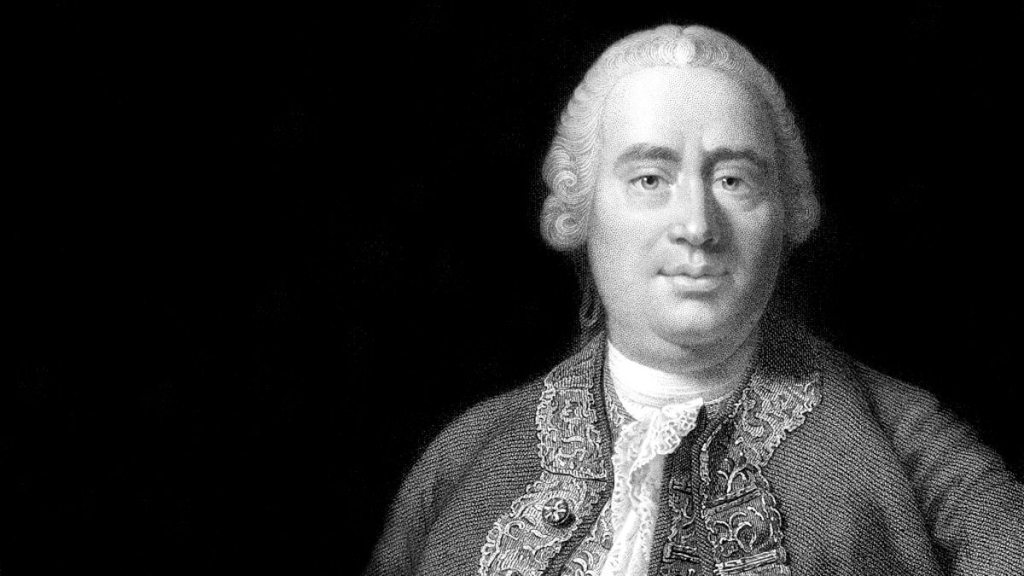
    In David Hume’s book A Treatise of Human Nature, he constructs what he calls the science of man. One cannot rightly understand any other species of science before this foundational science. The most radical and paradigm-shifting realization, for Hume, is that if all that exists are impressions and ideas, there are no grounds to truly justify putting any two impressions together causally, no matter how we might be inclined or disposed to do so, either by vulgar habit or through any rational means. This profound insight — that impressions are singular moments of a particular feeling with no relation except that of imagination — forced philosophers (including critics such as Reid) to deeply re-evaluate theories of knowledge acquisition and general epistemic concerns.

    Reid says this in his dedication for An Inquiry into the Human Mind, “His reasoning appeared to me to be just: there was therefore a necessity to call in question the principles upon which it was founded, or to admit the conclusions.” However, there are more reasons than the mere founding principles to reject Hume’s rationale. Drawing on a recent and rigorous debate, here are the five major critiques that make me skeptical of Hume’s skeptical conclusions.

    1. Circular Reasoning (The Problem of Induction)

    Hume uses causal reasoning (observing past regularities and inferring principles about human nature) to undermine the rational basis of causal reasoning. Suppose Hume justifies the separation of cause and correlation from experience, and he uses the distinction to describe and also argue against cause-and-effect as existing outside the mind (outside a relation/idea). In that case, he is making a circular argument. The implications of this circular reasoning are profound, as it challenges the very basis of our understanding of cause and effect. If belief in necessary connection is understood apart from reason, then there is equally no reason to undermine causal reasoning. The basis for an essential connection is reason and logical deduction. Thus, we can infer it from particular impressions, or it is not, and thus we can infer it based on specific impressions. Nothing falls on his skeptical rebuttal. You cannot easily conceive of a cause without an effect, any more than a premise without a conclusion.

    2. The Self-Refutation of Assertion and Communication

    The fact that Hume is making an argument refutes his point entirely. On what grounds can Hume either 1. make a distinction between kinds of necessity or 2. place either relations or matters of fact squarely into one category? Unthinkable things are equivalent to non-existent things, according to Hume. Therefore, you cannot make claims about external reality with reference to non-existent concepts. Even concepts of the imagination must exist by virtue of real impressions that have newly associated connections. Where are the impressions for a law such as non-contradiction?

    Hume believes we cannot know a table exists, so this is not simply descriptive. His outward attempts to convince others, and the fact that he has followers who support his theory, testify against him. Psychological interpretations of reality are false simply because meaning exists apart from the mechanical goings-on of the mind, and that meaning is communicable. The very fact that Hume is articulating his theory indicates such. Even a phenomenological view is better than psychologism.

    3. The Ad Hoc Assumption of External Existence

    Hume asks for the impression that gives rise to the idea of continuation and external existence separate from our perception, but where does he get the idea of continuation and external existence in the first place? If everything is sense impressions, how is he arguing against anything contrary to sense impressions? This is all very ad hoc. Calling concepts fabrications of the imagination and such. Does he not realize that by doing so, he’s condemning his very principles, which allowed him to condemn continuation and external existence?

    4. The Active Nature of Impressions, Not Raw Data

    There is also another popular critique of Hume. That is the notion of the tree falling in the woods. The tree falls without making a sound. A sound is something that can only be heard. The point being, Hume’s impressions already imply cause-and-effect before they are even interpreted or registered. Here is another thing. If two people hear a recording of an orchestra, but one of them has finely tuned ears for orchestration while the other does not, then, on first glance, the one with finely tuned ears will hear the counter-melody played on the violin. The one that does not is not surprising. However, Hume would have to acknowledge this as an impression reflected, interpreted by relation (all of which in a near-instant), yet that implies a higher acuity has been granted to the one in the realm of a particular sense. If sense is raw data, and therefore something that you receive and not create, it stands to reason that you should not be able to improve in the tacit reception of raw data. This analogy highlights the inherent contradictions in Hume’s argument, suggesting that our senses are not passive receptors of information but active interpreters that can improve over time.

    5. The Flawed Equivalence of Conceivability and Possibility

    A rigorous philosophical objection to Hume’s conclusion on necessity centers on his premise that what is conceivable is logically possible. Hume argues that because we can conceive of a cause without its usual effect (e.g., imagining the sun not rising) without contradiction, the necessary connection is not a truth of reason, but of habit. However, this conflates a psychological possibility (what we can imagine) with a metaphysical possibility (what could actually happen in reality). Contemporary critics argue that our inability to conceive of a contradiction in a causal break may reflect our epistemic limitations —our ignorance of deep, non-obvious natural laws —rather than a statement about the world itself. Therefore, the supposed “freedom” of the imagination that underpins his skepticism is merely a function of our ignorance of actual natural necessity, and his argument fails to prove that the necessity is truly absent from the objects themselves.

  • The Creation, the Fall, and the Problem of Suffering

    The Creation, the Fall, and the Problem of Suffering

    The problem of evil, death, and suffering has plagued humanity for millennia. How can a loving, all-powerful God allow such things? Many Christians have proposed scenarios suggesting that suffering helps us truly value goodness, or that our need for redemption demonstrates God’s great love. However, these explanations often fall short. Wouldn’t it be better to never experience sickness at all? And what about animal suffering, like a doe trapped in a forest fire?

    These challenging questions have a clear biblical explanation that is often overlooked when Christians disregard the evidence for a young creation perspective. From a biblical creationist viewpoint, the answers to suffering and death lie in three key areas:

    • The original perfect creation
    • The exercise of human free will
    • God’s righteous judgment following sin

    Genesis 1:31 states that God declared His creation “very good.” This description implies a state of perfection—a world without the decay and suffering we see today. This perfect state is fundamentally incompatible with the presence of death, disease, and suffering as original features of creation.

    The pivotal moment occurs in Genesis 2:17, where God warns Adam: “but of the tree of the knowledge of good and evil you shall not eat, for in the day that you eat of it you shall surely die.”

    The Hebrew text provides important insights:

    • Young’s Literal Translation renders “you shall surely die” as “dying thou dost die,” capturing the Hebrew infinitive absolute that emphasizes both the certainty and the process of death
    • The Hebrew word “בְּי֛וֹם” (be-yohm, “in the day”) with its prefix typically refers to an age or time period, indicating the consequences would begin in the age they ate the fruit, not necessarily instantaneously

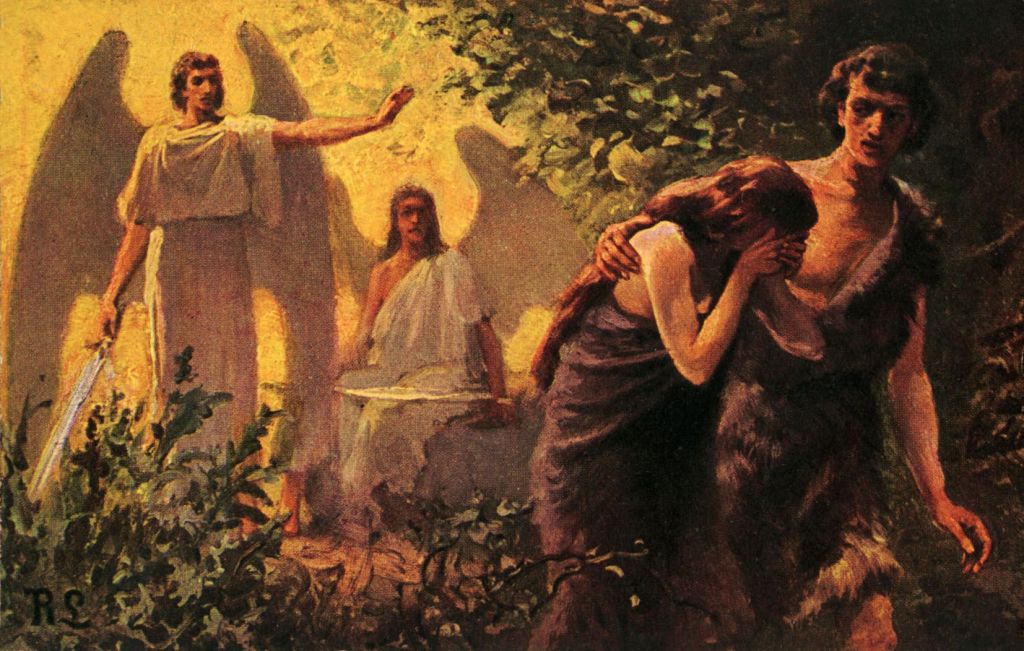
    When Adam and Eve disobeyed, God’s judgment was pronounced in Genesis 3:19: “By the sweat of your face you shall eat bread, till you return to the ground, for out of it you were taken; for you are dust, and to dust you shall return.” This confirmed that physical death entered the world, alongside the spiritual death that had already occurred at the moment of disobedience.

    The Bible clearly states that both humans and animals were originally vegetarian:

    “And God said, ‘Behold, I have given you every plant yielding seed that is on the face of all the earth, and every tree with seed in its fruit. You shall have them for food. And to every beast of the earth and to every bird of the heavens and to everything that creeps on the earth, everything that has the breath of life, I have given every green plant for food.’ And it was so.” (Genesis 1:29-30)

    This passage reveals a world initially free from predation and animal suffering before the Fall.

    An important distinction exists between plant life and animal life. After the Flood, God permitted humans to eat animal flesh: “Every moving thing that lives shall be food for you. And as I gave you the green plants, I give you everything. But you shall not eat flesh with its life, that is, its blood” (Genesis 9:3-4).

    The Hebrew term “nephesh chayyah” (living soul) applies to animals and humans, but not to plants, indicating a significant difference in the biblical concept of “life.” This distinction explains why the consumption of plants does not constitute death in the same sense as animal or human death.

    The ability to choose between good and evil is fundamental to human nature and dignity. Adam and Eve’s decision to disobey God was a deliberate exercise of free will with profound consequences. This choice introduced sin, death, and suffering into the world, demonstrating the reality and weight of moral responsibility.

    God valued human freedom enough to allow the possibility of wrong choices, even knowing the devastating consequences that would follow. This perspective highlights both God’s respect for human agency and the seriousness with which He views our moral decisions.

    The biblical creation account directly contradicts the evolutionary narrative, which posits death and competition as essential drivers of biological change. The biblical view presents:

    • A “very good” original creation
    • The introduction of death after the Fall
    • A fundamentally different understanding of Earth’s history

    If death existed before Adam’s sin, this would undermine the biblical connection between sin and death, and by extension, the necessity of Christ’s sacrificial death to overcome sin.

    The biblical account clearly states that death entered the world through Adam’s sin. 1 Corinthians 15:21-22, “For as by a man came death, by a man has come also the resurrection of the dead. For as in Adam all die, so also in Christ shall all be made alive.”  

    Conclusion

    The creation account, coupled with the concepts of free will and God’s judgment, provides a comprehensive explanation for the presence of evil, death, and suffering in our world. While these issues remain complex and deeply personal, the biblical narrative offers a framework for understanding them within the context of:

    • God’s original perfect creation
    • Humanity’s fall into sin
    • God’s redemptive plan

    By embracing the creationist perspective, we gain a deeper appreciation for the profound implications of the Fall and the hope offered through God’s promise of restoration. Rather than attempting to reconcile death and suffering as part of God’s original “very good” creation, we recognize them as intruders in a once-perfect world—intruders that will ultimately be defeated through Christ’s redemptive work.

  • The Paradox of Free Will

    The Paradox of Free Will

    The question of free will has perplexed theologians and philosophers for centuries. For one concerned with a proper exegesis of the Bible, the concept of free will is crucial for understanding human responsibility, divine justice, and the nature of God’s relationship with humanity.

    The Bible consistently presents humans as moral agents capable of making choices. Several passages highlight this:  

    • Deuteronomy 30:19: “I call heaven and earth to witness against you today, that I have set before you life and death, blessing and curse. Therefore choose life, that you and your offspring may live.”
    • Joshua 24:15: “And if it is evil in your eyes to serve the Lord, choose this day whom you will serve, whether the gods your fathers served in the region beyond the River, or the gods of the Amorites in whose land you dwell. But as for me and my house, we will serve the Lord.”
    • Revelation 3:20: “Behold, I stand at the door and knock. If anyone hears my voice and opens the door, I will come in to him and eat with him, and he with me.”
    • 2 Peter 3:9: “The Lord is not slow to fulfill his promise as some count slowness, but is patient toward you, not wishing that any should perish, but that all should reach repentance.”

    These verses establish that God has instilled in his image-bearing creation an ability to make moral choices. God has made these choices available to us and we are culpable for our sin in disobedience. This is, at the very least, a strong indication that mankind is accountable to God. Therefore, ruling out any form of determinism that denies human accountability.

    Theological Considerations

    The tension between God’s sovereignty and human free will is a central theological challenge. There is not a simple yes or no that we can give to the question of free will, because it exists in the particular. While God is omniscient and omnipotent, the Bible also affirms human accountability. Further, God can intercede in human activity, even moral activity.

    A common example of this is God’s hardening of the Pharaoh’s heart in Exodus. God foreknew Pharaoh’s hardened heart, but Pharaoh’s initial choices were what led to divine hardening. God’s foreknowledge does not negate Pharaoh’s agency. This is what’s called prescience. God knowing the future, but did not cause the future.

    God is in total control of how he behaves and interacts with his creation. That does not mean he has to necessarily micromanage every aspect such that this world then becomes, “the greatest of all possible worlds.” If you take the view that God plays a direct role in every particular, you will run into a few problems.

    Take the popular analogy of God as an author and humans as characters. This is often used to argue against free will. It goes like this: imagine all of humankind and the universe, itself, are figures of the imagination of God. Sure, in the narrative a certain character may act in this or that way based on their motivations and choices, yet these motivations and choices were all designed by the author. The author can write the characters in whatever way is pleasing.

    However, this analogy breaks down when considering God’s desire for genuine relationship. This view results in the rather absurd conclusion that God must have created us solely for the entertainment value. If humans are merely puppets, their love for God is not authentic. True love requires reciprocal choice which requires free will. Therefore, a world without free will results in a parasitic phantasy in the mind of God.

    There are two counters to this perspective that I encounter often. They have to do with the power of God and the will of God. I will address, first, the will of God.

    It is indeed the case that nothing can happen apart from God’s will. So when this criticism gets brought up the framing is such that it appears, therefore, God wills for all the choices which you have made in your life to have happened and in the manner in which they happened. However, there is a hidden assumption. Does God actually will that, or is what God values a more nuances proposition. I argue that God’s will can be to permit free agency. This is suggested heavily in scripture any time that God calls for a response from his creation. When God says “sin no more,” he is calling man to action. Why is it necessary for God to say this, if God is the only active agent in the process of who sins and who does not? Does it make sense for me to say to my bicycle, “stop pedaling.” According to some, it is not the bike doing the pedaling and, likewise, it is not the man doing the sinning (although the bike is moving and the man is acting they are not casually powerful).

    So does man having free will to choose actions that move away from God’s set path make God less powerful? This claim is often made against those who endorse a free-will-agency view. It is suggested that, if man can act apart from God’s purpose for their life (even if it’s not against God’s will) there still arises a problem in which God could plausibly create a world where every freewill agent he created would freely choose him. God can rig the game in his favor, so to speak. Apart from the fact that if this counterexample is true, it has graver consequence on the validity of a reformed view, there is a logical error in this understanding of the nature of free will.

    If God were to guarantee a specific outcome, such as every human freely choosing him, then the choice would no longer be truly free. It would be a predetermined response, a mere illusion of choice. True free will necessitates the genuine possibility of choosing otherwise, including the potential for rejection. To remove this possibility is to remove the essence of free will itself, rendering it meaningless. Therefore, to argue that God’s power is diminished by allowing genuine free will is to misunderstand that genuine free will requires the possibility of choosing against God.

    Three Main Arguments For Free Will:

    1. If God ordains every human action, including evil ones, then God becomes the author of evil. For the young earth creationist there is a clear perspective which attributes evil to the misuse of free will, consistent with the Genesis narrative of the Fall. God allows evil, but he does not create it.
    2. As Dr. Michael S. Heiser argues, humans are created in God’s image, which includes attributes like intelligence, emotion, and creativity. It is consistent that free will is also a component of this image. To deny free will is to diminish human dignity and responsibility. It is also rather arbitrary to leave out a significant part of man’s God-image for no apparent reason. 
    3. The sacrifice of Jesus Christ is presented as sufficient for all humanity. If salvation is not universally applied, it is due to individual rejection, not divine limitation. God’s desire that none shall perish, is a strong argument for free will.

    Conclusion

    In conclusion, the biblical narrative, particularly the passages emphasizing human choice and accountability, strongly supports the concept of free will. While the tension between divine sovereignty and human agency presents a complex theological challenge, the young-Earth creationist perspective offers a coherent framework for understanding this relationship. By recognizing God’s permissive will, acknowledging the importance of genuine relationship, and affirming the image of God in humanity, we can reconcile these seemingly contradictory truths. The rejection of a deterministic worldview, which reduces humans to mere puppets, underscores the significance of free will in the context of divine justice and love. Potentially, the concept of created heterozygosity and information theory can provide a scientific framework and biological basis for understanding the inherent capacity for diverse moral choices within the created order (although this is speculation). Ultimately, the existence of free will, while a mystery in some respects, is essential for understanding human responsibility, the nature of God’s relationship with humanity, and the very essence of love itself.

  • A Personal Reflection on Kierkegaard’s “Leap” of Faith

    A Personal Reflection on Kierkegaard’s “Leap” of Faith

    Reading Kierkegaard’s “Concluding Unscientific Postscript,” particularly his exploration of the “leap” of faith, resonates deeply with my own understanding of what it means to embrace a Christian worldview. It’s not merely about intellectual assent to historical or scientific propositions; it’s a profound, personal relationship that transcends the limitations of objective knowledge.

    Kierkegaard, through Climacus, articulates the “leap” as a radical discontinuity, a “shifting from one genus to another.” This echoes my own experience in realizing that, although science is fascinating, it is not what we’ll get our final grade on. Just as Climacus argues that historical facts, no matter how compelling, cannot generate faith, I’ve found that scientific evidence, while supportive, doesn’t compel belief on its own. Faith is not a matter of knowing the truth or knowing anything–it’s a leap. This leap is a move from the objective to the subjective, from the realm of empirical observation to the domain of personal commitment.

    The “ugly broad ditch” metaphor, about the unbridgeable gap between objective and subjective (relational, personal, i.e., of the subject) truth, illustrates the seemingly insurmountable divide between rational inquiry and the act of faith. No amount of scientific evidence or logical argumentation can bridge this gap. The leap is not a gradual progression but a decisive moment, a qualitative shift that defies rational calculation. It’s not about accumulating evidence until the scale tips; it’s about recognizing the inherent limitations of objective knowledge and choosing to embrace a truth that transcends it.

    Climacus’s critique of “earnestness” is particularly helpful. He argues that intellectual striving is “droll enough” in the context of the leap. I’ve encountered many who seek to intellectualize faith, to reduce it to a system of logical propositions. But faith, as Kierkegaard understands it, is not a product of intellectual prowess. It’s a matter of the will, a subjective commitment that transcends the realm of reason. One cannot “earnestly” approach faith; one either makes the leap or one does not. Yet, that is not to undermine neither the objective world nor the subjective relationship.

    Climacus’ satirical jab at those who attempt to “grab oneself by the neck a la Münchhausen” (a fictional character known for pulling himself out of a swamp by his own hair) speaks to the absurdity of trying to force faith through intellectual gymnastics. It’s a warning against self-deception, against pretending to have made the leap without truly engaging with its radical, personal nature. This resonates with a perspective which acknowledges the limitations of scientific and theological models and the necessity of a personal encounter with the Creator.

    You often here the accusation so and so has “blind faith” or that faith is not based on evidence. For me, the leap of faith is not a blind leap into irrationality. It’s a recognition that objective knowledge, while valuable, is insufficient to grasp the fullness of reality. It’s an acknowledgment that there are truths that transcend empirical observation, truths that can only be apprehended through a subjective act of commitment. In the context of creationism, the leap involves acknowledging the limitations of naturalistic explanations and embracing the possibility of a Creator whose handiwork is evident in the complexity and beauty of the natural world.

    This is valuable because we often feel the pressure to demonstrate the historical or the scientific aspect of our worldview as firmly in the historical or scientific. It is not. It is more. It is a leap into a new genus (Aristotelian category) of reality. It is a new domain of experience in addition to and separate from what we experience in religion, science, and the day-to-day.

    The leap is a deeply personal decision, one that each individual must make for themselves. It’s a journey that involves wrestling with doubt, questioning assumptions, and ultimately choosing to embrace a truth that resonates with the deepest parts of one’s being. It’s a move from stranglehold the “objective” has on our society into a complementary view which includes the “subjective”, a move that is essential for true faith.

    Citation

    1. Kierkegaard, Søren. Concluding Unscientific Postscript to Philosophical Fragments. Edited and translated by Howard V. Hong and Edna H. Hong, Princeton University Press, 1992.
  • Heisenberg, Kant, and the Limits of Science

    Heisenberg, Kant, and the Limits of Science

    In the realm of scientific inquiry, the intersection of epistemology (the study of knowledge) and physics often leads to profound philosophical debates. One such debate, highlighted by the clash between Kant’s universal claims and Heisenberg’s quantum observations, raises critical questions about the nature of causality and the limits of scientific knowledge.

    Kant posited universal axioms about metaphysics and epistemology, suggesting that certain principles, like causality, are a priori—foundational to all experience. Heisenberg, however, proposed that these principles might not apply in the quantum realm, where observations seem to reveal phenomena without clear causal explanations. This divergence raises a fundamental question: Can scientific theories, particularly those in quantum physics, challenge or redefine the very foundations of how we understand knowledge?

    The Challenge to Universal Causality

    Heisenberg, in his work “Physics and Beyond,” recounts a conversation with Grete Hermann, a Kantian philosopher, who argued that causality is not an empirical assertion but a necessary presupposition for all experience. Hermann emphasized that without a strict relationship between cause and effect, our observations would be mere subjective sensations, lacking objective correlates. She questioned how quantum mechanics could “relax” the causal law and still claim to be a branch of science.

    Heisenberg countered that in quantum mechanics, we only have access to statistical averages, not underlying processes. He cited the example of Radium B atoms emitting electrons, where the timing and direction of emission appear stochastic. He argued that extensive research reveals behaviors with no discernible causes, suggesting that causality breaks down at the quantum level.

    Creationist Perspectives on Causality and Randomness

    From a creationist perspective, the concept of randomness must be carefully examined. As David Bohm suggests in “Causality and Chance in Modern Physics,” random processes can exist within objects that are nonetheless real and independent of observation. This aligns with the idea that even seemingly random events may be governed by underlying, complex causal laws, perhaps beyond our current comprehension.

    Consider the Created Heterozygosity Hypothesis, which posits that organisms were created with “front-loaded” genomes, containing a high degree of genetic variation. This variation can manifest as apparent randomness in biological processes, but it does not negate the existence of underlying design and purpose.

    Furthermore, the concept of information theory, a key aspect of intelligent design, emphasizes that information is always the product of intelligent agency. The complexity and specificity observed in quantum phenomena may point to an underlying intelligence that operates beyond the limitations of our current scientific models.

    Addressing the Limits of Scientific Knowledge

    Hermann rightly pointed out that the absence of a discovered cause does not imply the absence of a cause. She argued that physicists should continue searching for underlying causes rather than abandoning the principle of causality altogether. This aligns with the creationist view that our understanding of the natural world is incomplete, and that further investigation may reveal deeper levels of design and purpose.

    The debate between Heisenberg and Hermann highlights the limitations of science. As creationists, we acknowledge that science is a powerful tool for understanding the natural world, but it is not the ultimate arbiter of truth. Methodological naturalism, the assumption that all phenomena can be explained by natural causes, arbitrarily excludes the possibility of non-natural agency.

    The Necessity of Universal Presuppositions

    Kant’s emphasis on universal presuppositions, like causality, underscores the importance of a solid epistemological foundation. Without these foundational beliefs, our ability to claim objective knowledge about the world is undermined. As Friedrich clarified, “Every perception refers to an observational situation that must be specified if experience is to result. The consequence of a perception can no longer be objectified in the manner of classical physics.” However, this does not mean that Kant’s principles are wrong, but that our understanding of observation has changed.

    The creationist worldview recognizes that the universe is the product of an intelligent Creator, whose design and purpose are evident in the natural world. Therefore, the search for causal explanations should not exclude the possibility of non-natural or intelligent causes.

    Conclusion: A Call for Intellectual Honesty

    The philosophical tension between Kant and Heisenberg reveals a fundamental issue at the intersection of epistemology and quantum physics. Heisenberg’s challenge to universal causality, while based on observed phenomena, ultimately undermines the foundation of scientific knowledge.

    As creationists, we advocate for intellectual honesty and a comprehensive approach to scientific inquiry. We acknowledge the limits of science and the importance of universal presuppositions, such as causality. We recognize that our understanding of the universe is incomplete and that further investigation, guided by both scientific rigor and a biblical worldview, may reveal deeper levels of design and purpose.

    The debate over causality in quantum mechanics should remind us that scientific advances, while valuable, should not lead us to abandon the foundational principles that make knowledge possible. Instead, we should embrace a holistic approach that integrates scientific observations with a robust epistemological framework, recognizing the limits of human understanding and the possibility of non-natural causes.

    Sources:

    Bohm, D. (1957). Causality and Chance in Modern Physics. Routledge & Kegan Paul.

    Heisenberg, W. (1971). Physics and Beyond: Encounters and Conversations. Harper & Row.