

Creation Questions

Category: History

  • Specious Extrapolations in Origin of Species

    Specious Extrapolations in Origin of Species

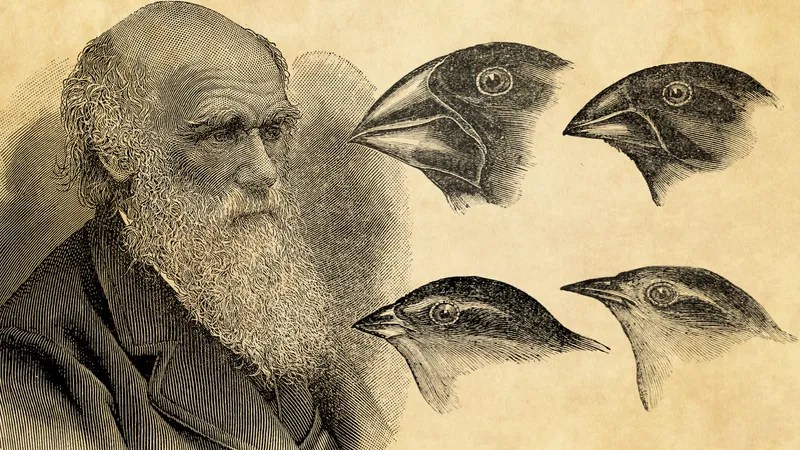
    In The Origin of Species, Darwin outlines evidence against the contemporary notion of species fixity, i.e., the idea that species represent immovable boundaries. He first uses the concepts of variations alongside his introduced mechanism of natural selection to create a plausible case for not merely variations, breeds, or races of organisms, but indeed species as commonly descended. Then, in chapter 4, after introducing a taxonomic tree as a picture of biota diversification, he writes, 

    “I see no reason to limit the process of modification, as now explained, to the formation of genera alone.”

    This sentence encapsulates the theoretical move that introduced the concept of universal common ancestry as a permissible and presently accepted scientific model. There is much to discuss regarding the arguments and warrants of the modern debate; however, let us take Darwin on his own terms. In those premier paragraphs of his seminal work, was Darwin’s extrapolation merited? Do the mechanisms and the evidence put forth for them bring us to this inevitable conclusion, or perhaps is the argument yet inconclusive? In this essay, we will argue that, while Darwin’s analogical reasoning was ingenious, his reliance on uniformitarianism and nominalism may render his extrapolation less secure than it first appears.

    In order to explain this, one must first understand the logical progression Darwin must follow. There are apparently three major assumptions—or premises. These are (1) analogism–artificial selection is analogous to natural selection, (2) uniformitarianism–variation is a mostly consistent and uniform process through biological time, and (3) nominalism–all variations and, therefore, all forms, vary by degree only and not kind. Here, we use ‘nominalism’ in the sense that species categories reflect human classification rather than intrinsic natural divisions, a position Darwin implicitly adopts.

    Of his three assumptions, one shows itself to be particularly strong—that of analogism. He spends most of the first four chapters defending this premise from multiple angles. He goes into detail on the powers of artificial selection in chapter one. His detail helps us identify which particular aspect of artificial selection leads to the observed robustness and fitness within its newly delineated populations. For this, he highlights mild selection over a long time. While one can see a drastic change in quick selection, this type of selection is less sustainable. It offers a narrower range of variable options (as variations take time to emerge).

    However, even with this carefully developed premise, let us not overlook its flaws. Notice that the evidence for the power of long-term selection is said to show that it brings about more robust or larger changes within some organisms in at least some environments. However, what evidence does Darwin present to demonstrate this case?

    Darwin does not provide a formal, quantifiable, long-term experiment to demonstrate the superiority of mild, long-term selection. Instead, he relies on descriptive, historical examples from breeders’ practices and then uses a logical argument based on the nature of variation. Thus, Darwin’s appeal demonstrates plausibility, not proof. This is an important distinction if one is to treat natural selection as a mechanism of universal transformation rather than limited adaptation.

    Even still, the extrapolation of differential selection and the environment’s role in that is not egregiously contentious or strange. Moreover, perhaps surprisingly, the assumption of analogism seems to be the most mutable extrapolation. The processes which stand in more doubt are Uniformitarianism and Nominalism (which will be the issue of the rest of this essay). The assumptions of uniformitarianism and nominalism undergird Darwin’s broader inference. When formalized, they resemble the following abductive arguments:

    Argument from Persistent Variation and Selection:

    Premise 1: If the mechanisms of variation and natural selection are persistent through time, then we can infer universal common descent.

    Premise 2: The mechanisms of variation and natural selection are persistent through time.

    Conclusion: Therefore, we can infer universal common descent.

    Argument from Difference in Degree:

    Premise 1: If all life differs only by degree and not kind, then we can infer that variation is a sufficient process to create all modern forms of life.

    Premise 2: All life differs only by degree and not kind,

    Conclusion: Therefore, we infer that variation is a sufficient process to create all modern forms of life.

    From these inferential conclusions, we see the importance of the two final assumptions as a fountainhead of the stream of Darwinian theory. 

    Before moving on, a few disclaimers are in order. It is worth noting that both arguments are contingent on the assumption that biology has existed throughout long geological time scales, but that is to be put aside for now. Notice we are now implicitly granting the assumption of analogism, and this imported doctrine is, likewise, essential to any common descent arguments. Finally, it is also worth clarifying that Darwin’s repeated insistence that ‘no line of demarcation can be drawn’ between varieties and species exemplifies the nominalist premise on which this argument from degree depends.

    To test these assumptions and determine whether they are as plausible as Darwin takes them to be, we first need to examine their constituent evidence and whether they provide empirical or logical support for Darwin’s thesis.

    The uniformitarian view can be presented in several ways. For Darwin, the view was the lens through which he saw biology, based on the Principles of Geology as articulated by Charles Lyell. Overall, it is not a poor inferential standard by any means. There are, however, certain caveats that limit its relevance in any science. Essentially, the mechanism in question must be precisely known, in that what X can do is never extrapolated into what X cannot do as part of its explanatory power. 

    How Darwin frames the matter is to say, “I observe X happening at small scales, therefore X can accumulate indefinitely.” This is not inherently incorrect or poor science in and of itself. However, one might ask: if one does not know the specific mechanisms involved in this variation process, is it really plausible to extrapolate these unknown variables far into the past or the future? Without knowing how variation actually works (no Mendelian genetics, no understanding of heredity’s material basis), Darwin is in a conundrum. He cannot justify the assumption that variation is unlimited if he cannot explain what it would even mean for that proposition to be true across deep time. It is like measuring the Mississippi’s sediment deposition rate, as was done for over 170 years, and extrapolating it back in time, when the river spanned the Gulf of Mexico. Alternatively, it is like measuring the processes of water erosion along the White Cliffs of Dover and extrapolating back in time until it reaches the European continent. In the first case, there is an apparent flaw in assuming constant deposition rates. In the second case, it is evident that water alone could not have caused the original break between England and France.

    It is the latter issue that is of deep concern here. There are too many unknowns in this equation to make it remotely scientific. It is not true that observing a phenomenon consistently requires understanding its mechanisms to extrapolate. However, Darwin’s theory is historical in a way that gravity, disease, or early mechanistic explanations were not. It cannot be immediately tested. Darwin, at best, leaves us to do the bulk of the grunt work after indulging in what can only be called guesswork.

    Darwin’s second line of reasoning to reach the universal common ancestry thesis relies heavily on a philosophical view of reality: nominalism. For nominalism to be correct, all traits and features would need to be quantitatively different (longer/shorter, harder/softer, heavier/lighter, rougher/smoother) without any that are qualitatively different (light/dark, solid/liquid/gas, color/sound, circle/square). In order to determine whether biology contains quality distinctions, we must understand how and in what way kinds become differentiable.

    The best polemical examples of discrete things, which differ more than just in degree, are colors. Colors could be hard to pin down on occasion. Darwin would have an easy time, as he did with species and variation taxonomical discourse, pointing out the divisive groups of thought in the classification of colors. Intuitively, there is a straightforward flow of some red to some blue. Even if they are mostly distinguishable, is not that cloud or wash of in-betweens enough to question the whole enterprise of genuine or authentic categories?

    However, moving from blue to yellow is not just an increase or decrease in something; it is a change to an entirely new color identity. It is a new form. The perceptual experience of blue is qualitatively different from the perceptual experience of yellow. Meaning they affect the viewer in particular and different ways. Hues, specifically, are indeed highly differentiated and are clear species within the genus of color. An artist mixing blue and yellow to create green does not thereby prove that blue and yellow are not real, distinct colors—only that intermediates are possible. Likewise, it is no business of the taxonomer, which calls some species and others variations, to negate the realness of any of these separate groups and count them as arbitrary and nominal. If colors—which exist on a continuous spectrum of wavelengths—still exhibit qualitative differences, then Darwin’s assumption that ALL biological features exist only on quantitative gradients becomes questionable.

    However, Darwin has done this very thing, representing different kinds of structures with different developmental origins and functional architectures as a mere spectrum with no distinct affections or purposes. Darwin needs variation to be infinitely plastic, but what does he say to real biological constraints? Is it ever hard to tell the difference between a plant and an animal? A beak from fangs? A feather from fur? A nail from a claw? A leaf from a pine needle? What if body plans have inherent organizational logic that resists certain transformations? He is treating organisms like clay that can be molded into any form, but what if they are more like architectural structures with load-bearing walls? Darwin is missing good answers to these concerns. All of which need answers in order to call the Argument from Difference in Degree sound or convincing. 

    This critique does not diminish Darwin’s achievement in proposing a naturalistic mechanism for adaptation. Instead, it highlights the philosophical assumptions embedded in his leap from observable variation to universal common descent. Assumptions that, in 1859, lacked the mechanistic grounding that would make such extrapolation scientifically secure.
  • The Five Major Challenges To Hume’s Skepticism

    The Five Major Challenges To Hume’s Skepticism

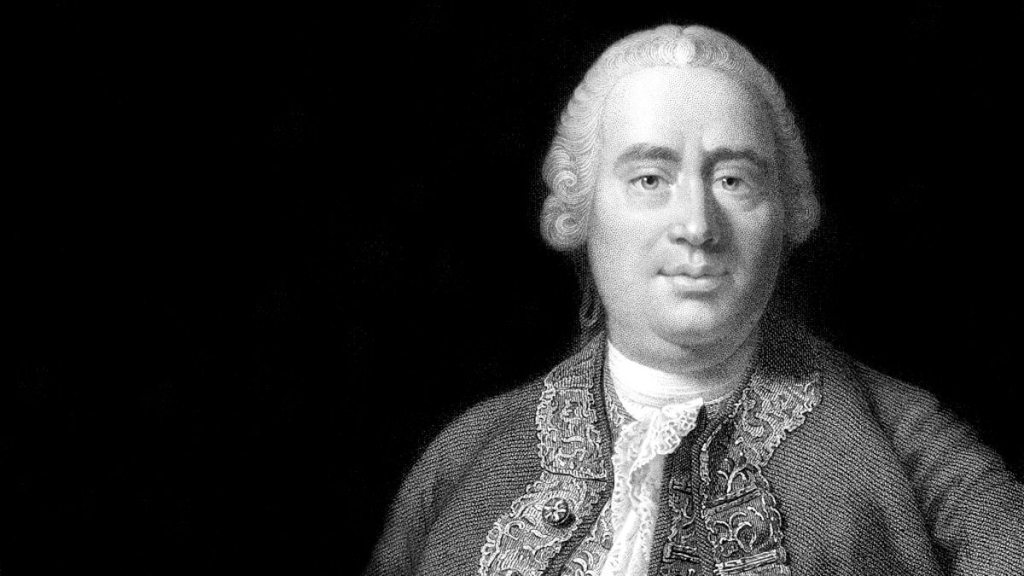
    In David Hume’s book A Treatise of Human Nature, he constructs what he calls the science of man. One cannot rightly understand any other species of science before this foundational science. The most radical and paradigm-shifting realization, for Hume, is that if all that exists are impressions and ideas, there are no grounds to truly justify putting any two impressions together causally, no matter how we might be inclined or disposed to do so, either by vulgar habit or through any rational means. This profound insight — that impressions are singular moments of a particular feeling with no relation except that of imagination — forced philosophers (including critics such as Reid) to deeply re-evaluate theories of knowledge acquisition and general epistemic concerns.

    Reid says this in his dedication for An Inquiry into the Human Mind, “His reasoning appeared to me to be just: there was therefore a necessity to call in question the principles upon which it was founded, or to admit the conclusions.” However, there are more reasons than the mere founding principles to reject Hume’s rationale. Drawing on a recent and rigorous debate, here are the five major critiques that make me skeptical of Hume’s skeptical conclusions.

    1. Circular Reasoning (The Problem of Induction)

    Hume uses causal reasoning (observing past regularities and inferring principles about human nature) to undermine the rational basis of causal reasoning. Suppose Hume justifies the separation of cause and correlation from experience, and he uses the distinction to describe and also argue against cause-and-effect as existing outside the mind (outside a relation/idea). In that case, he is making a circular argument. The implications of this circular reasoning are profound, as it challenges the very basis of our understanding of cause and effect. If belief in necessary connection is understood apart from reason, then there is equally no reason to undermine causal reasoning. The basis for an essential connection is reason and logical deduction. Thus, we can infer it from particular impressions, or it is not, and thus we can infer it based on specific impressions. Nothing falls on his skeptical rebuttal. You cannot easily conceive of a cause without an effect, any more than a premise without a conclusion.

    2. The Self-Refutation of Assertion and Communication

    The fact that Hume is making an argument refutes his point entirely. On what grounds can Hume either 1. make a distinction between kinds of necessity or 2. place either relations or matters of fact squarely into one category? Unthinkable things are equivalent to non-existent things, according to Hume. Therefore, you cannot make claims about external reality with reference to non-existent concepts. Even concepts of the imagination must exist by virtue of real impressions that have newly associated connections. Where are the impressions for a law such as non-contradiction?

    Hume believes we cannot know a table exists, so this is not simply descriptive. His outward attempts to convince others, and the fact that he has followers who support his theory, testify against him. Psychological interpretations of reality are false simply because meaning exists apart from the mechanical goings-on of the mind, and that meaning is communicable. The very fact that Hume is articulating his theory indicates such. Even a phenomenological view is better than psychologism.

    3. The Ad Hoc Assumption of External Existence

    Hume asks for the impression that gives rise to the idea of continuation and external existence separate from our perception, but where does he get the idea of continuation and external existence in the first place? If everything is sense impressions, how is he arguing against anything contrary to sense impressions? This is all very ad hoc. Calling concepts fabrications of the imagination and such. Does he not realize that by doing so, he’s condemning his very principles, which allowed him to condemn continuation and external existence?

    4. The Active Nature of Impressions, Not Raw Data

    There is also another popular critique of Hume. That is the notion of the tree falling in the woods. The tree falls without making a sound. A sound is something that can only be heard. The point being, Hume’s impressions already imply cause-and-effect before they are even interpreted or registered. Here is another thing. If two people hear a recording of an orchestra, but one of them has finely tuned ears for orchestration while the other does not, then, on first glance, the one with finely tuned ears will hear the counter-melody played on the violin. The one that does not is not surprising. However, Hume would have to acknowledge this as an impression reflected, interpreted by relation (all of which in a near-instant), yet that implies a higher acuity has been granted to the one in the realm of a particular sense. If sense is raw data, and therefore something that you receive and not create, it stands to reason that you should not be able to improve in the tacit reception of raw data. This analogy highlights the inherent contradictions in Hume’s argument, suggesting that our senses are not passive receptors of information but active interpreters that can improve over time.

    5. The Flawed Equivalence of Conceivability and Possibility

    A rigorous philosophical objection to Hume’s conclusion on necessity centers on his premise that what is conceivable is logically possible. Hume argues that because we can conceive of a cause without its usual effect (e.g., imagining the sun not rising) without contradiction, the necessary connection is not a truth of reason, but of habit. However, this conflates a psychological possibility (what we can imagine) with a metaphysical possibility (what could actually happen in reality). Contemporary critics argue that our inability to conceive of a contradiction in a causal break may reflect our epistemic limitations —our ignorance of deep, non-obvious natural laws —rather than a statement about the world itself. Therefore, the supposed “freedom” of the imagination that underpins his skepticism is merely a function of our ignorance of actual natural necessity, and his argument fails to prove that the necessity is truly absent from the objects themselves.

  • The Creation, the Fall, and the Problem of Suffering

    The Creation, the Fall, and the Problem of Suffering

    The problem of evil, death, and suffering has plagued humanity for millennia. How can a loving, all-powerful God allow such things? Many Christians have proposed scenarios suggesting that suffering helps us truly value goodness, or that our need for redemption demonstrates God’s great love. However, these explanations often fall short. Wouldn’t it be better to never experience sickness at all? And what about animal suffering, like a doe trapped in a forest fire?

    These challenging questions have a clear biblical explanation that is often overlooked when Christians disregard the evidence for a young creation perspective. From a biblical creationist viewpoint, the answers to suffering and death lie in three key areas:

    • The original perfect creation
    • The exercise of human free will
    • God’s righteous judgment following sin

    Genesis 1:31 states that God declared His creation “very good.” This description implies a state of perfection—a world without the decay and suffering we see today. This perfect state is fundamentally incompatible with the presence of death, disease, and suffering as original features of creation.

    The pivotal moment occurs in Genesis 2:17, where God warns Adam: “but of the tree of the knowledge of good and evil you shall not eat, for in the day that you eat of it you shall surely die.”

    The Hebrew text provides important insights:

    • Young’s Literal Translation renders “you shall surely die” as “dying thou dost die,” capturing the Hebrew infinitive absolute that emphasizes both the certainty and the process of death
    • The Hebrew word “בְּי֛וֹם” (be-yohm, “in the day”) with its prefix typically refers to an age or time period, indicating the consequences would begin in the age they ate the fruit, not necessarily instantaneously

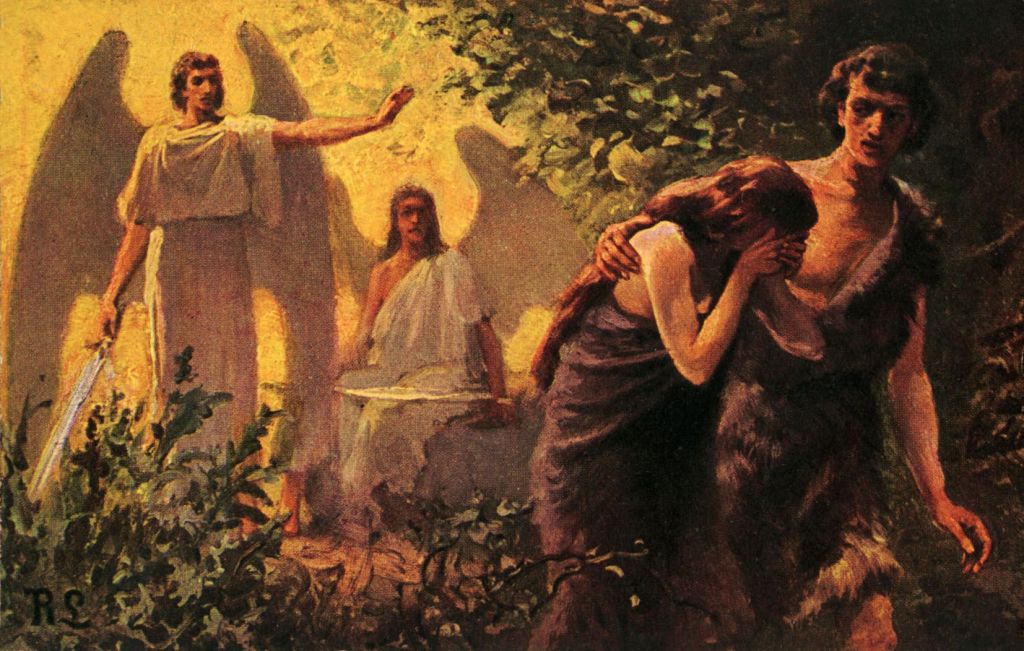
    When Adam and Eve disobeyed, God’s judgment was pronounced in Genesis 3:19: “By the sweat of your face you shall eat bread, till you return to the ground, for out of it you were taken; for you are dust, and to dust you shall return.” This confirmed that physical death entered the world, alongside the spiritual death that had already occurred at the moment of disobedience.

    The Bible clearly states that both humans and animals were originally vegetarian:

    “And God said, ‘Behold, I have given you every plant yielding seed that is on the face of all the earth, and every tree with seed in its fruit. You shall have them for food. And to every beast of the earth and to every bird of the heavens and to everything that creeps on the earth, everything that has the breath of life, I have given every green plant for food.’ And it was so.” (Genesis 1:29-30)

    This passage reveals a world initially free from predation and animal suffering before the Fall.

    An important distinction exists between plant life and animal life. After the Flood, God permitted humans to eat animal flesh: “Every moving thing that lives shall be food for you. And as I gave you the green plants, I give you everything. But you shall not eat flesh with its life, that is, its blood” (Genesis 9:3-4).

    The Hebrew term “nephesh chayyah” (living soul) applies to animals and humans, but not to plants, indicating a significant difference in the biblical concept of “life.” This distinction explains why the consumption of plants does not constitute death in the same sense as animal or human death.

    The ability to choose between good and evil is fundamental to human nature and dignity. Adam and Eve’s decision to disobey God was a deliberate exercise of free will with profound consequences. This choice introduced sin, death, and suffering into the world, demonstrating the reality and weight of moral responsibility.

    God valued human freedom enough to allow the possibility of wrong choices, even knowing the devastating consequences that would follow. This perspective highlights both God’s respect for human agency and the seriousness with which He views our moral decisions.

    The biblical creation account directly contradicts the evolutionary narrative, which posits death and competition as essential drivers of biological change. The biblical view presents:

    • A “very good” original creation
    • The introduction of death after the Fall
    • A fundamentally different understanding of Earth’s history

    If death existed before Adam’s sin, this would undermine the biblical connection between sin and death, and by extension, the necessity of Christ’s sacrificial death to overcome sin.

    The biblical account clearly states that death entered the world through Adam’s sin. 1 Corinthians 15:21-22, “For as by a man came death, by a man has come also the resurrection of the dead. For as in Adam all die, so also in Christ shall all be made alive.”  

    Conclusion

    The creation account, coupled with the concepts of free will and God’s judgment, provides a comprehensive explanation for the presence of evil, death, and suffering in our world. While these issues remain complex and deeply personal, the biblical narrative offers a framework for understanding them within the context of:

    • God’s original perfect creation
    • Humanity’s fall into sin
    • God’s redemptive plan

    By embracing the creationist perspective, we gain a deeper appreciation for the profound implications of the Fall and the hope offered through God’s promise of restoration. Rather than attempting to reconcile death and suffering as part of God’s original “very good” creation, we recognize them as intruders in a once-perfect world—intruders that will ultimately be defeated through Christ’s redemptive work.