
Creation Questions

Tag: bible

  • Jesus Is The Logos

    Jesus Is The Logos

    Based on a cross-sectional analysis of Revelation, John, Hebrews, Colossians, and 1 Timothy, the conclusion that the Logos is a pre-existent, divine person, Jesus Christ, is not merely suggested, but is textually inescapable.

    Let me explain:

    The argument begins with the most direct statement of identity and nature:

    “In the beginning was the WORD, and the Word was with God, and the Word was God.” — John 1:1

    This verse establishes two critical facts: The Word is eternal and the Word is distinct in personhood but shares divinity.

    This divine person is definitively named at the climactic moment of Christ’s return:

    “He was clothed with a robe dipped in blood, and His name is called The Word of God.” — Revelation 19:13

    Jesus is explicitly named the “Word of God.” Jesus is linked to the Word across multiple apostolic authors. John introduces the concept immediately:

    “All things were made through Him, and without Him nothing was made that was made.” — John 1:3

    The Apostle Paul and the author of Hebrews use the identical theological framework to describe Jesus:

    Colossians 1:16: “For by Him all things were created that are in heaven and that are on earth… All things were created through Him and for Him.”

    1 Corinthians 8:6: “…one Lord Jesus Christ, through whom are all things, and through whom we live.”

    Hebrews 1:2: “…spoken to us by His Son, through whom also He made the worlds.”

    Jesus is the sole, ultimate agent “through whom all things consist and were created.” Jesus of Nazareth must, therefore, be the Logos of John 1:1-3. This divine Creator is also the perfect revelation of the Father, known through the Incarnation.

    “The WORD became flesh and made his dwelling among us. We have seen his glory, the glory of the one and only Son, who came from the Father…” — John 1:14

    The mystery of godliness, that God appeared in the flesh (1 Timothy 3:16), is explained by the Logos taking on humanity. Furthermore, He is defined by His relationship to the invisible God:

    “He is the image of the invisible God…” — Colossians 1:15

    “[He is] the brightness of His glory and the express image of His person, and upholding all things by the word of His power…” — Hebrews 1:3

    The Greek word for “express image” in Hebrews 1:3 is charaktēr, meaning an exact replica or the imprint left by a stamp or engraving tool. This confirms that the person of Jesus (the Word) is the precise, perfect, and essential representation of the invisible Father.

    The evidence forms an irrefutable loop: The one who is called the Word of God (Revelation) is the one who is God (John 1:1). This same figure is the one through whom all things were created (John 1:3, Colossians 1:16, 1 Corinthians 8:6). Finally, this divine Creator became flesh (John 1:14) to reveal the exact image of God (Hebrews 1:3). The biblical testimony is unified, establishing the inescapable truth that Jesus Christ is the eternal, divine WORD (Logos).

  • The Pagan Can Be Saved?

    The Pagan Can Be Saved?

    Wesley Coleman

    In Søren Kierkegaard’s Concluding Unscientific Postscript to Philosophical Fragments, Johannes Climacus breaks down notions, based on objective and speculative interpretations, of Christianity, arguing instead that authentic religious truth is fundamentally subjective. As exemplified in his assertion on page 201 regarding truth in prayer, Climacus posits that the manner of an individual’s infinite, passionate relation to the eternal—even in the face of objective uncertainty or perceived untruth—is paramount, superseding intellectual assent to dogma or historical fact and revealing the inherent limitations of any detached, disinterested approach to faith. This stance foregrounds the lived reality of faith as a personal, strenuous endeavor, fundamentally separate from and perhaps at odds with objective inquiry.

    Kierkegaard, through Climacus, opens the Postscript by challenging what he identifies as problematic approaches to understanding Christianity: the historical, the speculative, and the superficial religiousness prevalent in his time. From the very start, Kierkegaard has separated the objective issue of the truth of Christianity from the subjective issue of the subjective individual’s relation to the truth of Christianity (Kierkegaard 22). Climacus contends that the objective point of view, whether focusing on historical or philosophical truth, is inherently flawed when applied to Christianity. An objective inquiry is characterized as “disinterested,” seeking to establish truth through critical consideration of reports or the relation of doctrine to eternal truth. However, for an individual concerned with their eternal happiness, historical certainty, being merely an “approximation,” is profoundly insufficient. This is because “an approximation is too little to build his happiness on and is so unlike an eternal happiness that no result can ensue” (Kierkegaard 22). The scholarly pursuit, while commendable in its erudition, ultimately “distracts” from the issue of an individual’s faith (Kierkegaard 14) and “suppresses” the vital dialectical clarity required for true understanding (Kierkegaard 11).

    The fundamental problem with objectivity, as Climacus elaborates, is its inherent detachment from the individual’s existence. The “objective subject” is too “modest” and “immodest” to include himself in the inquiry; he is interested but “not infinitely, personally, impassionedly interested in his relation to this truth concerning his own eternal happiness” (Kierkegaard 22). This detachment leads to a comical self-deception: “Precisely this is the basis of the scholar’s elevated calm and the parroter’s comical thoughtlessness” (Kierkegaard 22). Christianity, Climacus asserts, is spirit; spirit is inwardness; inwardness is subjectivity; subjectivity is essentially passion, and at its maximum an infinite, personally interested passion for one’s eternal happiness. Therefore, as soon as subjectivity is taken away, and passion from subjectivity, and infinite interest from passion, there is no decision whatsoever. The objective approach, by sacrificing this infinite, personal, impassioned interestedness, paradoxically makes one too objective to have eternal happiness. The speculative point of view fares no better, attempting to permeate Christianity with thought and and make it eternal thought. Yet, if Christianity is truly subjectivity, a matter of inward deepening, then objective indifference cannot come to know anything whatsoever. Like is understood only by like; thus, the knower must be in the requisite state of infinite, passionate interest. Speculative thought, in its objectivity, is “totally indifferent to his and my and your eternal happiness” (Kierkegaard 55), making its “happiness” an illusion as it attempts to be “exclusively eternal within time” (Kierkegaard 56).

    This critique of objective and speculative approaches, which Climacus gradually unfolds finally builds to a climax on page 201 with the passage at hand to be dealt with. The chapter titled “Subjective Truth, Inwardness; Truth Is Subjectivity” in Part Two directly introduces the core concept that “truth becomes appropriation, inwardness, subjectivity, and the point is to immerse oneself, existing, in subjectivity” (Kierkegaard 192). Climacus establishes that for an existing person, “the question about truth persists” not as an abstract definition, but as something to “exist in” (Kierkegaard 191). He dismisses mediation and the abstract “subject-object” as reverting to abstraction (Kierkegaard 192), emphasizing that “an existing person cannot be in two places at the same time, cannot be subject-object” (Kierkegaard 199). The “I-I” is explicitly called a “mathematical point that does not exist at all” (Kierkegaard 197), making it clear, for Climacus, that it is an impossibility for an existing human being to transcend their individual, passionate existence and achieve this abstract oneness. For Climacus, “only ethical and ethical-religious knowing is essential knowing” (Kierkegaard 198), and such knowing is always essentially related to the knower’s own existence.

    The critical distinction, immediately preceding the paragraph in question, is articulated as: “When the question about truth is asked objectively, truth is reflected upon objectively as an object to which the knower relates himself…When the question about truth is asked subjectively, the individual’s relation is reflected upon subjectively. If only the how of this relation is in truth, the individual is in truth, even if he in this way were to relate himself to untruth” (Kierkegaard 199). This prioritizes the mode of relation over the object of relation in its abstracted form separate from engagement.

    Then, the force of Climacus’s argument is finally catalyzed. He starts with an aggressive remark, “now, if the problem is to calculate where there is more truth…then there can be no doubt about the answer for anyone who is not totally botched by scholarship and science” (Kierkegaard 201). The harsh remark is true, it is intuitive for all those not steeped in abstraction. Those who are incapable of grasping the truth are those which have been immersed in a harmful way of thinking, and Climacus’s words are meant to provoke that truth. The phrase “botched by scholarship and science” in particular is reminiscent of the “infinite, personal, impassioned interestedness” which exists in the person practicing the objective issue (Kierkegaard 27).

    Climacus then explicitly rules out any notion of a neutral, balanced approach: “(and, as stated, simultaneously to be on both sides equally is not granted to an existing person but is only a beatifying delusion for a deluded I-I)” (Kierkegaard 201). This re-emphasizes that an existing human being cannot inhabit the abstract “subject-object” or “I-I,” which is a phantom of pure thought (Kierkegaard 192). To attempt such a mediation between objective and subjective approaches is a “delusion,” a fantastical escape from the concrete reality of existing. An existing person is always in a process of becoming (Kierkegaard 192), and this inherent motion precludes the static, all-encompassing view of the “I-I” (Kierkegaard 199).

    The core of the paragraph is the deep dichotomy presented: “whether on the side of the person who only objectively seeks the true God and the approximating truth of the God-idea or on the side of the person who is infinitely concerned that he in truth relate himself to God with the infinite passion of need” (Kierkegaard 201). The dichotomy is on one hand, “the true God” and “approximating truth of the God-idea” and on the other, “infinite passion of need.” The objective seeker remains stuck in approximate knowledge, which, as established earlier, is insufficient for eternal happiness. In contrast, the “infinite passion of need” signifies the highest subjectivity, where the individual’s “eternal happiness” is at stake. This passion brings true existential importance to the individual which is impossible through speculation.

    The paragraph then presents a provocative thought experiment: “If someone who lives in the midst of Christianity enters, with knowledge of the true idea of God, the house of God, the house of the true God, and prays, but prays in untruth, and if someone lives in an idolatrous land but prays with all the passion of infinity, although his eyes are resting upon the image of an idol—where, then, is there more truth?” (Kierkegaard 201). This scenario is incredibly hard for many who view Christianity as something true that one believes about God. This analogy turns that presumption on its head drawing a distinction between the “what” and the “how” of faith (Kierkegaard 199). The person who is a Christian by birth or culture or even intellectually “knows the true idea of God” and prays in the “house of the true God” (Kierkegaard 201) represents the objective approach that assumes faith is an afterthought and something that can be taken for granted. Such an individual may possess all the outward forms and correct doctrines, but their prayer is “in untruth” if it lacks the “infinite passion of inwardness” (Kierkegaard 201). This coincides with Climacus’s earlier assertion that objective Christianity is pagan (Kierkegaard 43), and to know a creed by rote is paganism, because Christianity is inwardness. Their knowledge, being disinterested, is merely a vanishing, unrecognizable atom of objective understanding, not transformative truth.

    Conversely, the individual in an “idolatrous land” who prays “with all the passion of infinity” to an idol, despite the objective untruth of the object, possesses “more truth” (Kierkegaard 201). The passion itself, the subjective “how” of their relation, is the determining factor. This is because the passion of the infinite is the very truth. Their worship, even of an objectively false god, carries the weight of authentic, boundless engagement.

    The conclusion of the paragraph drives the point home: “The one prays in truth to God although he is worshiping an idol; the other prays in untruth to the true God and is therefore in truth worshiping an idol” (Kierkegaard 201). This is not a relativistic dismissal of God’s objective existence, but a radical redefinition of what constitutes truth in the context of an individual’s religious life. The person who prays passionately to an idol is, in their inwardness, genuinely seeking the divine, and this “infinite passion of need” (Kierkegaard 201) creates a true “God-relation” (Kierkegaard 199). Their relation, despite the objective error, is in truth. This is, perhaps, a shocking revelation to the one who calls the heretic ‘unsaved’. Conversely, the person who prays to the true God without this infinite passion effectively turns the true God into an “idol”—an object of detached, intellectual assent rather than a living, transforming presence. This intellectual understanding without passionate inwardness is merely an illusion. It reduces the divine to an object for intellectual scrutiny, precisely what objective thought does to Christianity (Kierkegaard 52).

    Other possible interpretations of this passage, primarily objective or speculative, fail to grasp its radical thrust. An objective interpretation would likely focus on the factual untruth of idol worship, concluding that the idolater is in untruth regardless of their passion. This perspective, however, completely misses Climacus’s central argument that objective knowledge is “indifferent” to the knower’s existence and thus cannot engage with the truth of the infinite (Kierkegaard 193). For an objective approach, the truth is merely “an object to which the knower relates himself” (Kierkegaard 199), failing to recognize that “the individual’s relation is reflected upon subjectively” and the “how” is truth (Kierkegaard 199). This kind of detached, “disinterested” knowledge simply “distracts” from the issue of faith (Kierkegaard 28).

    A speculative interpretation might attempt to mediate between the two positions, arguing that the true understanding lies in a higher synthesis where both the object and the subjective relation are reconciled. However, Climacus explicitly rejects such mediation for an existing person, stating that to be in mediation is to be finished; to exist is to become. Speculative thought, in its quest for a “system” (Kierkegaard 14), “promises everything and keeps nothing at all” for the existing individual. It assumes a “presuppositionless” beginning and ultimately “dissolves into a make-believe” of understanding faith (Kierkegaard 14). By attempting to “explain and annul” the paradox, speculative thought implicitly “corrects” Christianity instead of explaining it. The absolute paradox, which is the eternal truth coming into existence in time, cannot be understood but only believed “against the understanding” (Kierkegaard 217). Any attempt to rationally encompass or explain it is “volatilization” and a return to paganism (Kierkegaard 217). The speculative thinker, in trying to become “objective” and “disappear from himself” (Kierkegaard 56), cannot grasp the existential truth of faith, which is grounded in passion and the “utmost exertion” of the existing self (Kierkegaard 55).

    Furthermore, the interpretation that reduces Christianity to a set of doctrines or a historical phenomenon, implicitly adopted by the “Christian in the midst of Christianity” who prays “in untruth” (Kierkegaard 201), is also rejected. Christianity is not a doctrine but a relational act. The relation to a doctrine is merely intellectual, whereas the relation to Christianity is one of faith, an infinite interestedness. To be a Christian by name only is a serious danger due to the fact that it removes the necessary “infinite passion” (Kierkegaard 16). Such individuals, by “praying in untruth” (Kierkegaard 201), effectively transform the true God into an “idol” (Kierkegaard 201), stripped of the demanding, transformative power that calls for infinite inwardness.

    In conclusion, the paragraph on page 201 profoundly encapsulates Climacus’s core thesis: Christianity’s truth is existentially actualized not through objective knowledge or speculative comprehension, but through the subjective individual’s absolute, infinite passion. This passion, born of an “infinite need” and held fast against “objective uncertainty” (Kierkegaard 203), is the very essence of faith, a “contradiction between the infinite passion of inwardness and the objective uncertainty” (Kierkegaard 204). The example of the passionate idolater versus the dispassionate Christian reveals that the intensity and truthfulness of the subjective relation far outweighs the objective accuracy of the object of worship when it comes to genuine religiousness. This radical emphasis on the “how” of faith over the “what” forces the reader to confront the demanding, terrifying, and deeply personal nature of becoming and being a Christian, a path that rejects the easy and fragmentary reassurances of objective certainty and speculative systems in favor of a lived, passionate existence with a holistic commitment. The radical conclusion that one can have objective error and be in real relationship with God. The radical conclusion that the pagan can be saved. Not because their idol is the true God, but because they have true faith.

    Climacus, Johannes. Concluding Unscientific Postscript to Philosophical Fragments. Edited and translated by Howard V. Hong and Edna H. Hong, Princeton UP, 1992.

  • The Creation, the Fall, and the Problem of Suffering

    The Creation, the Fall, and the Problem of Suffering

    The problem of evil, death, and suffering has plagued humanity for millennia. How can a loving, all-powerful God allow such things? Many Christians have proposed scenarios suggesting that suffering helps us truly value goodness, or that our need for redemption demonstrates God’s great love. However, these explanations often fall short. Wouldn’t it be better to never experience sickness at all? And what about animal suffering, like a doe trapped in a forest fire?

    These challenging questions have a clear biblical explanation that is often overlooked when Christians disregard the evidence for a young creation perspective. From a biblical creationist viewpoint, the answers to suffering and death lie in three key areas:

    • The original perfect creation
    • The exercise of human free will
    • God’s righteous judgment following sin

    Genesis 1:31 states that God declared His creation “very good.” This description implies a state of perfection—a world without the decay and suffering we see today. This perfect state is fundamentally incompatible with the presence of death, disease, and suffering as original features of creation.

    The pivotal moment occurs in Genesis 2:17, where God warns Adam: “but of the tree of the knowledge of good and evil you shall not eat, for in the day that you eat of it you shall surely die.”

    The Hebrew text provides important insights:

    • Young’s Literal Translation renders “you shall surely die” as “dying thou dost die,” capturing the Hebrew infinitive absolute that emphasizes both the certainty and the process of death
    • The Hebrew word “בְּי֛וֹם” (be-yohm, “in the day”) with its prefix typically refers to an age or time period, indicating the consequences would begin in the age they ate the fruit, not necessarily instantaneously

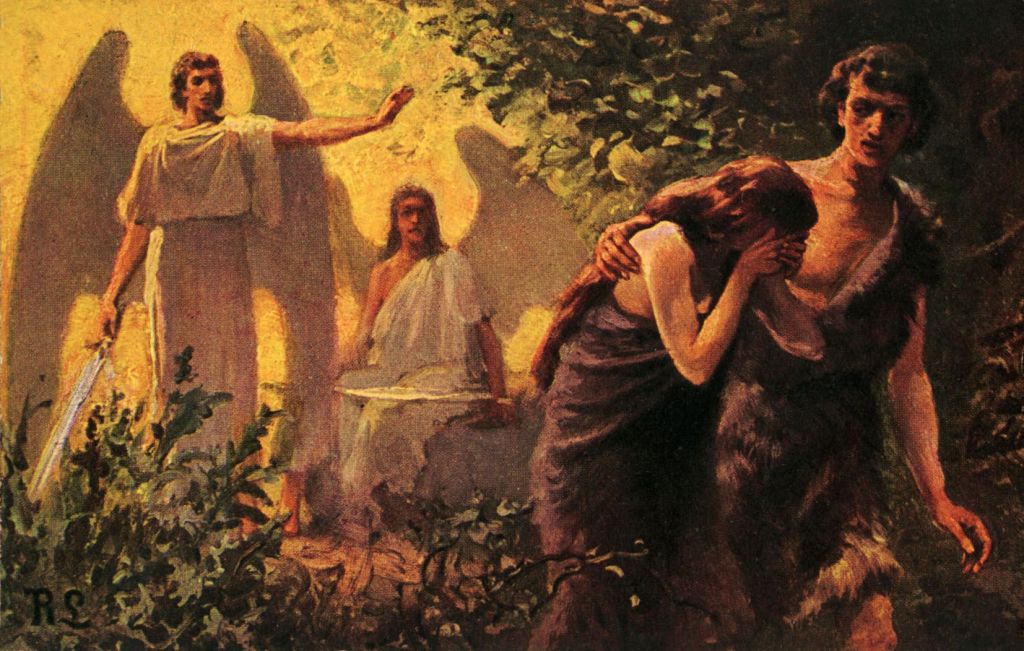
    When Adam and Eve disobeyed, God’s judgment was pronounced in Genesis 3:19: “By the sweat of your face you shall eat bread, till you return to the ground, for out of it you were taken; for you are dust, and to dust you shall return.” This confirmed that physical death entered the world, alongside the spiritual death that had already occurred at the moment of disobedience.

    The Bible clearly states that both humans and animals were originally vegetarian:

    “And God said, ‘Behold, I have given you every plant yielding seed that is on the face of all the earth, and every tree with seed in its fruit. You shall have them for food. And to every beast of the earth and to every bird of the heavens and to everything that creeps on the earth, everything that has the breath of life, I have given every green plant for food.’ And it was so.” (Genesis 1:29-30)

    This passage reveals a world initially free from predation and animal suffering before the Fall.

    An important distinction exists between plant life and animal life. After the Flood, God permitted humans to eat animal flesh: “Every moving thing that lives shall be food for you. And as I gave you the green plants, I give you everything. But you shall not eat flesh with its life, that is, its blood” (Genesis 9:3-4).

    The Hebrew term “nephesh chayyah” (living soul) applies to animals and humans, but not to plants, indicating a significant difference in the biblical concept of “life.” This distinction explains why the consumption of plants does not constitute death in the same sense as animal or human death.

    The ability to choose between good and evil is fundamental to human nature and dignity. Adam and Eve’s decision to disobey God was a deliberate exercise of free will with profound consequences. This choice introduced sin, death, and suffering into the world, demonstrating the reality and weight of moral responsibility.

    God valued human freedom enough to allow the possibility of wrong choices, even knowing the devastating consequences that would follow. This perspective highlights both God’s respect for human agency and the seriousness with which He views our moral decisions.

    The biblical creation account directly contradicts the evolutionary narrative, which posits death and competition as essential drivers of biological change. The biblical view presents:

    • A “very good” original creation
    • The introduction of death after the Fall
    • A fundamentally different understanding of Earth’s history

    If death existed before Adam’s sin, this would undermine the biblical connection between sin and death, and by extension, the necessity of Christ’s sacrificial death to overcome sin.

    The biblical account clearly states that death entered the world through Adam’s sin. 1 Corinthians 15:21-22, “For as by a man came death, by a man has come also the resurrection of the dead. For as in Adam all die, so also in Christ shall all be made alive.”  

    Conclusion

    The creation account, coupled with the concepts of free will and God’s judgment, provides a comprehensive explanation for the presence of evil, death, and suffering in our world. While these issues remain complex and deeply personal, the biblical narrative offers a framework for understanding them within the context of:

    • God’s original perfect creation
    • Humanity’s fall into sin
    • God’s redemptive plan

    By embracing the creationist perspective, we gain a deeper appreciation for the profound implications of the Fall and the hope offered through God’s promise of restoration. Rather than attempting to reconcile death and suffering as part of God’s original “very good” creation, we recognize them as intruders in a once-perfect world—intruders that will ultimately be defeated through Christ’s redemptive work.

  • Presuppositionalism: A Tool for Christian Apologetics?

    Presuppositionalism: A Tool for Christian Apologetics?

    In the landscape of Christian apologetics, presuppositional apologetics presents a distinctive approach to understanding knowledge, reality, and belief. This philosophical method, pioneered by thinkers like Cornelius Van Til in the 1920s, challenges fundamental assumptions about epistemology and seeks to demonstrate the unique explanatory power of a biblical worldview.

    Understanding Presuppositionalism

    Presuppositional apologetics advances a bold claim: Christian theism provides the only coherent framework for understanding logic, morality, and the nature of knowledge itself. Unlike classical apologetic approaches that seek to prove God’s existence through external evidence, this method argues that the very possibility of rational thought depends on acknowledging a divine foundation.

    The core principle is that every individual, consciously or unconsciously, operates from a set of foundational beliefs about reality. These presuppositions shape how we interpret evidence, understand causality, and construct meaning. Presuppositionalists argue that a naturalistic worldview ultimately fails to provide a stable ground for rational inquiry.

    The Philosophical Challenge of Solipsism

    At the heart of this approach lies a profound philosophical challenge: the problem of solipsism. If we cannot definitively prove the existence of anything beyond our own mind, how can we claim to know anything with certainty? This epistemological dilemma threatens to reduce all knowledge to a subjective, potentially illusory experience.

    Traditional empiricist approaches, as critiqued by philosophers like David Hume, struggle to overcome this fundamental uncertainty. Empiricism, which relies solely on sensory experience and observation, cannot conclusively escape the possibility that our perceptions are merely internal constructs with no correspondence to an external reality.

    The Divine Foundation of Knowledge

    The presuppositional argument proposes a radical solution: God’s existence as the transcendent Creator provides the necessary foundation for objective knowledge. This perspective argues that:

    1. An objective reality exists independent of human perception
    2. Universal principles of logic and morality are grounded in God’s unchanging nature
    3. Human reasoning gains its validity from a divine source of rationality

    By positioning God as the ultimate source of knowledge, this approach attempts to resolve the solipsistic dilemma. The created world, according to this view, is not a mental construct but a real, intentionally designed system that reflects divine intelligence.

    Scientific and Philosophical Implications

    While traditional creation science is often criticized, presuppositional apologetics seeks to integrate philosophical reasoning with scientific inquiry. Concepts like baraminology (the study of created kinds) and catastrophic plate tectonics are presented as attempts to provide alternative explanatory frameworks for natural phenomena.

    However, it is crucial to recognize that these arguments remain contentious within the broader scientific community. The strength of the presuppositional approach lies not in its empirical evidence but in its philosophical critique of naturalistic epistemology.

    Critiques and Limitations

    The presuppositional method is not without significant challenges:

    1. It can appear circular, assuming the very thing it seeks to prove
    2. It may not convincingly engage with those who do not share its initial theological premises
    3. It risks oversimplifying complex philosophical and scientific questions

    Despite these limitations, the approach offers a provocative challenge to purely materialistic worldviews, forcing a deeper examination of the foundations of knowledge.

    Conclusion

    Presuppositional apologetics represents a sophisticated attempt to ground human understanding in a transcendent perspective. By challenging the foundations of knowledge and highlighting the limitations of naturalistic epistemology, it invites a more nuanced conversation about the nature of reality, reason, and belief.

    While not universally convincing, this approach provides a thought-provoking framework for those seeking to understand the relationship between faith, philosophy, and scientific inquiry.

  • How Created Heterozygosity Explains Genetic Variation

    How Created Heterozygosity Explains Genetic Variation

    A Conceptual Introduction:

    The study of genetics reveals a stunning tapestry of diversity within the living world. While evolutionary theory traditionally attributes this variation to random mutations accumulated over vast stretches of time, a creationist perspective offers a compelling alternative: Created Heterozygosity. This hypothesis proposes that God designed organisms with pre-existing genetic variability, allowing for adaptation and diversification within created kinds. This concept not only aligns with biblical accounts but also provides a more coherent explanation for observed genetic phenomena.

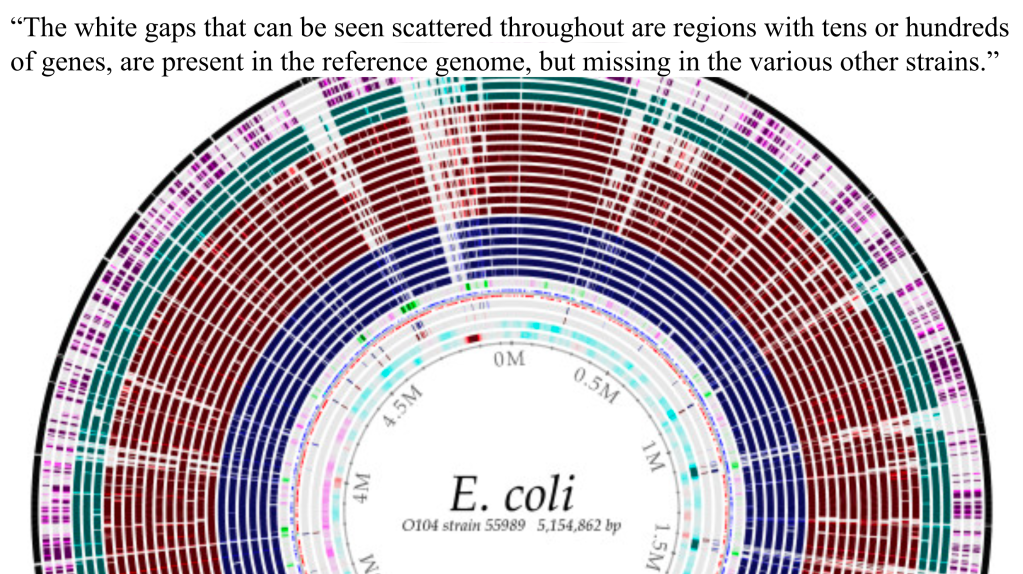
    The evolutionary narrative hinges on the power of mutations to generate novel genetic information. However, the overwhelming evidence points to the deleterious nature of most mutations. This can be seen in the famous Long-Term Evolutionary Experiments with E. coli. Notice, in the graphic below (Hofwegen, 2016), just how much information gets lost due to selection pressures and mutation. This is known as genetic entropy, the gradual degradation of the genome due to accumulated harmful mutations, poses a significant challenge to the idea that random mutations can drive the complexification of life. Furthermore, the sheer number of beneficial mutations required to explain the intricate design of living organisms strains credulity.

    “Genomic DNA sequencing revealed an amplification of the citT and dctA loci and DNA rearrangements to capture a promoter to express CitT, aerobically. These are members of the same class of mutations identified by the LTEE. We conclude that the rarity of the LTEE mutant was an artifact of the experimental conditions and not a unique evolutionary event. No new genetic information (novel gene function) evolved.”

    In contrast, Created Heterozygosity suggests that God, the master engineer, imbued organisms with a pre-programmed potential for variation. Just as human engineers design systems with built-in flexibility, God equipped his creation with the genetic resources necessary to adapt to diverse environments. This concept resonates with the biblical affirmation that God created organisms “according to their kinds,” implying inherent boundaries within which variation can occur. Recent research, such as the ENCODE project and studies on the dark proteome, has revealed an astonishing level of complexity and functionality within the genome, further supporting the idea of a designed system.

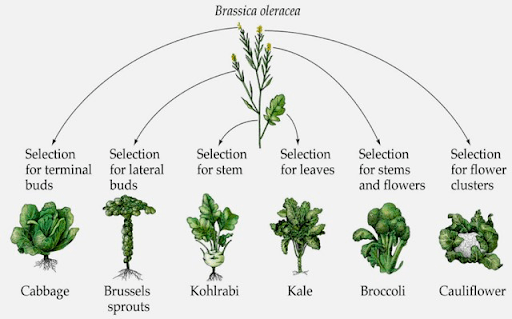
    Baraminology, the study of created kinds, provides empirical support for Created Heterozygosity. The rapid diversification observed within baramins, such as the canid or feline kinds, can be readily explained by the expression of pre-existing genetic information. For example, the diverse array of dog breeds can be traced back to the inherent genetic variability within the canine kind, rather than the accumulation of countless beneficial mutations.

    Of course, objections arise. The role of mutations in adaptation is often cited as evidence against Created Heterozygosity. However, certain mutations may represent the expression of designed backup systems or pre-programmed responses to environmental changes. Moreover, the vast majority of observed genetic variation can be attributed to the shuffling and expression of existing genetic information, rather than the creation of entirely new information.

    The implications for human genetics are profound. Created Heterozygosity elegantly explains the high degree of genetic variation within the human population, while remaining consistent with the biblical account of Adam and Eve as the progenitors of all humanity. Research on Mitochondrial Eve and Y-Chromosome Adam/Noah further supports the idea of a recent, common ancestry for all people.

    In conclusion, Created Heterozygosity provides a compelling framework for understanding genetic variation from a creationist perspective. By acknowledging the limitations of mutation-driven evolution and recognizing the evidence for designed diversity, we can appreciate the intricate wisdom of the Creator and the coherence of the biblical narrative. This concept invites us to explore the vastness of genetic diversity with a renewed sense of awe, recognizing the pre-programmed potential inherent in God’s magnificent creation.

    Citation:

    1. Van Hofwegen, D. J., Hovde, C. J., & Minnich, S. A. (2016). Rapid Evolution of Citrate Utilization by Escherichia coli by Direct Selection Requires citT and dctA. Journal of bacteriology, 198(7), 1022–1034.
  • The Paradox of Free Will

    The Paradox of Free Will

    The question of free will has perplexed theologians and philosophers for centuries. For one concerned with a proper exegesis of the Bible, the concept of free will is crucial for understanding human responsibility, divine justice, and the nature of God’s relationship with humanity.

    The Bible consistently presents humans as moral agents capable of making choices. Several passages highlight this:  

    • Deuteronomy 30:19: “I call heaven and earth to witness against you today, that I have set before you life and death, blessing and curse. Therefore choose life, that you and your offspring may live.”
    • Joshua 24:15: “And if it is evil in your eyes to serve the Lord, choose this day whom you will serve, whether the gods your fathers served in the region beyond the River, or the gods of the Amorites in whose land you dwell. But as for me and my house, we will serve the Lord.”
    • Revelation 3:20: “Behold, I stand at the door and knock. If anyone hears my voice and opens the door, I will come in to him and eat with him, and he with me.”
    • 2 Peter 3:9: “The Lord is not slow to fulfill his promise as some count slowness, but is patient toward you, not wishing that any should perish, but that all should reach repentance.”

    These verses establish that God has instilled in his image-bearing creation an ability to make moral choices. God has made these choices available to us and we are culpable for our sin in disobedience. This is, at the very least, a strong indication that mankind is accountable to God. Therefore, ruling out any form of determinism that denies human accountability.

    Theological Considerations

    The tension between God’s sovereignty and human free will is a central theological challenge. There is not a simple yes or no that we can give to the question of free will, because it exists in the particular. While God is omniscient and omnipotent, the Bible also affirms human accountability. Further, God can intercede in human activity, even moral activity.

    A common example of this is God’s hardening of the Pharaoh’s heart in Exodus. God foreknew Pharaoh’s hardened heart, but Pharaoh’s initial choices were what led to divine hardening. God’s foreknowledge does not negate Pharaoh’s agency. This is what’s called prescience. God knowing the future, but did not cause the future.

    God is in total control of how he behaves and interacts with his creation. That does not mean he has to necessarily micromanage every aspect such that this world then becomes, “the greatest of all possible worlds.” If you take the view that God plays a direct role in every particular, you will run into a few problems.

    Take the popular analogy of God as an author and humans as characters. This is often used to argue against free will. It goes like this: imagine all of humankind and the universe, itself, are figures of the imagination of God. Sure, in the narrative a certain character may act in this or that way based on their motivations and choices, yet these motivations and choices were all designed by the author. The author can write the characters in whatever way is pleasing.

    However, this analogy breaks down when considering God’s desire for genuine relationship. This view results in the rather absurd conclusion that God must have created us solely for the entertainment value. If humans are merely puppets, their love for God is not authentic. True love requires reciprocal choice which requires free will. Therefore, a world without free will results in a parasitic phantasy in the mind of God.

    There are two counters to this perspective that I encounter often. They have to do with the power of God and the will of God. I will address, first, the will of God.

    It is indeed the case that nothing can happen apart from God’s will. So when this criticism gets brought up the framing is such that it appears, therefore, God wills for all the choices which you have made in your life to have happened and in the manner in which they happened. However, there is a hidden assumption. Does God actually will that, or is what God values a more nuances proposition. I argue that God’s will can be to permit free agency. This is suggested heavily in scripture any time that God calls for a response from his creation. When God says “sin no more,” he is calling man to action. Why is it necessary for God to say this, if God is the only active agent in the process of who sins and who does not? Does it make sense for me to say to my bicycle, “stop pedaling.” According to some, it is not the bike doing the pedaling and, likewise, it is not the man doing the sinning (although the bike is moving and the man is acting they are not casually powerful).

    So does man having free will to choose actions that move away from God’s set path make God less powerful? This claim is often made against those who endorse a free-will-agency view. It is suggested that, if man can act apart from God’s purpose for their life (even if it’s not against God’s will) there still arises a problem in which God could plausibly create a world where every freewill agent he created would freely choose him. God can rig the game in his favor, so to speak. Apart from the fact that if this counterexample is true, it has graver consequence on the validity of a reformed view, there is a logical error in this understanding of the nature of free will.

    If God were to guarantee a specific outcome, such as every human freely choosing him, then the choice would no longer be truly free. It would be a predetermined response, a mere illusion of choice. True free will necessitates the genuine possibility of choosing otherwise, including the potential for rejection. To remove this possibility is to remove the essence of free will itself, rendering it meaningless. Therefore, to argue that God’s power is diminished by allowing genuine free will is to misunderstand that genuine free will requires the possibility of choosing against God.

    Three Main Arguments For Free Will:

    1. If God ordains every human action, including evil ones, then God becomes the author of evil. For the young earth creationist there is a clear perspective which attributes evil to the misuse of free will, consistent with the Genesis narrative of the Fall. God allows evil, but he does not create it.
    2. As Dr. Michael S. Heiser argues, humans are created in God’s image, which includes attributes like intelligence, emotion, and creativity. It is consistent that free will is also a component of this image. To deny free will is to diminish human dignity and responsibility. It is also rather arbitrary to leave out a significant part of man’s God-image for no apparent reason. 
    3. The sacrifice of Jesus Christ is presented as sufficient for all humanity. If salvation is not universally applied, it is due to individual rejection, not divine limitation. God’s desire that none shall perish, is a strong argument for free will.

    Conclusion

    In conclusion, the biblical narrative, particularly the passages emphasizing human choice and accountability, strongly supports the concept of free will. While the tension between divine sovereignty and human agency presents a complex theological challenge, the young-Earth creationist perspective offers a coherent framework for understanding this relationship. By recognizing God’s permissive will, acknowledging the importance of genuine relationship, and affirming the image of God in humanity, we can reconcile these seemingly contradictory truths. The rejection of a deterministic worldview, which reduces humans to mere puppets, underscores the significance of free will in the context of divine justice and love. Potentially, the concept of created heterozygosity and information theory can provide a scientific framework and biological basis for understanding the inherent capacity for diverse moral choices within the created order (although this is speculation). Ultimately, the existence of free will, while a mystery in some respects, is essential for understanding human responsibility, the nature of God’s relationship with humanity, and the very essence of love itself.

  • My Top 5 Favorite Creation Podcasts

    My Top 5 Favorite Creation Podcasts

    As a creation enthusiast, I’m always on the lookout for resources that delve into the fascinating intersection of science and the biblical narrative. Podcasts have become a fantastic avenue for exploring these topics in depth, and I’ve curated a list of my top five favorites that consistently deliver insightful and engaging content.

    1. Let’s Talk Creation:

    This podcast is a gem for anyone seeking thoughtful and accessible discussions on creation science. Hosted by two PhD creationists, Todd Wood (baraminology) and Paul Garner (geology), “Let’s Talk Creation” offers bimonthly episodes that are both informative and easy to digest. What I appreciate most is their level-headed approach and their ability to break down complex scientific concepts into understandable terms. You’ll walk away from each episode with new insights and a deeper appreciation for the creation model.

    2. Standing For Truth:

    “Standing For Truth” is a powerhouse of creation content. With a vast database of interviews featuring subject experts from every relevant field, this podcast provides a comprehensive exploration of creation science. While it can get a little technical at times, the in-depth discussions and expert perspectives make it a valuable resource for those seeking a more rigorous understanding of the evidence.

    3. Creation Ministries International:

    For high-quality production and a wide variety of topics, “Creation Ministries International” delivers. Their videos are visually engaging and provide digestible explanations of creation science concepts including a wide range of scientists, philosophers, and theologians. While they may not always delve into the deepest technical details, their content is perfect for those seeking a solid overview of the evidence and its implications.

    4. Creation Unfolding:

    If you’re particularly interested in geology and paleontology, “Creation Unfolding” is a must-listen. The main host, Dr. K. P. Coulson, a well-researched geologist, brings a wealth of knowledge to the table, and the recurring guests provide diverse perspectives on these fascinating subjects. The laser-focused approach of this podcast makes it an invaluable resource for those seeking a deeper understanding of Earth’s history from a creationist perspective.

    5. Biblical Genetics:

    Dr. Robert Carter’s personal podcast, “Biblical Genetics,” is a treasure trove of information for anyone interested in the intersection of genetics and creation science. Dr. Carter, a renowned geneticist, tackles complex topics with clarity and precision, responding to popular-level content creators and professors with detailed explanations and analysis of technical papers. He skillfully guides listeners through intricate genetic concepts, making them accessible to a wider audience.


    These five podcasts represent a diverse range of perspectives and approaches to creation science. Whether you’re a seasoned creationist or just beginning to explore these topics, you’re sure to find valuable insights and engaging discussions within these podcasts.

  • Embryonic Similarities – Common Design, Not Common Descent

    Embryonic Similarities – Common Design, Not Common Descent

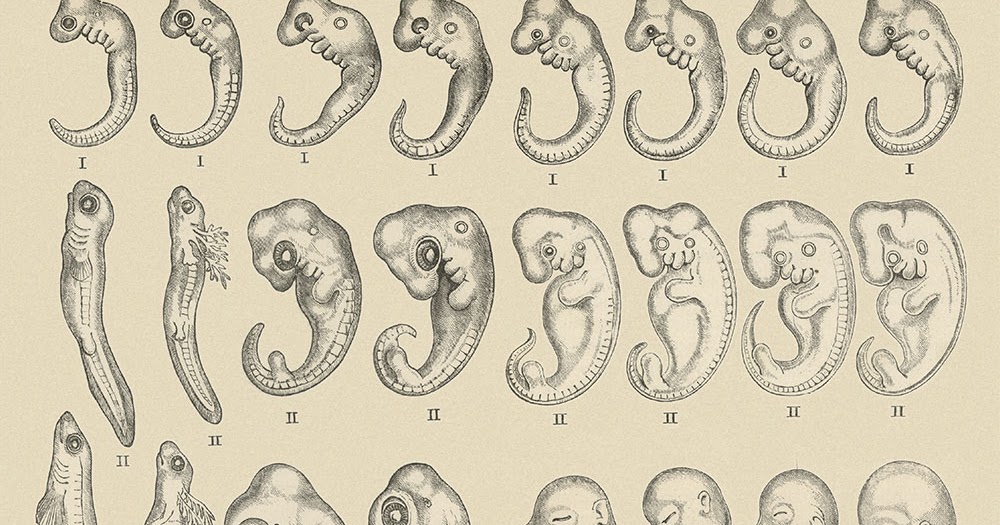
    For decades, textbook illustrations of Haeckel’s Embryos have been presented as a compelling visual argument for evolution. These side-by-side comparisons of vertebrate embryos, purportedly showing striking similarities in early developmental stages, have been used to argue for a shared evolutionary ancestry. However, a closer look reveals a story of misrepresentation and manipulation, rather than an accurate depiction of embryological evidence.

    Ernst Haeckel, a fervent supporter of Darwin’s theory, produced these drawings in the late 19th century. Yet, his illustrations were not faithful representations of actual embryos. He exaggerated similarities, omitted or altered developmental stages, and even used the same woodcut to represent different species. This deliberate manipulation aimed to bolster the concept of “recapitulation,” the now-discredited idea that embryonic development mirrors evolutionary history.

    The reality is that vertebrate embryos are far more distinct in their early stages than Haeckel portrayed. His illustrations were exposed as fraudulent even in his own time, yet they persisted in textbooks for generations, a testament to the power of visual propaganda in shaping scientific narratives.

    The argument that similarities in vertebrate embryos indicate a shared evolutionary history is challenged by several points.

    Challenging the “Recapitulation” Narrative

    One of the central tenets of the evolutionary argument is that embryonic development (“ontogeny”) reflects an organism’s evolutionary history (“phylogeny”). However, this concept, often summarized as “ontogeny recapitulates phylogeny,” is deeply flawed.

    • Embryonic Structures vs. Adult Structures: Embryonic features like pharyngeal slits and tails do not simply recapitulate the adult forms of ancestral organisms. Instead, they serve specific functions within the embryonic stage, often disappearing or transforming into entirely different structures in the adult. The embryonic mode of life is distinct from the adult mode.
    • “Recapitulation” is a Creationist Concept: The recognition of embryonic similarities predates Darwin. Creationists viewed these similarities as a “God-given ‘pattern of unification’ that reflected the unity of nature,” emphasizing a common Creator’s design rather than evolutionary lineage.
    • Unique Development: The unique eye development in lampreys, transitioning from larval eyespots to adult camera eyes, demonstrates that developmental pathways do not always follow a simple, linear evolutionary progression.
    • Order of Development: The occasional appearance of later-stage developmental features earlier in the embryonic process further complicates the evolutionary narrative.

    Genetic and Developmental Complexity

    The genetic and developmental complexity underlying embryonic similarities points to intelligent design:

    • Genetic Similarity: The fact that damage to the pax6 gene cascade results in the loss of a functional eye across diverse animal groups highlights a fundamental genetic similarity, but this similarity does not necessitate a shared evolutionary history. It speaks to a common design blueprint.
    • Complex Regulatory Systems: The development of complex structures like the eye involves thousands of interacting genes and intricate regulatory systems. Such complexity is more consistent with intelligent design than with random evolutionary processes.
    • Common Design: The similarities observed in vertebrate embryos can be readily explained as a reflection of a common design by an intelligent Creator. Just as an engineer might use similar design principles in different models, a Creator might employ common developmental strategies across various organisms.

    A Creationist Interpretation

    From a creationist perspective, the similarities in vertebrate embryos are not evidence of evolutionary transitions but rather manifestations of a unified design plan. The Creator used common design elements to achieve diverse functions in different organisms. This approach aligns with the concept of baraminology, which studies created kinds and acknowledges variations within those kinds.

    The argument that embryonic similarities exclusively support evolution overlooks the possibility of intelligent design. By recognizing the complexity of developmental processes and the historical context of these observations, we can appreciate the power of a creationist explanation.