As a creation enthusiast, I’m always on the lookout for resources that delve into the fascinating intersection of science and the biblical narrative. Podcasts have become a fantastic avenue for exploring these topics in depth, and I’ve curated a list of my top five favorites that consistently deliver insightful and engaging content.
1. Let’s Talk Creation:
This podcast is a gem for anyone seeking thoughtful and accessible discussions on creation science. Hosted by two PhD creationists, Todd Wood (baraminology) and Paul Garner (geology), “Let’s Talk Creation” offers bimonthly episodes that are both informative and easy to digest. What I appreciate most is their level-headed approach and their ability to break down complex scientific concepts into understandable terms. You’ll walk away from each episode with new insights and a deeper appreciation for the creation model.
2. Standing For Truth:
“Standing For Truth” is a powerhouse of creation content. With a vast database of interviews featuring subject experts from every relevant field, this podcast provides a comprehensive exploration of creation science. While it can get a little technical at times, the in-depth discussions and expert perspectives make it a valuable resource for those seeking a more rigorous understanding of the evidence.
3. Creation Ministries International:
For high-quality production and a wide variety of topics, “Creation Ministries International” delivers. Their videos are visually engaging and provide digestible explanations of creation science concepts including a wide range of scientists, philosophers, and theologians. While they may not always delve into the deepest technical details, their content is perfect for those seeking a solid overview of the evidence and its implications.
4. Creation Unfolding:
If you’re particularly interested in geology and paleontology, “Creation Unfolding” is a must-listen. The main host, Dr. K. P. Coulson, a well-researched geologist, brings a wealth of knowledge to the table, and the recurring guests provide diverse perspectives on these fascinating subjects. The laser-focused approach of this podcast makes it an invaluable resource for those seeking a deeper understanding of Earth’s history from a creationist perspective.
5. Biblical Genetics:
Dr. Robert Carter’s personal podcast, “Biblical Genetics,” is a treasure trove of information for anyone interested in the intersection of genetics and creation science. Dr. Carter, a renowned geneticist, tackles complex topics with clarity and precision, responding to popular-level content creators and professors with detailed explanations and analysis of technical papers. He skillfully guides listeners through intricate genetic concepts, making them accessible to a wider audience.
These five podcasts represent a diverse range of perspectives and approaches to creation science. Whether you’re a seasoned creationist or just beginning to explore these topics, you’re sure to find valuable insights and engaging discussions within these podcasts.
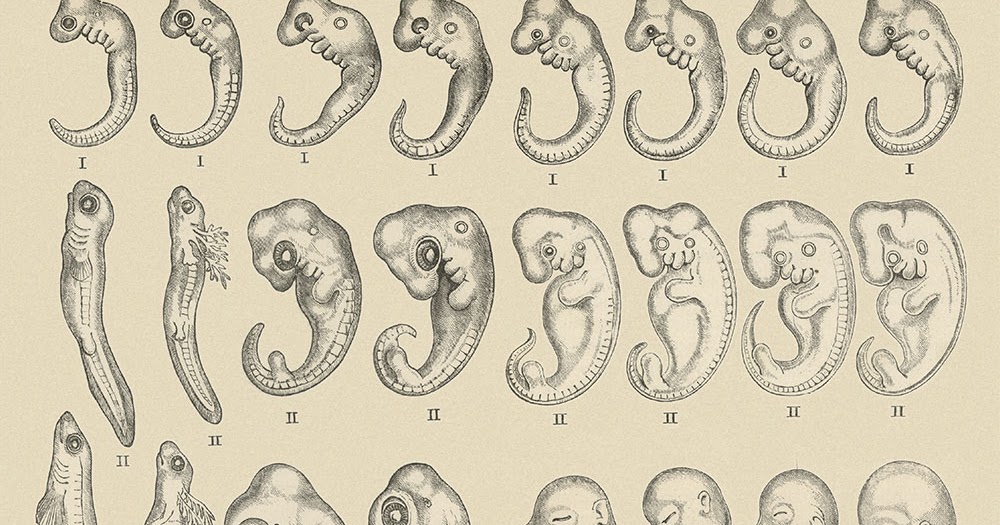
For decades, textbook illustrations of Haeckel’s Embryos have been presented as a compelling visual argument for evolution. These side-by-side comparisons of vertebrate embryos, purportedly showing striking similarities in early developmental stages, have been used to argue for a shared evolutionary ancestry. However, a closer look reveals a story of misrepresentation and manipulation, rather than an accurate depiction of embryological evidence.
Ernst Haeckel, a fervent supporter of Darwin’s theory, produced these drawings in the late 19th century. Yet, his illustrations were not faithful representations of actual embryos. He exaggerated similarities, omitted or altered developmental stages, and even used the same woodcut to represent different species. This deliberate manipulation aimed to bolster the concept of “recapitulation,” the now-discredited idea that embryonic development mirrors evolutionary history.
The reality is that vertebrate embryos are far more distinct in their early stages than Haeckel portrayed. His illustrations were exposed as fraudulent even in his own time, yet they persisted in textbooks for generations, a testament to the power of visual propaganda in shaping scientific narratives.
The argument that similarities in vertebrate embryos indicate a shared evolutionary history is challenged by several points.
Challenging the “Recapitulation” Narrative
One of the central tenets of the evolutionary argument is that embryonic development (“ontogeny”) reflects an organism’s evolutionary history (“phylogeny”). However, this concept, often summarized as “ontogeny recapitulates phylogeny,” is deeply flawed.
Embryonic Structures vs. Adult Structures: Embryonic features like pharyngeal slits and tails do not simply recapitulate the adult forms of ancestral organisms. Instead, they serve specific functions within the embryonic stage, often disappearing or transforming into entirely different structures in the adult. The embryonic mode of life is distinct from the adult mode.
“Recapitulation” is a Creationist Concept: The recognition of embryonic similarities predates Darwin. Creationists viewed these similarities as a “God-given ‘pattern of unification’ that reflected the unity of nature,” emphasizing a common Creator’s design rather than evolutionary lineage.
Unique Development: The unique eye development in lampreys, transitioning from larval eyespots to adult camera eyes, demonstrates that developmental pathways do not always follow a simple, linear evolutionary progression.
Order of Development: The occasional appearance of later-stage developmental features earlier in the embryonic process further complicates the evolutionary narrative.
Genetic and Developmental Complexity
The genetic and developmental complexity underlying embryonic similarities points to intelligent design:
Genetic Similarity: The fact that damage to the pax6 gene cascade results in the loss of a functional eye across diverse animal groups highlights a fundamental genetic similarity, but this similarity does not necessitate a shared evolutionary history. It speaks to a common design blueprint.
Complex Regulatory Systems: The development of complex structures like the eye involves thousands of interacting genes and intricate regulatory systems. Such complexity is more consistent with intelligent design than with random evolutionary processes.
Common Design: The similarities observed in vertebrate embryos can be readily explained as a reflection of a common design by an intelligent Creator. Just as an engineer might use similar design principles in different models, a Creator might employ common developmental strategies across various organisms.
A Creationist Interpretation
From a creationist perspective, the similarities in vertebrate embryos are not evidence of evolutionary transitions but rather manifestations of a unified design plan. The Creator used common design elements to achieve diverse functions in different organisms. This approach aligns with the concept of baraminology, which studies created kinds and acknowledges variations within those kinds.
The argument that embryonic similarities exclusively support evolution overlooks the possibility of intelligent design. By recognizing the complexity of developmental processes and the historical context of these observations, we can appreciate the power of a creationist explanation.
The very definition of science has undergone a subtle yet significant shift. Historically, science was understood as the pursuit of knowledge, a quest to understand the world around us through observation and reason. This pursuit inherently necessitates certain presuppositions: that the universe operates with causal connections, that truth is knowable, and that we can have confidence in our ability to discern it. However, modern science has often become synonymous with methodological naturalism, a philosophy that restricts scientific inquiry to natural causes, excluding any possibility of non-natural or supernatural agency. The RationalWiki page on Methodological Naturalism introduces the concept like so:
Methodological naturalism is the label for the required assumption of philosophical naturalism when working with the scientific method. Methodological naturalists limit their scientific research to the study of natural causes, because any attempts to define causal relationships with the supernatural are never fruitful, and result in the creation of scientific “dead ends” and God of the gaps-type hypotheses. To avoid these traps, scientists assume that all causes are empirical and naturalistic, which means they can be measured, quantified, and studied methodically.
However, this assumption of naturalism need not extend beyond an assumption of methodology. This is what separates methodological naturalism from philosophical naturalism — the former is merely a tool and makes no truth claim, while the latter makes the philosophical — essentially atheistic — claim that only natural causes exist.
The distinction between methodological and ontological naturalism, while often presented as this clear boundary, is, in practice, a strategic rhetorical move. Methodological naturalism purports to be a neutral, non-ontological framework for scientific inquiry. It claims to be a mere rule of engagement—that science should only investigate natural phenomena using natural explanations. Yet, in its application, it inexorably leads to ontological conclusions. By systematically excluding the possibility of non-natural causes a priori, science creates a worldview in which naturalism appears to be the only viable explanation for everything. This isn’t a discovery; it’s a foregone conclusion derived from the very rules of the game.
The assumptions underpinning science are the most glaring example of this flawed logic. Science demands that phenomena be testable, repeatable, and observable, yet it rests on a foundation of unproven, non-empirical assumptions. We must assume logic, order, and consistency in nature—presuppositions that are not themselves testable by the scientific method. This creates a paradox: science, in its pursuit of knowledge, relies on foundational truths that are, by its own criteria, unscientific.
This arbitrary limitation is particularly problematic when we consider the concept of agent causation. In fields like forensics, we readily distinguish between natural and volitional causes. We can conclude, based on empirical evidence, that an event was caused by an agent’s intent or will, even though that intent is not a physical object we can measure. There is already a precedent for including non-material causes in our models of reality. Science, as a system for making models that account for data, should be open to all potential causal explanations, not just those that fit within a pre-approved, naturalist box. By artificially fixing its scope to exclude supernatural causes, science pre-determines its own conclusions and, in doing so, sacrifices the pursuit of a more complete truth about reality. It becomes a system for confirming its own biases, rather than an open-ended quest for knowledge.
Further, this limitation creates a profound epistemological problem. Consider the analogy of a painting: while analyzing the physical components of the paint and canvas can provide valuable information, it does not explain the origin or intent of the artwork. Even if we limit the inquiry to all natural processes and we found how the components could have been put together in this fashion through totally naturalistic processes, that doesn’t mean that this is the only explanation nor the most parsimonious explanation. Again forensics, but not just forensics, but archaeology, information theory, search for extraterrestrial intelligence (SETI), and geography. We routinely investigate both natural and non-natural causes. Embedded within these fields is the idea of agent causation, intentionality, and will. Archaeology examines artifacts to understand the cultural and intellectual agency of past civilizations. Information theory can examine material, in respect to its environment, which is high in free energy. This is usually simply described as complex and specified information. The Search for Extraterrestrial Intelligence (SETI) demonstrates that science can test for non-natural causes, such as intelligent signals from distant galaxies. Geography can also seek an understanding of how humans have impacted the natural processes and landforms of their environments through various farming and infrastructure.
Why, then, is natural science uniquely restricted?
The claim that science will eventually explain all phenomena through natural processes creates a logical contradiction. Methodological naturalism, by its very nature, cannot detect non-natural causes. Therefore, any conclusions drawn from this limited methodology are inherently incomplete. Scientific methodology is rooted in epistemological assumptions, and flawed assumptions lead to incomplete or inaccurate conclusions. Pragmatism, while useful, is insufficient for pursuing truth if it ignores potential causal factors.
Counterexamples abound, highlighting that science is not always confined to strict naturalism. Studies on prayer and near-death experiences, for instance, explore non-natural influences. These examples underscore the fact that the a priori rejection of non-natural causes is a philosophical position that requires justification, especially given the prevalence of dual-causal investigations in other fields.
From a creationist perspective, excluding supernatural processes as potential causal explanations is not only unscientific but also detrimental to the pursuit of true knowledge. The goal of science should be to determine the causes and mechanisms underlying observed phenomena, regardless of whether they are natural or involve intelligent agency. The term “supernatural” refers to causes that are not due to physical laws and chemistry, such as programming or other information input. Excluding these potential causes compromises the integrity of scientific inquiry.
A true scientist must follow all leads and consider all possibilities to ensure that the most accurate and comprehensive model is upheld. Science is grounded in the principles of evidence-based reasoning, and the evidence may lead to non-natural or supernatural causes. If naturalism is to be a consistent and reliable methodology, it must be applied across all scientific disciplines, including forensics and historical sciences.
In conclusion, the pursuit of knowledge should not be constrained by arbitrary philosophical limitations. By embracing a broader definition of science that includes the possibility of non-natural causes, we can move closer to a more complete and accurate understanding of the universe. This approach aligns with the creationist worldview, which recognizes the intelligent design and purpose inherent in the natural world.