



From my perspective, society isn’t some grand, top-down invention or a purely artificial construct. Instead, it’s a natural outgrowth of human interaction, an organic creation. This organic origin gives society a fascinating, dualistic nature: it’s both a source of conflict and a fertile ground for cooperation, a necessary evil, and a crucial tool for individual flourishing. I see these seemingly opposing ideas not as separate or contradictory, but as deeply intertwined.
The inherent conflict within society comes from the undeniable reality of human imperfection. As fallen creatures, individuals will always have competing interests, differing desires, and a natural lean toward self-interest and corruption. This doesn’t mean we’re in a constant state of overt warfare, but rather a perpetual tension over resources, values, and the direction we take as a collective. Yet, our natural inclination to interact also fosters cooperation. Things like specialization, security, the pursuit of knowledge, and companionship make a collective invaluable. Society, then, emerges from this very tension—the delicate balance between individual will and collective order.
Our Place as Individuals in the Social Fabric
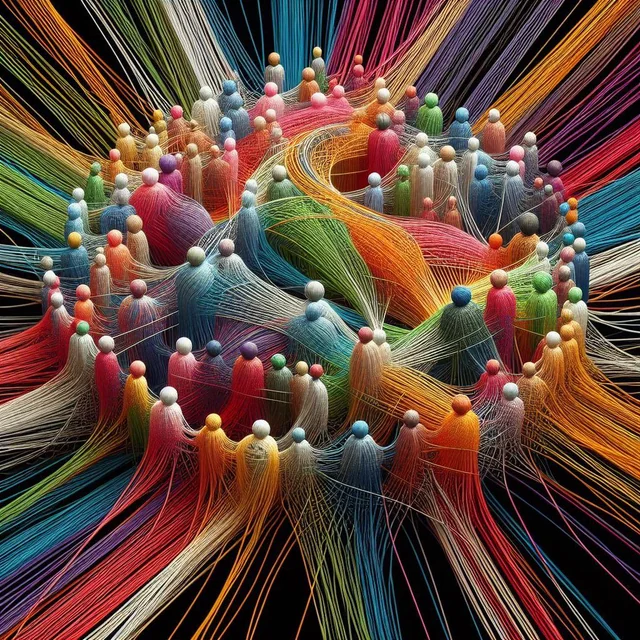
An individual’s relationship to society is equally nuanced. In my view, the paramount command for each of us is to love our neighbor and orient our lives toward God. This core Christian ethical responsibility dictates an outward-looking concern for others, yet it critically anchors responsibility within our own sphere of influence. While the collective good is undeniably important and should be prioritized when we can genuinely affect change, our ultimate responsibility isn’t to the totality of society—what Dostoevsky called ‘general love of humanity’—but for what we can directly control: the self.
This means cultivating personal virtue, making ethical choices in daily interactions, and contributing positively within our own communities. Society, in turn, has a duty to its members, but this duty is reciprocal. It flows from the recognition that individuals have responsibilities toward each other. It’s not a top-down benevolence, but a framework of mutual obligation.
Understanding Freedom and Authority
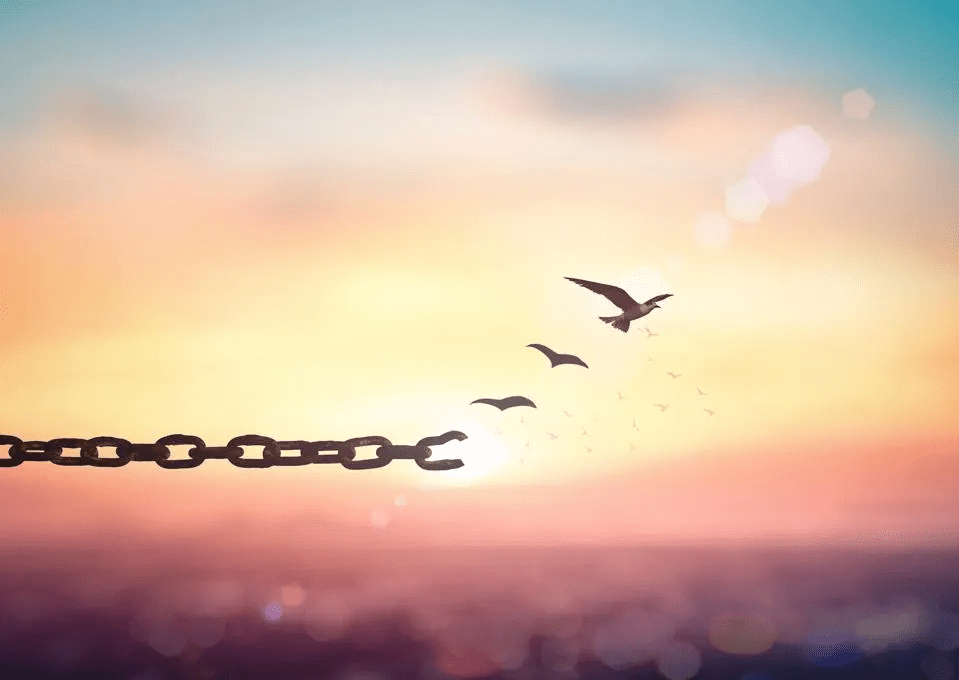
Freedom, in this context, isn’t absolute license. All freedom is either freedom from or freedom to. We should possess freedom from things that cause harm—whether it’s physical violence, coercive manipulation, or the unjust suppression of conscience. Equally, we should have the freedom to choose things that benefit us, to pursue our vocations, and to act on good impulses. Crucially, to exercise these freedoms, we must also be free to express our perceptions about what’s beneficial and harmful, and to act on the former while restricting the latter.
Broader, or higher, societal authority should be clearly codified into law, discriminating against no one group. These laws should ideally be general rules of conduct, equally applicable to all, providing a predictable framework for individual action rather than dictating specific outcomes.
This idea comes from a fundamental principle of governance, which I derive from thinkers like Hayek and Mill: broader authority—the state or collective institutions—should err on the side of fewer restrictions and regulations. Its role is to establish and enforce the rules of the game, not to direct the play itself. Conversely, narrower authority, extending to its most narrow point in the self, should err on the side of being too restricted. This means exercising personal moral discipline and self-governance.
This plays out with a clear distinction: the king declares that murder is forbidden, establishing a universal legal boundary, while the individual forbids hate in his own heart, engaging in the continuous, internal struggle for virtue. The former creates external order; the latter cultivates internal righteousness. The moment this moral hierarchy is dismembered is likely the same moment society begins to decline.
The Unending Struggle
Human beings are fallen creatures, and none of this will ever play out as a utopian vision. We’re not so malleable, in a Marxist sense, that our nature can be entirely shaped by policy or environmental conditions; there are inherent tendencies and proclivities that resist perfect social engineering. Nor are humans so inherently good that they don’t tend toward corruption when power is consolidated or accountability is removed. While humans are capable of immense wonders, they are equally capable of great atrocities. It’s not wrong to call humanity bad in its fallen state, but to call us irredeemable would be antithetical to the Christian ethos that informs my worldview.
The telos of man, our ultimate purpose, is to obey God’s commands. Ideally, institutions should facilitate that process, creating an environment conducive to moral flourishing. However, due to human imperfection and the inherent limitations of collective structures, institutions are, perhaps, not capable of reaching that ideal state in their earthly manifestation.
In many ways, I identify strongly with Friedrich Hayek’s arguments in The Road to Serfdom. His critique of collectivist policies and central planning resonates with my understanding of human nature and the necessary boundaries of societal authority. Hayek meticulously demonstrates how attempts to centrally plan society toward specific, desirable ends, even with the best intentions, inevitably lead to a loss of individual liberty and an escalation of coercive power and totalitarianism. I maintain a tentative rule-of-law position while I wait for the Lawmaker.
Further Reading:
- Dostoevsky, Fyodor. The Brothers Karamazov
- Hayek, F. A. The Road to Serfdom
- Marx, Karl, and Engels, Friedrich. The Communist Manifesto
- Mill, John Stuart. On Liberty
