
Creation Questions

Author: Wesley Coleman

  • The Creation, the Fall, and the Problem of Suffering

    The Creation, the Fall, and the Problem of Suffering

    The problem of evil, death, and suffering has plagued humanity for millennia. How can a loving, all-powerful God allow such things? Many Christians have proposed scenarios suggesting that suffering helps us truly value goodness, or that our need for redemption demonstrates God’s great love. However, these explanations often fall short. Wouldn’t it be better to never experience sickness at all? And what about animal suffering, like a doe trapped in a forest fire?

    These challenging questions have a clear biblical explanation that is often overlooked when Christians disregard the evidence for a young creation perspective. From a biblical creationist viewpoint, the answers to suffering and death lie in three key areas:

    • The original perfect creation
    • The exercise of human free will
    • God’s righteous judgment following sin

    Genesis 1:31 states that God declared His creation “very good.” This description implies a state of perfection—a world without the decay and suffering we see today. This perfect state is fundamentally incompatible with the presence of death, disease, and suffering as original features of creation.

    The pivotal moment occurs in Genesis 2:17, where God warns Adam: “but of the tree of the knowledge of good and evil you shall not eat, for in the day that you eat of it you shall surely die.”

    The Hebrew text provides important insights:

    • Young’s Literal Translation renders “you shall surely die” as “dying thou dost die,” capturing the Hebrew infinitive absolute that emphasizes both the certainty and the process of death
    • The Hebrew word “בְּי֛וֹם” (be-yohm, “in the day”) with its prefix typically refers to an age or time period, indicating the consequences would begin in the age they ate the fruit, not necessarily instantaneously

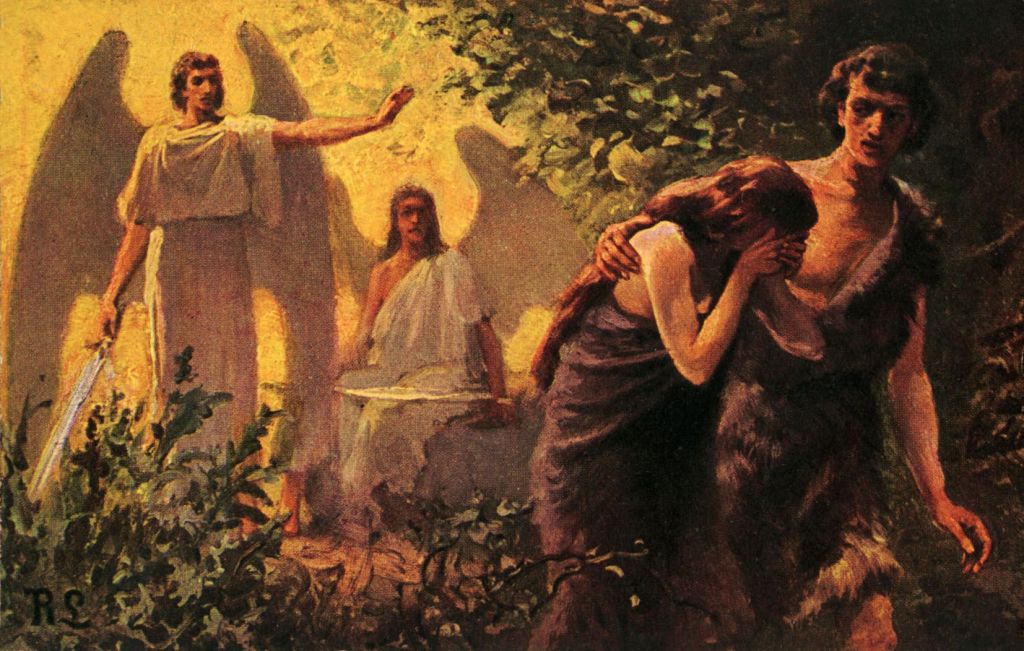
    When Adam and Eve disobeyed, God’s judgment was pronounced in Genesis 3:19: “By the sweat of your face you shall eat bread, till you return to the ground, for out of it you were taken; for you are dust, and to dust you shall return.” This confirmed that physical death entered the world, alongside the spiritual death that had already occurred at the moment of disobedience.

    The Bible clearly states that both humans and animals were originally vegetarian:

    “And God said, ‘Behold, I have given you every plant yielding seed that is on the face of all the earth, and every tree with seed in its fruit. You shall have them for food. And to every beast of the earth and to every bird of the heavens and to everything that creeps on the earth, everything that has the breath of life, I have given every green plant for food.’ And it was so.” (Genesis 1:29-30)

    This passage reveals a world initially free from predation and animal suffering before the Fall.

    An important distinction exists between plant life and animal life. After the Flood, God permitted humans to eat animal flesh: “Every moving thing that lives shall be food for you. And as I gave you the green plants, I give you everything. But you shall not eat flesh with its life, that is, its blood” (Genesis 9:3-4).

    The Hebrew term “nephesh chayyah” (living soul) applies to animals and humans, but not to plants, indicating a significant difference in the biblical concept of “life.” This distinction explains why the consumption of plants does not constitute death in the same sense as animal or human death.

    The ability to choose between good and evil is fundamental to human nature and dignity. Adam and Eve’s decision to disobey God was a deliberate exercise of free will with profound consequences. This choice introduced sin, death, and suffering into the world, demonstrating the reality and weight of moral responsibility.

    God valued human freedom enough to allow the possibility of wrong choices, even knowing the devastating consequences that would follow. This perspective highlights both God’s respect for human agency and the seriousness with which He views our moral decisions.

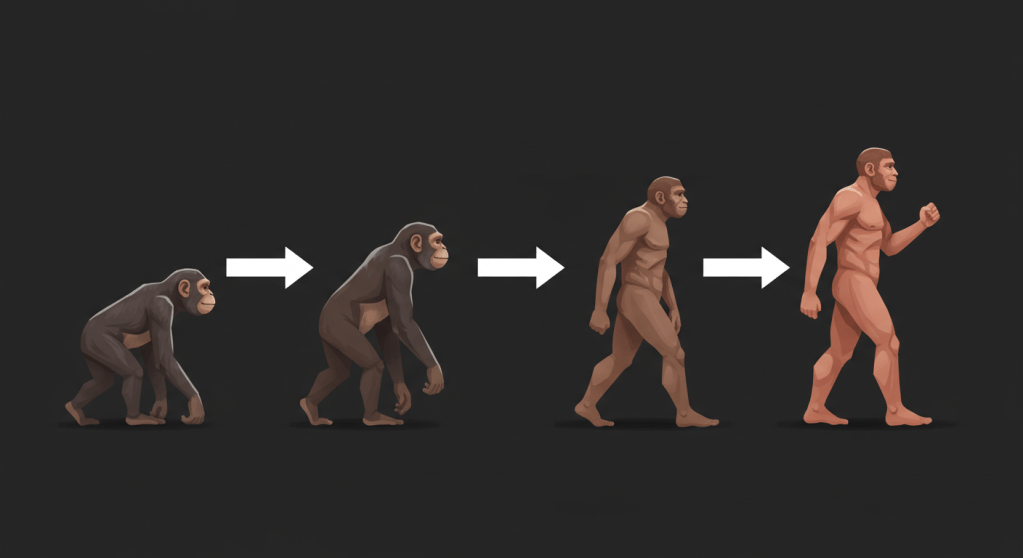
    The biblical creation account directly contradicts the evolutionary narrative, which posits death and competition as essential drivers of biological change. The biblical view presents:

    • A “very good” original creation
    • The introduction of death after the Fall
    • A fundamentally different understanding of Earth’s history

    If death existed before Adam’s sin, this would undermine the biblical connection between sin and death, and by extension, the necessity of Christ’s sacrificial death to overcome sin.

    The biblical account clearly states that death entered the world through Adam’s sin. 1 Corinthians 15:21-22, “For as by a man came death, by a man has come also the resurrection of the dead. For as in Adam all die, so also in Christ shall all be made alive.”  

    Conclusion

    The creation account, coupled with the concepts of free will and God’s judgment, provides a comprehensive explanation for the presence of evil, death, and suffering in our world. While these issues remain complex and deeply personal, the biblical narrative offers a framework for understanding them within the context of:

    • God’s original perfect creation
    • Humanity’s fall into sin
    • God’s redemptive plan

    By embracing the creationist perspective, we gain a deeper appreciation for the profound implications of the Fall and the hope offered through God’s promise of restoration. Rather than attempting to reconcile death and suffering as part of God’s original “very good” creation, we recognize them as intruders in a once-perfect world—intruders that will ultimately be defeated through Christ’s redemptive work.

  • Tiny Water Fleas, Big Questions About Evolution

    Tiny Water Fleas, Big Questions About Evolution

    Scientists recently spent a decade tracking the genetics of a tiny water creature called Daphnia pulex, a type of water flea. What they found is stirring up a lot of questions about how evolution really works.  

    Imagine you’re watching a group of people over ten years, noting every little change in their appearance. Now, imagine doing that with the genetic code of hundreds of water fleas. That’s essentially what these researchers did. They looked at how the frequencies of different versions of genes (alleles) changed from year to year.

    What they discovered was surprising. On average, most of the genetic variations they tracked didn’t seem to be under strong selection at all. In other words, most of the time, the different versions of genes were more or less equally successful. It’s like watching people over ten years and finding that, on average, nobody’s hair color really changed much.

    However, there was a catch. Even though the average trend was “no change,” there were a lot of ups and downs from year to year. One year, a particular gene version might be slightly more common, and the next year, it might be slightly less common. This means that selective pressures—the forces that push evolution—were constantly changing.

    Think of it like the weather. One day it’s sunny, the next it’s rainy, but the average temperature over the year might be pretty mild. The researchers called this “fluctuating selection.”

    They also found that these genetic changes weren’t happening randomly across the whole genome. Instead, they were happening in small, linked groups of genes. These groups seemed to be working together, like little teams within the genome.  

    So, what does this all mean?

    Well, for one thing, it challenges the traditional idea of gradual, steady evolution via natural selection. If evolution were a slow, constant march forward, you’d expect to see consistent changes in gene frequencies over time being promoted by the environment. But that’s not what they found. Instead, they saw a lot of back-and-forth, with selection pressures constantly changing and equalizing at a net-zero.  

    From a design perspective, this makes a lot of sense. Instead of random changes slowly building up over millions of years, this data suggests that organisms are incredibly adaptable, designed to handle constant environmental shifts. The “teams” of linked genes working together look a lot like pre-programmed modules, ready to respond to whatever challenges the environment throws their way.

    The fact that most gene variations are “quasi-neutral,” meaning they don’t really affect survival on average, also fits with the idea of a stable, created genome. Rather than constantly evolving new features, organisms might be designed with a wide range of genetic options, ready to be used when needed.

    This study on tiny water fleas is a reminder that evolution is a lot more complex than we often think. It’s not just about random mutations and gradual changes. It’s about adaptability, flexibility, and a genome that’s ready for anything. And maybe, just maybe, it’s about design.

    (Based on: The genome-wide signature of short-term temporal selection)

  • Ologies,ologies, everywhere, Nor any drop to drink…

    Ologies,ologies, everywhere, Nor any drop to drink…

    So, you’re telling me that every field of study, from the submicroscopic quarks of quantum physics to the grand cosmic spirals of astrophysics, can’t help but stumble over the God question? Metaphysics? Yes. Phenomenology? Check. Cosmology? Double-check. Epistemology? What do you know! Even dear old biology, with all its little proteins and DNA, can’t resist a good teleological head-scratcher.

    Now, I’m not saying this proves anything. I’m just saying, if you walk into a library and every book has a page on Bigfoot, you might start to wonder if there’s really something to that hairy fellow lurking in the woods. And when every intellectual pursuit is pondering about the divine, maybe, just maybe, He’s not a mere figment of our collective imagination.

    In an interview on the Soul Boom podcast, the well-known agnostic skeptic Alex O’Connor was asked what the best argument for the existence of God was. He said, “There are so many, I think there’s even an argument for the existence of God that can be made just from the number of arguments for the existence of God. The fact that there’s an argument from beauty, and argument from contingency, from ontology, from maths… Anywhere you look, there’s an argument for God, so you could always make an argument for God’s existence from the sheer number of arguments for God’s existence.”

    So in your honour, Alex, here is a little syllogism (albeit tongue and cheek):

    Let’s get logical for a second:

    1. Premise 1: Multiple independent disciplines (across diverse “ologies”) converge on arguments that point to or require a transcendent foundation resembling theistic conceptions.
    2. Premise 2: When independent intellectual traditions across diverse cultures and disciplines converge on similar conclusions despite different methodologies and starting assumptions, this convergence provides strong evidence for the validity of those conclusions.
    3. Premise 3: This convergence pattern exists regarding arguments that point to a transcendent foundation for reality, knowledge, consciousness, morality, etc.
    4. Conclusion: Therefore, there is strong evidence for the validity of a transcendent foundation (resembling theistic conceptions) for reality.

    Boom. Check mate, atheists.

    Of course, the skeptics will say, “But correlation doesn’t equal causation!” And to that, I say, “Sure, but it’s a heck of a coincidence, isn’t it?” It’s like finding a universal remote that works on every TV in the world. You might start to suspect someone is behind all these converging coincidences.

    The Information Age and the Divine Download

    Think about it: information theory tells us that complex information requires an intelligent source. Biological systems scream design, the fine-tuning of the universe is downright suspicious, and even our own brains’ consciousness hint at something beyond the purely material. As Dr. Stephen C. Meyer argues in his book “Signature in the Cell“, the digital code within DNA points to an intelligent cause.

    And if our brains can conjure up these elaborate arguments for God, maybe, just maybe, they’re picking up a signal from the ultimate source code. A divine download, if you will.

    A Gentle Nudge

    Maybe this is what Blaise Pascal thinking when he made his wager? We all must make a choice about believing in God’s existence or not with incomplete information, and the potential gains for accepting Him far outweigh the negatives. Perhaps the next time you’re investigating an obscure ‘ology’, and you find yourself pondering the God question, remember: in the end it comes down to a subjective decision. And the universe, in all its vastness and complexity, seems to be whispering which path to choose.

    Now, I’m not saying you have to believe any of this. But maybe, just maybe, it’s worth a second thought?

    Video: “Alex O’Connor Explores the Mysteries of God | Soul Boom” Soul Boom w/ Rainn Wilson (2025)

  • Presuppositionalism: A Tool for Christian Apologetics?

    Presuppositionalism: A Tool for Christian Apologetics?

    In the landscape of Christian apologetics, presuppositional apologetics presents a distinctive approach to understanding knowledge, reality, and belief. This philosophical method, pioneered by thinkers like Cornelius Van Til in the 1920s, challenges fundamental assumptions about epistemology and seeks to demonstrate the unique explanatory power of a biblical worldview.

    Understanding Presuppositionalism

    Presuppositional apologetics advances a bold claim: Christian theism provides the only coherent framework for understanding logic, morality, and the nature of knowledge itself. Unlike classical apologetic approaches that seek to prove God’s existence through external evidence, this method argues that the very possibility of rational thought depends on acknowledging a divine foundation.

    The core principle is that every individual, consciously or unconsciously, operates from a set of foundational beliefs about reality. These presuppositions shape how we interpret evidence, understand causality, and construct meaning. Presuppositionalists argue that a naturalistic worldview ultimately fails to provide a stable ground for rational inquiry.

    The Philosophical Challenge of Solipsism

    At the heart of this approach lies a profound philosophical challenge: the problem of solipsism. If we cannot definitively prove the existence of anything beyond our own mind, how can we claim to know anything with certainty? This epistemological dilemma threatens to reduce all knowledge to a subjective, potentially illusory experience.

    Traditional empiricist approaches, as critiqued by philosophers like David Hume, struggle to overcome this fundamental uncertainty. Empiricism, which relies solely on sensory experience and observation, cannot conclusively escape the possibility that our perceptions are merely internal constructs with no correspondence to an external reality.

    The Divine Foundation of Knowledge

    The presuppositional argument proposes a radical solution: God’s existence as the transcendent Creator provides the necessary foundation for objective knowledge. This perspective argues that:

    1. An objective reality exists independent of human perception
    2. Universal principles of logic and morality are grounded in God’s unchanging nature
    3. Human reasoning gains its validity from a divine source of rationality

    By positioning God as the ultimate source of knowledge, this approach attempts to resolve the solipsistic dilemma. The created world, according to this view, is not a mental construct but a real, intentionally designed system that reflects divine intelligence.

    Scientific and Philosophical Implications

    While traditional creation science is often criticized, presuppositional apologetics seeks to integrate philosophical reasoning with scientific inquiry. Concepts like baraminology (the study of created kinds) and catastrophic plate tectonics are presented as attempts to provide alternative explanatory frameworks for natural phenomena.

    However, it is crucial to recognize that these arguments remain contentious within the broader scientific community. The strength of the presuppositional approach lies not in its empirical evidence but in its philosophical critique of naturalistic epistemology.

    Critiques and Limitations

    The presuppositional method is not without significant challenges:

    1. It can appear circular, assuming the very thing it seeks to prove
    2. It may not convincingly engage with those who do not share its initial theological premises
    3. It risks oversimplifying complex philosophical and scientific questions

    Despite these limitations, the approach offers a provocative challenge to purely materialistic worldviews, forcing a deeper examination of the foundations of knowledge.

    Conclusion

    Presuppositional apologetics represents a sophisticated attempt to ground human understanding in a transcendent perspective. By challenging the foundations of knowledge and highlighting the limitations of naturalistic epistemology, it invites a more nuanced conversation about the nature of reality, reason, and belief.

    While not universally convincing, this approach provides a thought-provoking framework for those seeking to understand the relationship between faith, philosophy, and scientific inquiry.

  • How Created Heterozygosity Explains Genetic Variation

    How Created Heterozygosity Explains Genetic Variation

    A Conceptual Introduction:

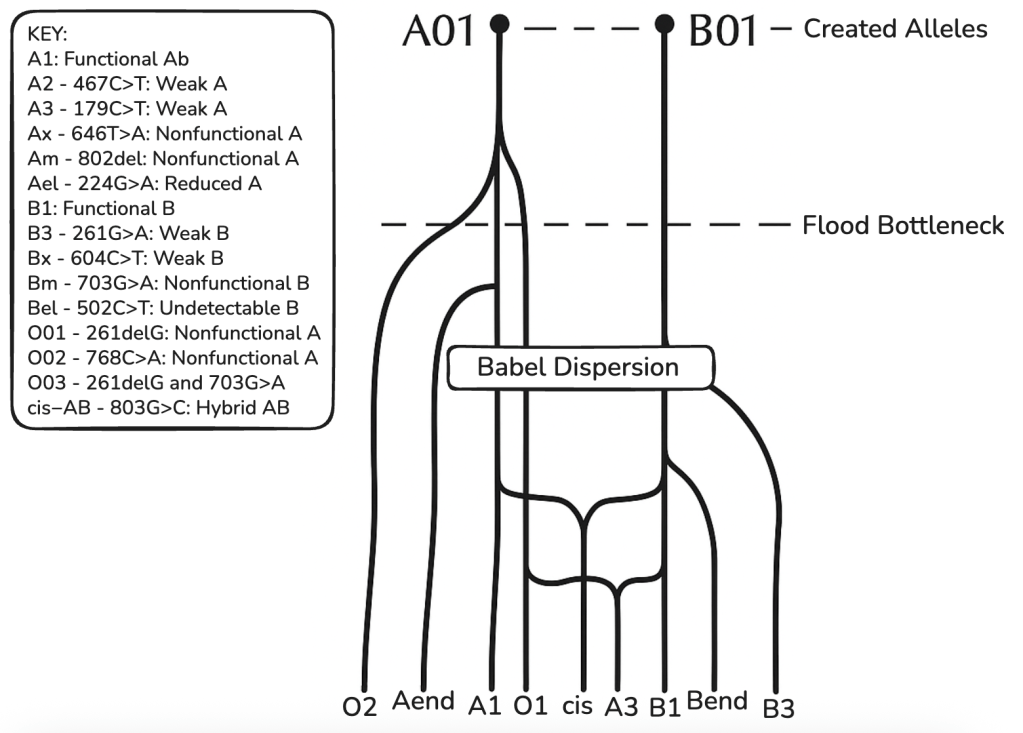
    The study of genetics reveals a stunning tapestry of diversity within the living world. While evolutionary theory traditionally attributes this variation to random mutations accumulated over vast stretches of time, a creationist perspective offers a compelling alternative: Created Heterozygosity. This hypothesis proposes that God designed organisms with pre-existing genetic variability, allowing for adaptation and diversification within created kinds. This concept not only aligns with biblical accounts but also provides a more coherent explanation for observed genetic phenomena.

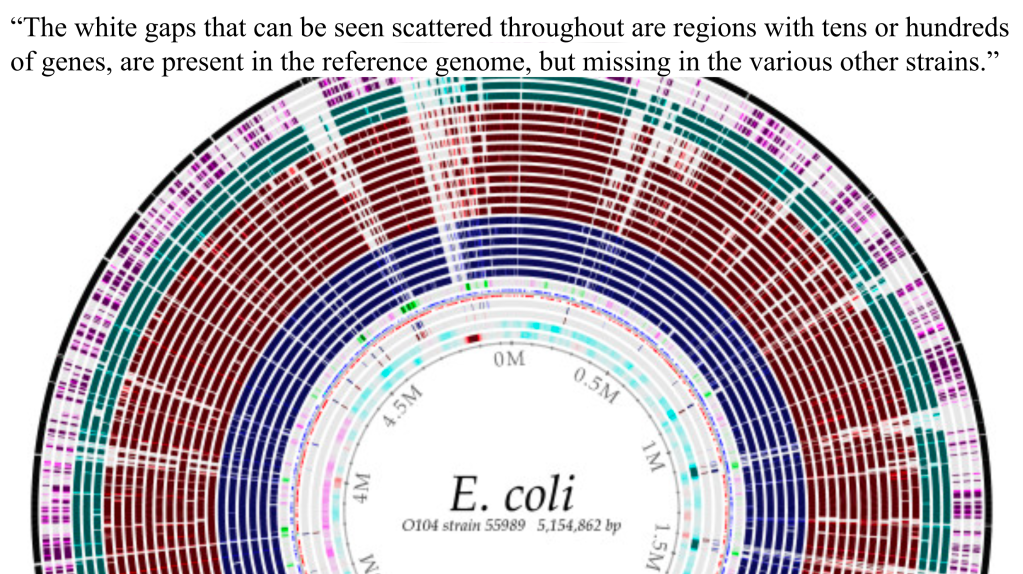
    The evolutionary narrative hinges on the power of mutations to generate novel genetic information. However, the overwhelming evidence points to the deleterious nature of most mutations. This can be seen in the famous Long-Term Evolutionary Experiments with E. coli. Notice, in the graphic below (Hofwegen, 2016), just how much information gets lost due to selection pressures and mutation. This is known as genetic entropy, the gradual degradation of the genome due to accumulated harmful mutations, poses a significant challenge to the idea that random mutations can drive the complexification of life. Furthermore, the sheer number of beneficial mutations required to explain the intricate design of living organisms strains credulity.

    “Genomic DNA sequencing revealed an amplification of the citT and dctA loci and DNA rearrangements to capture a promoter to express CitT, aerobically. These are members of the same class of mutations identified by the LTEE. We conclude that the rarity of the LTEE mutant was an artifact of the experimental conditions and not a unique evolutionary event. No new genetic information (novel gene function) evolved.”

    In contrast, Created Heterozygosity suggests that God, the master engineer, imbued organisms with a pre-programmed potential for variation. Just as human engineers design systems with built-in flexibility, God equipped his creation with the genetic resources necessary to adapt to diverse environments. This concept resonates with the biblical affirmation that God created organisms “according to their kinds,” implying inherent boundaries within which variation can occur. Recent research, such as the ENCODE project and studies on the dark proteome, has revealed an astonishing level of complexity and functionality within the genome, further supporting the idea of a designed system.

    Baraminology, the study of created kinds, provides empirical support for Created Heterozygosity. The rapid diversification observed within baramins, such as the canid or feline kinds, can be readily explained by the expression of pre-existing genetic information. For example, the diverse array of dog breeds can be traced back to the inherent genetic variability within the canine kind, rather than the accumulation of countless beneficial mutations.

    Of course, objections arise. The role of mutations in adaptation is often cited as evidence against Created Heterozygosity. However, certain mutations may represent the expression of designed backup systems or pre-programmed responses to environmental changes. Moreover, the vast majority of observed genetic variation can be attributed to the shuffling and expression of existing genetic information, rather than the creation of entirely new information.

    The implications for human genetics are profound. Created Heterozygosity elegantly explains the high degree of genetic variation within the human population, while remaining consistent with the biblical account of Adam and Eve as the progenitors of all humanity. Research on Mitochondrial Eve and Y-Chromosome Adam/Noah further supports the idea of a recent, common ancestry for all people.

    In conclusion, Created Heterozygosity provides a compelling framework for understanding genetic variation from a creationist perspective. By acknowledging the limitations of mutation-driven evolution and recognizing the evidence for designed diversity, we can appreciate the intricate wisdom of the Creator and the coherence of the biblical narrative. This concept invites us to explore the vastness of genetic diversity with a renewed sense of awe, recognizing the pre-programmed potential inherent in God’s magnificent creation.

    Citation:

    1. Van Hofwegen, D. J., Hovde, C. J., & Minnich, S. A. (2016). Rapid Evolution of Citrate Utilization by Escherichia coli by Direct Selection Requires citT and dctA. Journal of bacteriology, 198(7), 1022–1034.
  • The Paradox of Free Will

    The Paradox of Free Will

    The question of free will has perplexed theologians and philosophers for centuries. For one concerned with a proper exegesis of the Bible, the concept of free will is crucial for understanding human responsibility, divine justice, and the nature of God’s relationship with humanity.

    The Bible consistently presents humans as moral agents capable of making choices. Several passages highlight this:  

    • Deuteronomy 30:19: “I call heaven and earth to witness against you today, that I have set before you life and death, blessing and curse. Therefore choose life, that you and your offspring may live.”
    • Joshua 24:15: “And if it is evil in your eyes to serve the Lord, choose this day whom you will serve, whether the gods your fathers served in the region beyond the River, or the gods of the Amorites in whose land you dwell. But as for me and my house, we will serve the Lord.”
    • Revelation 3:20: “Behold, I stand at the door and knock. If anyone hears my voice and opens the door, I will come in to him and eat with him, and he with me.”
    • 2 Peter 3:9: “The Lord is not slow to fulfill his promise as some count slowness, but is patient toward you, not wishing that any should perish, but that all should reach repentance.”

    These verses establish that God has instilled in his image-bearing creation an ability to make moral choices. God has made these choices available to us and we are culpable for our sin in disobedience. This is, at the very least, a strong indication that mankind is accountable to God. Therefore, ruling out any form of determinism that denies human accountability.

    Theological Considerations

    The tension between God’s sovereignty and human free will is a central theological challenge. There is not a simple yes or no that we can give to the question of free will, because it exists in the particular. While God is omniscient and omnipotent, the Bible also affirms human accountability. Further, God can intercede in human activity, even moral activity.

    A common example of this is God’s hardening of the Pharaoh’s heart in Exodus. God foreknew Pharaoh’s hardened heart, but Pharaoh’s initial choices were what led to divine hardening. God’s foreknowledge does not negate Pharaoh’s agency. This is what’s called prescience. God knowing the future, but did not cause the future.

    God is in total control of how he behaves and interacts with his creation. That does not mean he has to necessarily micromanage every aspect such that this world then becomes, “the greatest of all possible worlds.” If you take the view that God plays a direct role in every particular, you will run into a few problems.

    Take the popular analogy of God as an author and humans as characters. This is often used to argue against free will. It goes like this: imagine all of humankind and the universe, itself, are figures of the imagination of God. Sure, in the narrative a certain character may act in this or that way based on their motivations and choices, yet these motivations and choices were all designed by the author. The author can write the characters in whatever way is pleasing.

    However, this analogy breaks down when considering God’s desire for genuine relationship. This view results in the rather absurd conclusion that God must have created us solely for the entertainment value. If humans are merely puppets, their love for God is not authentic. True love requires reciprocal choice which requires free will. Therefore, a world without free will results in a parasitic phantasy in the mind of God.

    There are two counters to this perspective that I encounter often. They have to do with the power of God and the will of God. I will address, first, the will of God.

    It is indeed the case that nothing can happen apart from God’s will. So when this criticism gets brought up the framing is such that it appears, therefore, God wills for all the choices which you have made in your life to have happened and in the manner in which they happened. However, there is a hidden assumption. Does God actually will that, or is what God values a more nuances proposition. I argue that God’s will can be to permit free agency. This is suggested heavily in scripture any time that God calls for a response from his creation. When God says “sin no more,” he is calling man to action. Why is it necessary for God to say this, if God is the only active agent in the process of who sins and who does not? Does it make sense for me to say to my bicycle, “stop pedaling.” According to some, it is not the bike doing the pedaling and, likewise, it is not the man doing the sinning (although the bike is moving and the man is acting they are not casually powerful).

    So does man having free will to choose actions that move away from God’s set path make God less powerful? This claim is often made against those who endorse a free-will-agency view. It is suggested that, if man can act apart from God’s purpose for their life (even if it’s not against God’s will) there still arises a problem in which God could plausibly create a world where every freewill agent he created would freely choose him. God can rig the game in his favor, so to speak. Apart from the fact that if this counterexample is true, it has graver consequence on the validity of a reformed view, there is a logical error in this understanding of the nature of free will.

    If God were to guarantee a specific outcome, such as every human freely choosing him, then the choice would no longer be truly free. It would be a predetermined response, a mere illusion of choice. True free will necessitates the genuine possibility of choosing otherwise, including the potential for rejection. To remove this possibility is to remove the essence of free will itself, rendering it meaningless. Therefore, to argue that God’s power is diminished by allowing genuine free will is to misunderstand that genuine free will requires the possibility of choosing against God.

    Three Main Arguments For Free Will:

    1. If God ordains every human action, including evil ones, then God becomes the author of evil. For the young earth creationist there is a clear perspective which attributes evil to the misuse of free will, consistent with the Genesis narrative of the Fall. God allows evil, but he does not create it.
    2. As Dr. Michael S. Heiser argues, humans are created in God’s image, which includes attributes like intelligence, emotion, and creativity. It is consistent that free will is also a component of this image. To deny free will is to diminish human dignity and responsibility. It is also rather arbitrary to leave out a significant part of man’s God-image for no apparent reason. 
    3. The sacrifice of Jesus Christ is presented as sufficient for all humanity. If salvation is not universally applied, it is due to individual rejection, not divine limitation. God’s desire that none shall perish, is a strong argument for free will.

    Conclusion

    In conclusion, the biblical narrative, particularly the passages emphasizing human choice and accountability, strongly supports the concept of free will. While the tension between divine sovereignty and human agency presents a complex theological challenge, the young-Earth creationist perspective offers a coherent framework for understanding this relationship. By recognizing God’s permissive will, acknowledging the importance of genuine relationship, and affirming the image of God in humanity, we can reconcile these seemingly contradictory truths. The rejection of a deterministic worldview, which reduces humans to mere puppets, underscores the significance of free will in the context of divine justice and love. Potentially, the concept of created heterozygosity and information theory can provide a scientific framework and biological basis for understanding the inherent capacity for diverse moral choices within the created order (although this is speculation). Ultimately, the existence of free will, while a mystery in some respects, is essential for understanding human responsibility, the nature of God’s relationship with humanity, and the very essence of love itself.

  • A Personal Reflection on Kierkegaard’s “Leap” of Faith

    A Personal Reflection on Kierkegaard’s “Leap” of Faith

    Reading Kierkegaard’s “Concluding Unscientific Postscript,” particularly his exploration of the “leap” of faith, resonates deeply with my own understanding of what it means to embrace a Christian worldview. It’s not merely about intellectual assent to historical or scientific propositions; it’s a profound, personal relationship that transcends the limitations of objective knowledge.

    Kierkegaard, through Climacus, articulates the “leap” as a radical discontinuity, a “shifting from one genus to another.” This echoes my own experience in realizing that, although science is fascinating, it is not what we’ll get our final grade on. Just as Climacus argues that historical facts, no matter how compelling, cannot generate faith, I’ve found that scientific evidence, while supportive, doesn’t compel belief on its own. Faith is not a matter of knowing the truth or knowing anything–it’s a leap. This leap is a move from the objective to the subjective, from the realm of empirical observation to the domain of personal commitment.

    The “ugly broad ditch” metaphor, about the unbridgeable gap between objective and subjective (relational, personal, i.e., of the subject) truth, illustrates the seemingly insurmountable divide between rational inquiry and the act of faith. No amount of scientific evidence or logical argumentation can bridge this gap. The leap is not a gradual progression but a decisive moment, a qualitative shift that defies rational calculation. It’s not about accumulating evidence until the scale tips; it’s about recognizing the inherent limitations of objective knowledge and choosing to embrace a truth that transcends it.

    Climacus’s critique of “earnestness” is particularly helpful. He argues that intellectual striving is “droll enough” in the context of the leap. I’ve encountered many who seek to intellectualize faith, to reduce it to a system of logical propositions. But faith, as Kierkegaard understands it, is not a product of intellectual prowess. It’s a matter of the will, a subjective commitment that transcends the realm of reason. One cannot “earnestly” approach faith; one either makes the leap or one does not. Yet, that is not to undermine neither the objective world nor the subjective relationship.

    Climacus’ satirical jab at those who attempt to “grab oneself by the neck a la Münchhausen” (a fictional character known for pulling himself out of a swamp by his own hair) speaks to the absurdity of trying to force faith through intellectual gymnastics. It’s a warning against self-deception, against pretending to have made the leap without truly engaging with its radical, personal nature. This resonates with a perspective which acknowledges the limitations of scientific and theological models and the necessity of a personal encounter with the Creator.

    You often here the accusation so and so has “blind faith” or that faith is not based on evidence. For me, the leap of faith is not a blind leap into irrationality. It’s a recognition that objective knowledge, while valuable, is insufficient to grasp the fullness of reality. It’s an acknowledgment that there are truths that transcend empirical observation, truths that can only be apprehended through a subjective act of commitment. In the context of creationism, the leap involves acknowledging the limitations of naturalistic explanations and embracing the possibility of a Creator whose handiwork is evident in the complexity and beauty of the natural world.

    This is valuable because we often feel the pressure to demonstrate the historical or the scientific aspect of our worldview as firmly in the historical or scientific. It is not. It is more. It is a leap into a new genus (Aristotelian category) of reality. It is a new domain of experience in addition to and separate from what we experience in religion, science, and the day-to-day.

    The leap is a deeply personal decision, one that each individual must make for themselves. It’s a journey that involves wrestling with doubt, questioning assumptions, and ultimately choosing to embrace a truth that resonates with the deepest parts of one’s being. It’s a move from stranglehold the “objective” has on our society into a complementary view which includes the “subjective”, a move that is essential for true faith.

    Citation

    1. Kierkegaard, Søren. Concluding Unscientific Postscript to Philosophical Fragments. Edited and translated by Howard V. Hong and Edna H. Hong, Princeton University Press, 1992.
  • The Limits of Evolution

    The Limits of Evolution

    Yesterday, a presentation by Dr. Rob Stadler took place on Dr. James Tour’s Youtube channel which has brought to light a compelling debate about the true extent of evolutionary capabilities. In their conversation, they delve into the levels of confidence in evolutionary evidence, revealing a stark contrast between observable, high-confidence microevolution and the extrapolated, low-confidence claims of macroevolutionary transitions. This distinction, which is based on the levels of evidence as understood in medical science, raises profound questions about the sufficiency of evolutionary mechanisms to explain the vast diversity of life.

    Dr. Stadler, author of “The Scientific Approach to Evolution,” presents a rigorous framework for evaluating scientific evidence. He outlines six criteria for high-confidence results: repeatability, direct measurability, prospectiveness, unbiasedness, assumption-free methodology, and reasonable claims. Applying these criteria to common evolutionary arguments, such as the fossil record, geographic distribution, vestigial organs, and comparative anatomy, Dr. Stadler reveals significant shortcomings. These lines of evidence, he argues, fall short of the high-confidence threshold. They are not repeatable, they cannot be directly measured, there is very little (if any) of predictive value , and most importantly they rely heavily on biased interpretation and assumption.

    However, the interview also highlights examples of high-confidence evolutionary studies. Experiments with E. coli bacteria, for instance, demonstrate the power of natural selection and mutation to drive small-scale changes within a population. These studies, repeatable and directly measurable, provide compelling evidence for microevolution. Yet, as Dr. Stadler emphasizes, extrapolating these observed changes to explain the origin of complex biological systems or the vast diversity of life is a leap of faith, not a scientific conclusion.

    The genetic differences between humans and chimpanzees further illustrate this point. While popular science often cites a 98% similarity, Dr. Stadler points out the significant differences, particularly in “orphan genes” and the regulatory functions of non-protein-coding DNA. These differences, he argues, challenge the notion of a simple, linear evolutionary progression.

    This aligns with the research of Dr. Douglas Axe, whose early work explored the probability of protein evolution. Axe’s findings suggest that the vast divergence between protein structures makes a common ancestor for all proteins highly improbable (Axe, 2000). This raises critical questions about the likelihood of orphan genes arising through random evolutionary processes alone, given the complexity and specificity of protein function.

    The core argument, as presented by Dr. Tour and Dr. Stadler, is not that evolution is entirely false. Rather, they contend that the high-confidence evidence supports only limited, small-scale changes, or microevolution. The leap to macroevolution, the idea that these small changes can accumulate to produce entirely new biological forms, appears to be a category error, based on our best evidence, and remains a low-confidence extrapolation.

    The video effectively presents case studies of evolution, demonstrating the observed limitations of evolutionary change. This evidence strongly suggests that evolutionary mechanisms are insufficient to account for the levels of diversity we observe today. The complexity of biological systems, the vast genetic differences between species, and the improbability of protein evolution challenge the core tenets of Neo-Darwinism and the Modern Synthesis.

    As Dr. Tour and Dr. Stadler articulate, a clear distinction must be made between observable, repeatable microevolution and the extrapolated, assumption-laden claims of macroevolution. While the former is supported by high-confidence evidence, the latter remains a subject of intense debate, demanding further scientific scrutiny.

    Works Cited

    • Tour, James, and Rob Stadler. “Evolution vs. Evidence: Are We Really 98% Chimp?” YouTube, uploaded by James Tour, https://www.youtube.com/watch?v=smTbYKJcnj8&t=2117s.
    • Axe, Douglas D. “Extreme functional sensitivity to conservative amino acid changes on enzyme exteriors.” Journal of Molecular Biology, vol. 301, no. 3, 2000, pp. 585-595.
  • My Top 5 Favorite Creation Podcasts

    My Top 5 Favorite Creation Podcasts

    As a creation enthusiast, I’m always on the lookout for resources that delve into the fascinating intersection of science and the biblical narrative. Podcasts have become a fantastic avenue for exploring these topics in depth, and I’ve curated a list of my top five favorites that consistently deliver insightful and engaging content.

    1. Let’s Talk Creation:

    This podcast is a gem for anyone seeking thoughtful and accessible discussions on creation science. Hosted by two PhD creationists, Todd Wood (baraminology) and Paul Garner (geology), “Let’s Talk Creation” offers bimonthly episodes that are both informative and easy to digest. What I appreciate most is their level-headed approach and their ability to break down complex scientific concepts into understandable terms. You’ll walk away from each episode with new insights and a deeper appreciation for the creation model.

    2. Standing For Truth:

    “Standing For Truth” is a powerhouse of creation content. With a vast database of interviews featuring subject experts from every relevant field, this podcast provides a comprehensive exploration of creation science. While it can get a little technical at times, the in-depth discussions and expert perspectives make it a valuable resource for those seeking a more rigorous understanding of the evidence.

    3. Creation Ministries International:

    For high-quality production and a wide variety of topics, “Creation Ministries International” delivers. Their videos are visually engaging and provide digestible explanations of creation science concepts including a wide range of scientists, philosophers, and theologians. While they may not always delve into the deepest technical details, their content is perfect for those seeking a solid overview of the evidence and its implications.

    4. Creation Unfolding:

    If you’re particularly interested in geology and paleontology, “Creation Unfolding” is a must-listen. The main host, Dr. K. P. Coulson, a well-researched geologist, brings a wealth of knowledge to the table, and the recurring guests provide diverse perspectives on these fascinating subjects. The laser-focused approach of this podcast makes it an invaluable resource for those seeking a deeper understanding of Earth’s history from a creationist perspective.

    5. Biblical Genetics:

    Dr. Robert Carter’s personal podcast, “Biblical Genetics,” is a treasure trove of information for anyone interested in the intersection of genetics and creation science. Dr. Carter, a renowned geneticist, tackles complex topics with clarity and precision, responding to popular-level content creators and professors with detailed explanations and analysis of technical papers. He skillfully guides listeners through intricate genetic concepts, making them accessible to a wider audience.


    These five podcasts represent a diverse range of perspectives and approaches to creation science. Whether you’re a seasoned creationist or just beginning to explore these topics, you’re sure to find valuable insights and engaging discussions within these podcasts.

  • Do Creationists Make Predictions?

    Do Creationists Make Predictions?

    A common criticism against scientists who espouse a young-age and global flood is that they don’t make testable predictions. However, a closer look reveals that creation science has a robust history of making predictions that challenge mainstream assumptions. To respond to the critic’s claim, we will look at eight predictions of note which are rooted in a biblical perspective of history, have been repeatedly validated, and prompt the need for a re-evaluation of the established paradigm.

    1. The Rapid Formation of Opals

    Dr. Len Crampton, a creationist geologist from New South Wales, Australia, dared to question the conventional timescale for opal formation. Mainstream geology posits that opals form over millions of years through slow, gradual processes. However, Crampton, drawing upon the catastrophic implications of the global Flood, predicted that opals could form rapidly under conditions of silica-rich solutions and rapid deposition. His experimental work demonstrated the feasibility of this rapid formation, challenging the long-age assumptions of conventional geology. While consensus geology made a story about opals which fit their narrative, creationists found the practical mechanism behind opal creation.

    2. Carbon-14 in “Ancient” Samples

    One of the most contentious areas of debate is the presence of Carbon-14 (C-14) in samples deemed millions of years old. Conventional radiometric dating assumes that C-14, with its relatively short half-life of 5,730 years, should be undetectable in samples older than 100,000 years. Yet, creation scientists, including those involved with the RATE (Radioisotopes and the Age of The Earth) project, have consistently predicted and found measurable C-14 in fossils, coal, and diamonds (Baumgardner, 2003). This finding directly challenges the long-age interpretations and raises questions about the assumptions underlying radiometric dating, but, significantly, it was predicted by creationists.

    3. Mature Galaxies and the Absence of Population III Stars

    In the realm of cosmology, Dr. Jason Lisle predicted that the James Webb Space Telescope (JWST) would reveal mature galaxies at great distances and a lack of Population III stars, the hypothetical first stars formed after the Big Bang. This prediction stands in stark contrast to standard cosmological models, which require long periods for galaxy formation and predict the existence of these primordial stars. The early JWST data has aligned with Lisle’s prediction, prompting a re-evaluation of current cosmological timelines. Another prediction in the bag.

    4. The Functionality of “Junk” DNA

    Evolutionary theory initially proposed that non-coding DNA was “junk,” remnants of evolutionary processes with no function. However, creation scientists, including Dr. Robert Carter, predicted that this “junk” DNA would be found to have important functions (Carter, 2010). The ENCODE project and subsequent research have demonstrated widespread biochemical activity within non-coding DNA, indicating its crucial roles in gene regulation and other cellular processes. This discovery challenges the notion of “junk” DNA and supports the concept of intelligent design.

    5. Helium Diffusion in Zircon Crystals

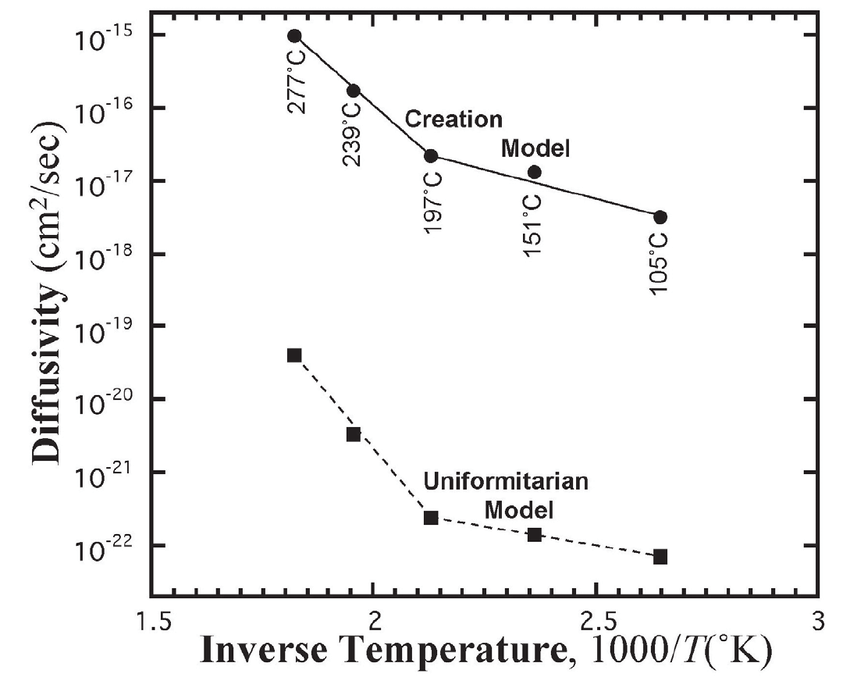
    Back to geology. In 1982, Dr. Robert Gentry discovered that the nuclear-decay-generated helium in little crystals in granites called zircons was too high for the rocks to have undergone a constant decay rate (Gentry, 1986). His observation lead to Dr. Russell Humphreys prediction during the early stages of the RATE project (Humphreys, 2000, p. 348, Figure 7), which were verified by an external laboratory, challenged the conventional radiometric dating assumptions. The high retention rates of helium in zircon crystals indicate that they cannot be millions of years old. The data fit his prediction, as shown below, perfectly.

    6. Cool Subducted Zones and Rapid Plate Tectonics

    Dr. John Baumgardner, a geophysicist, predicted that subducted lithospheric zones in the mantle would be cooler than expected (Baumgardner, 1994), due to rapid plate tectonics during the Flood. Observations have confirmed these cooler zones, supporting the Catastrophic Plate Tectonics (CPT) model.

    7. Lack of Metamorphosis in Folded Rock Layers

    Geologist Dr. Andrew Snelling predicted that Tapeats sandstone samples in bends would not exhibit metamorphic change to the minerals, despite the folding of the layers. This is because he predicted that all the sedimentary layers were laid down during the flood and that seismic activity below caused the layers to deform over the hardened faults below. Snelling et al. investigated the Tapeats and found no metamorphosing (Snelling, 2021). This evidence supports the prediction that these rocks were bent while still soft and it refutes the mainstream science prediction of ductile deformation (immense pressure and heat over time which should result in metamorphic changes), demonstrating that the folding occurred rapidly, before the rocks had time to metamorphose.

    8. Human Genetic Diversity

    Creation models predicted a relatively recent origin for humanity, with low genetic diversity. Genetic studies, including those on mitochondrial DNA and the Y chromosome, have supported this prediction, pointing to a relatively recent common ancestry.


    These are my top eight examples which highlight the predictive power of the creationist model. These predictions and their verifications dispel the myth that “creationists don’t make predictions” and, hopefully, give you a deeper appreciation for the robustness and explanatory power of the creationist worldview.

    Citations:

    1. John Baumgardner, J. R. (2003). Carbon-14 evidence for a recent global flood and a young age of the Earth. In Proceedings of the Fifth International Conference on Creationism (pp. 129-142). Creation Science Fellowship.
    2. Carter, R. W. (2010). The non-coding genome. Journal of Creation, 24(3), 116-123.
    3. Gentry, R. V. (1986). Radiohalos in polonium 218: evidence of a pre-cambrian granite. Science, 234(4776), 561-566.
    4. Humphreys, D. R. (2000). Accelerated nuclear decay: evidence for young-age radiocarbon dating. In Radioisotopes and the Age of The Earth: Results of a Young-Earth Creationist Research Initiative (pp. 333-379). Institute for Creation Research. p. 348, Figure 7.
    5. Baumgardner, J. R. (1994). Runaway subduction as the driving mechanism for the Genesis flood. In Proceedings of the Third International Conference on Creationism (pp. 63-75). Creation Science Fellowship.
    6. Snelling, A. A. (2021). The Petrology of the Tapeats Sandstone, Tonto Group, Grand Canyon, Arizona. Answers Research Journal, 14, 159–254.