Creation Questions

Tag: Biology

  • Tiny Water Fleas, Big Questions About Evolution

    Tiny Water Fleas, Big Questions About Evolution

    Scientists recently spent a decade tracking the genetics of a tiny water creature called Daphnia pulex, a type of water flea. What they found is stirring up a lot of questions about how evolution really works.  

    Imagine you’re watching a group of people over ten years, noting every little change in their appearance. Now, imagine doing that with the genetic code of hundreds of water fleas. That’s essentially what these researchers did. They looked at how the frequencies of different versions of genes (alleles) changed from year to year.

    What they discovered was surprising. On average, most of the genetic variations they tracked didn’t seem to be under strong selection at all. In other words, most of the time, the different versions of genes were more or less equally successful. It’s like watching people over ten years and finding that, on average, nobody’s hair color really changed much.

    However, there was a catch. Even though the average trend was “no change,” there were a lot of ups and downs from year to year. One year, a particular gene version might be slightly more common, and the next year, it might be slightly less common. This means that selective pressures—the forces that push evolution—were constantly changing.

    Think of it like the weather. One day it’s sunny, the next it’s rainy, but the average temperature over the year might be pretty mild. The researchers called this “fluctuating selection.”

    They also found that these genetic changes weren’t happening randomly across the whole genome. Instead, they were happening in small, linked groups of genes. These groups seemed to be working together, like little teams within the genome.  

    So, what does this all mean?

    Well, for one thing, it challenges the traditional idea of gradual, steady evolution via natural selection. If evolution were a slow, constant march forward, you’d expect to see consistent changes in gene frequencies over time being promoted by the environment. But that’s not what they found. Instead, they saw a lot of back-and-forth, with selection pressures constantly changing and equalizing at a net-zero.  

    From a design perspective, this makes a lot of sense. Instead of random changes slowly building up over millions of years, this data suggests that organisms are incredibly adaptable, designed to handle constant environmental shifts. The “teams” of linked genes working together look a lot like pre-programmed modules, ready to respond to whatever challenges the environment throws their way.

    The fact that most gene variations are “quasi-neutral,” meaning they don’t really affect survival on average, also fits with the idea of a stable, created genome. Rather than constantly evolving new features, organisms might be designed with a wide range of genetic options, ready to be used when needed.

    This study on tiny water fleas is a reminder that evolution is a lot more complex than we often think. It’s not just about random mutations and gradual changes. It’s about adaptability, flexibility, and a genome that’s ready for anything. And maybe, just maybe, it’s about design.

    (Based on: The genome-wide signature of short-term temporal selection)
  • The Limits of Evolution

    The Limits of Evolution

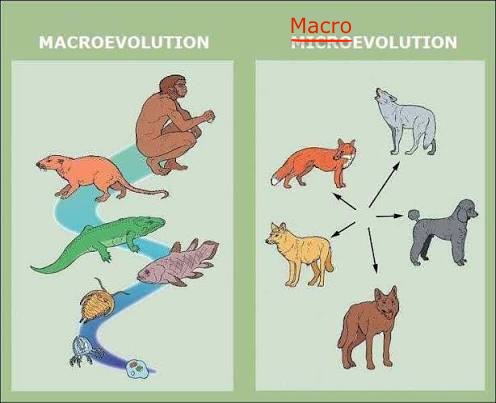
    Yesterday, a presentation by Dr. Rob Stadler took place on Dr. James Tour’s Youtube channel which has brought to light a compelling debate about the true extent of evolutionary capabilities. In their conversation, they delve into the levels of confidence in evolutionary evidence, revealing a stark contrast between observable, high-confidence microevolution and the extrapolated, low-confidence claims of macroevolutionary transitions. This distinction, which is based on the levels of evidence as understood in medical science, raises profound questions about the sufficiency of evolutionary mechanisms to explain the vast diversity of life.

    Dr. Stadler, author of “The Scientific Approach to Evolution,” presents a rigorous framework for evaluating scientific evidence. He outlines six criteria for high-confidence results: repeatability, direct measurability, prospectiveness, unbiasedness, assumption-free methodology, and reasonable claims. Applying these criteria to common evolutionary arguments, such as the fossil record, geographic distribution, vestigial organs, and comparative anatomy, Dr. Stadler reveals significant shortcomings. These lines of evidence, he argues, fall short of the high-confidence threshold. They are not repeatable, they cannot be directly measured, there is very little (if any) of predictive value , and most importantly they rely heavily on biased interpretation and assumption.

    However, the interview also highlights examples of high-confidence evolutionary studies. Experiments with E. coli bacteria, for instance, demonstrate the power of natural selection and mutation to drive small-scale changes within a population. These studies, repeatable and directly measurable, provide compelling evidence for microevolution. Yet, as Dr. Stadler emphasizes, extrapolating these observed changes to explain the origin of complex biological systems or the vast diversity of life is a leap of faith, not a scientific conclusion.

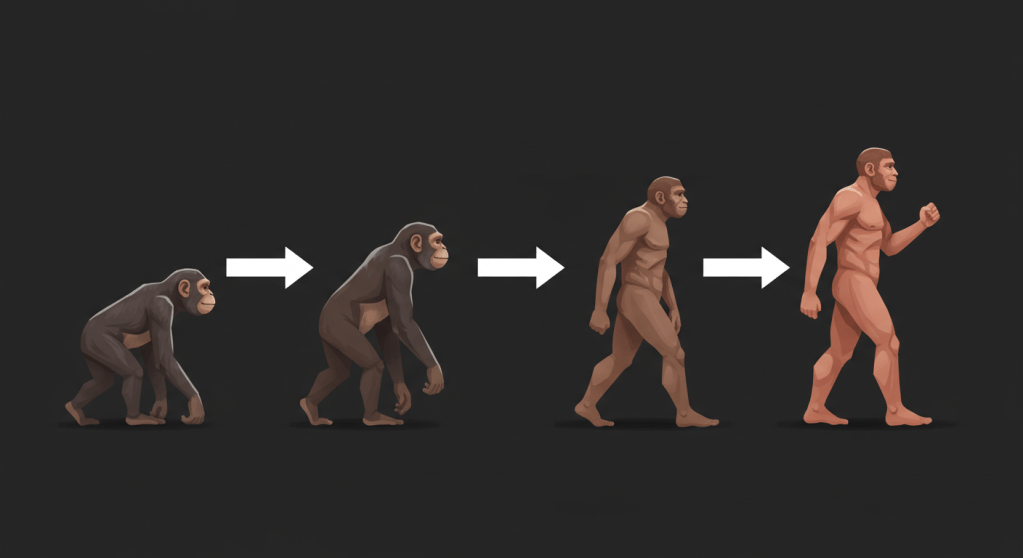
    The genetic differences between humans and chimpanzees further illustrate this point. While popular science often cites a 98% similarity, Dr. Stadler points out the significant differences, particularly in “orphan genes” and the regulatory functions of non-protein-coding DNA. These differences, he argues, challenge the notion of a simple, linear evolutionary progression.

    This aligns with the research of Dr. Douglas Axe, whose early work explored the probability of protein evolution. Axe’s findings suggest that the vast divergence between protein structures makes a common ancestor for all proteins highly improbable (Axe, 2000). This raises critical questions about the likelihood of orphan genes arising through random evolutionary processes alone, given the complexity and specificity of protein function.

    The core argument, as presented by Dr. Tour and Dr. Stadler, is not that evolution is entirely false. Rather, they contend that the high-confidence evidence supports only limited, small-scale changes, or microevolution. The leap to macroevolution, the idea that these small changes can accumulate to produce entirely new biological forms, appears to be a category error, based on our best evidence, and remains a low-confidence extrapolation.

    The video effectively presents case studies of evolution, demonstrating the observed limitations of evolutionary change. This evidence strongly suggests that evolutionary mechanisms are insufficient to account for the levels of diversity we observe today. The complexity of biological systems, the vast genetic differences between species, and the improbability of protein evolution challenge the core tenets of Neo-Darwinism and the Modern Synthesis.

    As Dr. Tour and Dr. Stadler articulate, a clear distinction must be made between observable, repeatable microevolution and the extrapolated, assumption-laden claims of macroevolution. While the former is supported by high-confidence evidence, the latter remains a subject of intense debate, demanding further scientific scrutiny.

    Works Cited

    • Tour, James, and Rob Stadler. “Evolution vs. Evidence: Are We Really 98% Chimp?” YouTube, uploaded by James Tour, https://www.youtube.com/watch?v=smTbYKJcnj8&t=2117s.
    • Axe, Douglas D. “Extreme functional sensitivity to conservative amino acid changes on enzyme exteriors.” Journal of Molecular Biology, vol. 301, no. 3, 2000, pp. 585-595.