
Creation Questions

Tag: god

  • The Idealist Argument from Contingency

    The Idealist Argument from Contingency

    Introduction: Observing Ex Nihilo Creation

    As I have been promoting the Kalam cosmological argument, I’ve been thinking deeply about its particular criticisms. To be clear, most criticisms of Craig’s Kalam fail, however some are fascinating and get you thinking about the particulars such as what existence means and whether ex nihilo (out of nothing) is an ontologically distinct kind of creation which we don’t observe.

    On one hand, most proponents of the Kalam are perfectly willing to grant that we don’t observe ex nihilo creation and redirect the skeptic to the metaphysical entailments of creation (usually from the principle of sufficient reason), suggesting that the universe, and all things which have ontology in and of themselves, do need efficient causes. Yet, I really don’t think we need to cede ground here. As I’ve meditated on this, I’ve come to the conclusion that we do in fact observe ex nihilo creations—from our minds.

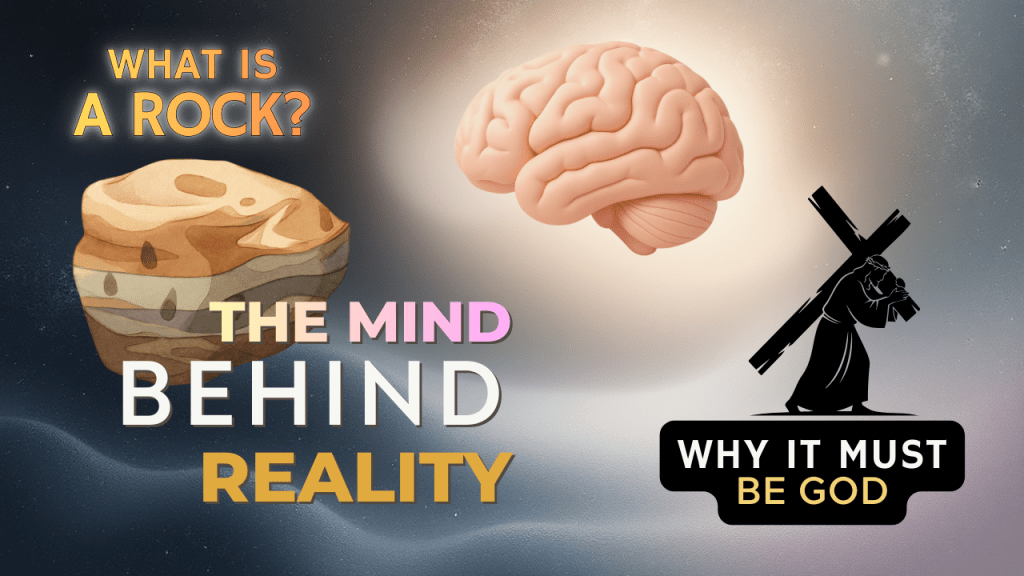
    What do I mean by this? Well, take any concept of a “thing”, let’s say a wooden chair (it’s the favorite of philosophers), and ask ourselves how it is that this thing exists in the “real” world. When we examine a chair carefully, we discover something remarkable: the chair as a unified object—as a chair—does not exist in the physical substrate at all. What exists physically are atoms arranged in a particular configuration. The “chairness” of this arrangement, the ontological unity that makes these atoms one thing rather than billions of separate things, is something imposed by mind. In this sense, we observe minds creating genuine ontological categories ex nihilo—not creating the matter itself, but creating the very thingness that makes a collection of particles into a unified object.

    This realization leads to a profound philosophical argument that I believe has been insufficiently explored in contemporary philosophy of religion.

    The Nature of Composite Objects

    We land on a few interesting features when we examine any purported “thing” in the material world. For one, a thing is instantiated in the world separate from its physical parts. This chair, for instance, may be made of wood, but many metals, plastics, and fabrics can be substituted and the identity of a thing within a category (or genus) is not changed. There is something higher than just mere components which brings the composition into a unified whole.

    But what is this “something higher”? The materialist wants to say it’s just the arrangement of particles. But this raises immediate problems. Consider: when exactly does a collection of wood atoms become a chair? When the carpenter has assembled 50% of the pieces? 75%? 90%? What if one leg is broken—is it still a chair, or merely chair-shaped atoms? What if the leg is cracked but still functional? The materialist has no principled answer to these questions because “chairness” is not a property that can be reduced to particle arrangements.

    The problem becomes even clearer when we consider boundaries. A chair has clear boundaries to us—we know where the chair ends and the floor begins. But at the atomic level, there are no such boundaries. Atoms are constantly exchanging electrons, being shed and replaced. Air molecules intermingle with the chair’s molecules at the surface. There is no physical demarcation that says “here the chair ends.” The boundaries we perceive (form) are imposed by our minds based on function and purpose.

    This leads to several different possible conclusions about where a “thing” must be sustained. We are asking where something really exists, ontologically speaking. To be precise, there are three exhaustive options: (1) the thing is sustained in a domain of itself (like Platonic Forms), (2) the thing is sustained in the material domain (by physics and chemistry alone), (3) the thing is sustained in the mental domain (by a mind). I offer the reader to consider alternate hypotheses and notice that these choices really do cover the gamut.

    The Trilemma of Ontology

    Let us examine each option in turn to see which can bear the weight of explanation.

    Option 1: Material Sustenance (Reductionist Materialism)

    For the materialist position, we run into the logical contradiction of unified-composite objects. The materialist must assume that composite objects, like a rock, have no inherent boundaries. Physical things are mere indifferentiable clusters of atoms. From here, the materialist has two options. They can either accept a form of object nihilism, where no composite objects actually exist, or they can turn to a nominalistic approach.

    In regards to nominalism, we must ask: what is the reason we would call a rock “rock” if separate from its ontology or it actually being a rock? If things, like a rock, exist in name only, then they do not really exist within distinct categories or kinds. This renders their definitions completely meaningless, because a good definition requires classification within the context of genus-species relationships. If things really exist as distinct objects, it is only because we have determined some aspect of their ontology over and above what reductionism or materialism can explain. So in reality, there is no sustainable nominalist approach for the materialist: one is either an object nihilist, or one must accept that real things are established some other way.

    It seems to me that something like a rock is a perfect example of what would be impossible to be established as ontologically distinct without a mind. Is a pebble a rock? Is a handful of sand many small pebbles? Why do we call a variant quantity of small rocks a singular category? Why do we delineate between singular grains of sand and groups of pebbles? Is it not an arbitrary size distinction relative to our observational abilities and purposes?

    For another example, consider why people groups such as Inuit tribes, who live in snowy environments, have many particular names for snow, whereas those tribes who live near the equator do not. It is because words are conventions within social groups to establish meaningful concepts. To someone who may see snow one day of the year, different textures and variations of snow are not meaningfully distinct. All composite objects that exist—including the very words that I am writing—are things minds have established as meaningful and bounded.

    Therefore, a rock is meaningfully different from a pebble and a group of pebbles from sand only insofar as our use or intent dictates. Our experience of snow presupposes our naming conventions of snow. If you learn a language with seven words for snow, but you have always lived in a desert, you will not suddenly understand snow differently—you need to experience snow differently first.

    But the materialist might object: “Even if our labels are arbitrary, the physical arrangements are real. When I sit in a chair, something physical holds me up.” This is true, but it misses the point. Yes, atoms arranged in a certain configuration will bear weight. But those atoms bearing weight is not the same as a chair existing. The chair, as a unified object with identity over time, with the capacity to be the same chair even if we replace parts, with clear boundaries—this is not present in the physical substrate. It is a mental construct imposed on that substrate.

    Consider the philosophical puzzle of the Ship of Theseus. If we replace every plank of a ship, one by one, is it the same ship? The puzzle has no answer in purely physical terms because the ship’s identity is not a physical property. Identity over time, unity, and boundaries are all features imposed by minds, not discovered in matter.

    If you accept Object Nihilism for composite objects and argue for a fundamental realist view where only quarks and leptons (or quantum fields) exist, then you face equally severe problems. What is your evidence that you exist ontologically? An entity which doesn’t exist as a unified object cannot consistently argue that some things do exist as unified objects. Moreover, what is your basis for assuming you know the “stuff” which is fundamental to reality? Even the quantum field is not necessarily the bottom line. Who can say what energy ultimately is? What’s to say that what’s fundamental isn’t also mind-contingent? That it isn’t mathematical in nature—which would itself require mental grounding?

    This view has made a distinction where everything composite is nominal except for something that has never been directly observed as a truly fundamental “thing.” How does one justify this distinction in the first place? It seems to me a contradiction in reasoning to deny mind-dependent categories for composite objects while affirming mind-independent categories for fundamental particles. Both require the same kind of ontological boundary-drawing that only minds can provide.

    Option 2: Self-Sustaining Forms (Platonism)

    From here, a skeptic might say, “Okay, the chair or rock isn’t purely material. But maybe it’s just a Platonic Form. It sustains itself in an abstract realm. Why do we need a Mind?”

    This is a more sophisticated response, but it ultimately fails for several reasons.

    First, abstract objects have no causal power. A Platonic Form of “chairness” cannot reach down into the physical world and organize atoms into a chair configuration. It cannot explain why this particular collection of atoms instantiates the form rather than some other collection. The relationship between abstract forms and concrete particulars remains deeply mysterious in Platonic metaphysics—so mysterious that even Plato himself struggled with it in dialogues like the Parmenides.

    Second, and more fundamentally, it is unintelligible to think of abstract objects like propositions, mathematical truths, or forms existing without a mind to think them. As Alvin Plantinga has argued, propositions are the contents of thoughts. They are the sort of thing that exists in minds. To say they exist “on their own” in some abstract realm is to commit a category error—it’s like saying colors exist independently of anything colored, or that motion exists independently of anything moving.

    Consider what a Platonic Form would have to be: a truth, a concept, a logical structure. But these are precisely the kinds of things that exist as thoughts. A thought cannot exist without a thinker any more than a dance can exist without a dancer. The Platonist wants to affirm that 2+2=4 exists eternally and necessarily, and I agree. But this truth exists as an eternal thought in an eternal mind, not as a free-floating abstraction.

    Third, many Platonic forms presuppose relationships, which themselves presuppose minds. Take the concept of justice. Justice involves right relations between persons. But “right relations” is an inherently normative concept that makes no sense without minds capable of recognizing and valuing those relations. Or consider mathematical sets. A set is defined by a rule of membership—a mental act of grouping things together according to a criterion. Sets don’t group themselves.

    Therefore, if the “Blueprint” of the universe is real—if there truly are eternal structures, categories, and forms that ground the intelligibility of reality—these cannot be free-floating abstract objects. They must be Divine Thoughts, eternally sustained in a Divine Mind.

    Option 3: Mental Sustenance (Idealism)

    This leaves us with the third option: composite objects exist insofar as they are sustained by minds. This may sound counterintuitive at first, but it’s the only option that avoids the contradictions of the previous two.

    When a carpenter builds a chair, he doesn’t merely arrange atoms—he imposes a conceptual unity on those atoms. He creates boundaries where there were none. He establishes identity conditions (this is one chair, not four separate legs plus a seat plus a back). He determines a function and purpose that gives meaning to the configuration. All of these acts are mental, not physical.

    But here’s the crucial question: once the carpenter stops thinking about the chair, does it cease to exist? In one sense, yes—the carpenter’s mind is no longer actively sustaining it. But in another sense, no—the chair continues to be recognized as a chair by other minds. As long as someone conceptualizes those atoms as a unified object called “chair,” it exists as such.

    This actually goes back to Bishop George Berkeley’s famous argument: “If a tree falls in the woods and no one is there to hear it, does it make a sound?” In a sense, if we stipulate that there is no wildlife and trees lack the ability to register sound frequencies, the fall really does not make a sound. This is because sound is a perception, a mental phenomenon. There are pressure waves in the air, certainly, but “sound” as we experience it requires a mind to interpret those waves.

    However, Berkeley went further than this, and so must we. Berkeley argued that material objects continue to exist when no human observes them because God’s mind perpetually perceives them. I want to make a similar but distinct claim: composite objects, categories, and the conceptual structure that makes reality intelligible all require perpetual mental sustenance. Not just observation, but active ontological grounding.

    An analogy may help: consider an author writing a novel. The characters in the novel have a kind of existence—they’re not nothing. But their existence is entirely dependent on the author’s creative act and the mind of any reader engaging with them. If every copy of the book were destroyed and everyone forgot the story, the characters would cease to exist in any meaningful sense. They have no “existential inertia” apart from minds sustaining them.

    I propose that composite objects in our world are similar. The atoms may have mind-independent existence (though even this is debatable), but the chairness—the unified object with boundaries, identity, and purpose—exists only in minds. And since these objects continue to exist even when finite human minds aren’t thinking about them, they must be sustained by an infinite, omnipresent Mind.

    The Formal Argument

    All this contemplation leads me to the first formulation of a new kind of contingency argument which I call the Argument from Ontological Sustenance (or Idealist Argument from Contingency):

    Premise 1: All composite objects require a mind to sustain their ontology.

    Premise 2: The universe is a composite object.

    Conclusion: Therefore, the universe requires a mind to sustain its ontology.

    This is a logically valid argument, meaning if the premises are true, the conclusion must be as well.

    The first premise has been defended at length above. The key insight is that composite objects—things made of parts organized into a unity—have no ontological status in the physical substrate alone. Their unity, boundaries, and identity exist only as mental constructs.

    The second premise should be relatively uncontroversial. The universe is composed of parts (galaxies, stars, planets, particles) organized into a whole. It has boundaries (even if those boundaries are the limits of spacetime itself). It has an identity that persists through time. All of these features require the same kind of mental grounding that chairs and rocks require.

    Therefore, the universe itself must be sustained in its existence as a unified, bounded entity by a mind. And since the universe contains all finite minds, this sustaining mind must be transcendent—beyond the universe, not part of it.

    Why Not Pantheism?

    An obvious objection arises: couldn’t the universe itself be the Mind that sustains all these categories? This would be a pantheistic solution—identifying God with the universe itself rather than positing a transcendent deity.

    This fails for several reasons:

    Step 1: A mind is a container for concepts. It is the sort of thing that has thoughts, holds ideas, and maintains logical relationships between propositions.

    Step 2: Necessary truths (logic, mathematics, metaphysics) exist outside our finite minds. We discover them; we don’t invent them. This implies a Greater Mind contains them.

    Step 3: Could this Greater Mind be the Universe itself?

    Refutation: No. A “Universe Mind” would be composed of parts (galaxies, energy fields, quantum states) and subject to entropy (time, change, decay). But anything composed of parts is contingent—dependent on those parts and their organization. Anything subject to entropy requires external sustenance or an explanation for why it continues to exist through change.

    Moreover, the universe is precisely the kind of composite object that needs mental grounding. To say the universe grounds its own categories is circular—it’s like saying a novel writes itself, or a dance choreographs itself.

    Conclusion: The Ultimate Sustainer cannot be the Universe. It must be Transcendent (distinct from creation) and Non-Contingent (self-existent, not dependent on anything external to itself).

    The Divine Attributes

    Once we establish that a Transcendent, Non-Contingent Mind sustains all reality, we can derive further attributes through the classical logic of Act and Potency (pure actuality).

    Premise: A Non-Contingent Mind has no external cause, and therefore no external limitations or deficiencies. It is “Pure Act”—fully realized, with no unrealized potential.

    Omnipotence

    To possess “some” power but not “all” power is to have a limitation—an unrealized potential to do more. But a Non-Contingent Being has no unrealized potentials by definition. Nothing external limits what it can do. Therefore, it possesses all power—omnipotence.

    Omniscience

    Ignorance is a lack, a privation of knowledge. A Fully Realized Mind has no lacks or privations. Moreover, if this Mind sustains all reality through its thoughts, it must know everything it sustains—otherwise, how could it sustain it? Therefore, it knows all things—omniscience.

    Omnibenevolence

    Evil, in the classical metaphysical tradition, is a privation—a lack of goodness or being. It is not a positive reality but an absence, like cold is the absence of heat or darkness the absence of light. Since this Mind is Fully Realized Being with no privations, it contains no evil. It is Pure Goodness—omnibenevolence.

    Eternity and Immutability

    Change implies potentiality—the ability to become something one is not yet. But a Non-Contingent Being has no potentiality. Therefore, it does not change. It exists eternally in a timeless present, not subject to temporal succession.

    Personhood

    This Mind thinks, knows, and creates categories. These are the activities of a person, not an impersonal force. Moreover, the categories it sustains include moral values, relational properties, and purposes—all of which presuppose personhood. Therefore, this Being is personal.

    The Christian Specificity

    We have now established the existence of a Transcendent, Omnipotent, Omniscient, Omnibenevolent, Eternal, Personal Mind that sustains all reality. This is recognizably the God of classical theism. But can we go further and identify this God with the specific God of Christianity?

    The Argument from Relational Necessity

    Premise 1: A God who is Personal, Truthful, and Loving is inherently Relational. Love seeks connection; truth seeks to be known; personhood seeks communion.

    Premise 2: To be fully known and to establish a perfect relationship with finite creatures, this Infinite God must bridge the ontological gap. He cannot remain purely transcendent and abstract.

    Consider: if God is perfectly loving, His love must be expressed, not merely potential. If God is truth, He must reveal Himself, not remain hidden. If God is personal, He must enter into relationship with persons He has created. But finite creatures cannot reach up to an infinite God—the ontological distance is too vast. Therefore, God must reach down to us.

    The Filter

    With this criterion, we can evaluate the world’s major religious traditions:

    Deism/Pantheism: These fail immediately because they offer no relationship. Deism presents a God who creates and withdraws. Pantheism identifies God with the universe, making genuine relationship impossible.

    Unitarian Monotheism (Islam/Judaism): These traditions affirm God’s transcendence and offer prophetic revelation—books and laws sent from on high. But God remains fundamentally separate. He sends messages but does not cross the boundary to unite with creation. The relationship is external, mediated through texts and commandments, never achieving full intimacy or union.

    Christianity: This succeeds as the only worldview where the Sustainer becomes the Sustained. In the doctrine of the Incarnation, God doesn’t merely send a message about Himself—He enters history as a human being. The Infinite becomes finite. The Creator becomes a creature. The Mind that sustains all reality subjects Himself to the very categories He created.

    This is not merely unique—it’s philosophically necessary. If God is to bridge the ontological gap between infinite and finite, between Creator and creature, He must do so by becoming both. The Incarnation is the only way for perfect relationship to be achieved.

    Verification Through Human Experience

    The Christian worldview also uniquely and truthfully describes the human condition. We experience ourselves as simultaneously possessing great dignity (made in God’s image, capable of reason and love) and great depravity (prone to selfishness, cruelty, and irrationality). We long for meaning, purpose, and redemption, yet find ourselves unable to achieve these on our own.

    Christianity explains this through the doctrine of the Fall and offers a solution through Redemption—not by our own efforts, but by God’s gracious action in Christ. This narrative aligns with both our philosophical conclusions about God’s nature and our existential experience of ourselves.

    Conclusion

    The Mind that sustains the rock, the chair, and every composite object in reality is the same Mind that entered the world as Jesus of Nazareth. From the seemingly simple question “What makes a chair a chair?” we have traced a path to the central truth of Christianity: God is not distant or abstract, but intimately involved in every aspect of reality, from the smallest pebble to the vast cosmos, from the categories that make thought possible to the incarnate life that makes redemption possible.

    This is the Argument from Ontological Sustenance. Like all philosophical arguments, it invites scrutiny, challenges, and further refinement. But I believe it opens a fruitful path for natural theology—one that begins not with cosmological speculation about the universe’s beginning, but with careful attention to the ontological structure of everyday objects and the categories that make them intelligible.

    Every time we recognize a chair as a chair, a rock as a rock, or the universe as a cosmos, we are implicitly acknowledging the work of the Divine Mind that makes such recognition possible.

  • Jesus Is The Logos

    Jesus Is The Logos

    Based on a cross-sectional analysis of Revelation, John, Hebrews, Colossians, and 1 Timothy, the conclusion that the Logos is a pre-existent, divine person, Jesus Christ, is not merely suggested, but is textually inescapable.

    Let me explain:

    The argument begins with the most direct statement of identity and nature:

    “In the beginning was the WORD, and the Word was with God, and the Word was God.” — John 1:1

    This verse establishes two critical facts: The Word is eternal and the Word is distinct in personhood but shares divinity.

    This divine person is definitively named at the climactic moment of Christ’s return:

    “He was clothed with a robe dipped in blood, and His name is called The Word of God.” — Revelation 19:13

    Jesus is explicitly named the “Word of God.” Jesus is linked to the Word across multiple apostolic authors. John introduces the concept immediately:

    “All things were made through Him, and without Him nothing was made that was made.” — John 1:3

    The Apostle Paul and the author of Hebrews use the identical theological framework to describe Jesus:

    Colossians 1:16: “For by Him all things were created that are in heaven and that are on earth… All things were created through Him and for Him.”

    1 Corinthians 8:6: “…one Lord Jesus Christ, through whom are all things, and through whom we live.”

    Hebrews 1:2: “…spoken to us by His Son, through whom also He made the worlds.”

    Jesus is the sole, ultimate agent “through whom all things consist and were created.” Jesus of Nazareth must, therefore, be the Logos of John 1:1-3. This divine Creator is also the perfect revelation of the Father, known through the Incarnation.

    “The WORD became flesh and made his dwelling among us. We have seen his glory, the glory of the one and only Son, who came from the Father…” — John 1:14

    The mystery of godliness, that God appeared in the flesh (1 Timothy 3:16), is explained by the Logos taking on humanity. Furthermore, He is defined by His relationship to the invisible God:

    “He is the image of the invisible God…” — Colossians 1:15

    “[He is] the brightness of His glory and the express image of His person, and upholding all things by the word of His power…” — Hebrews 1:3

    The Greek word for “express image” in Hebrews 1:3 is charaktēr, meaning an exact replica or the imprint left by a stamp or engraving tool. This confirms that the person of Jesus (the Word) is the precise, perfect, and essential representation of the invisible Father.

    The evidence forms an irrefutable loop: The one who is called the Word of God (Revelation) is the one who is God (John 1:1). This same figure is the one through whom all things were created (John 1:3, Colossians 1:16, 1 Corinthians 8:6). Finally, this divine Creator became flesh (John 1:14) to reveal the exact image of God (Hebrews 1:3). The biblical testimony is unified, establishing the inescapable truth that Jesus Christ is the eternal, divine WORD (Logos).

  • The Five Major Challenges To Hume’s Skepticism

    The Five Major Challenges To Hume’s Skepticism

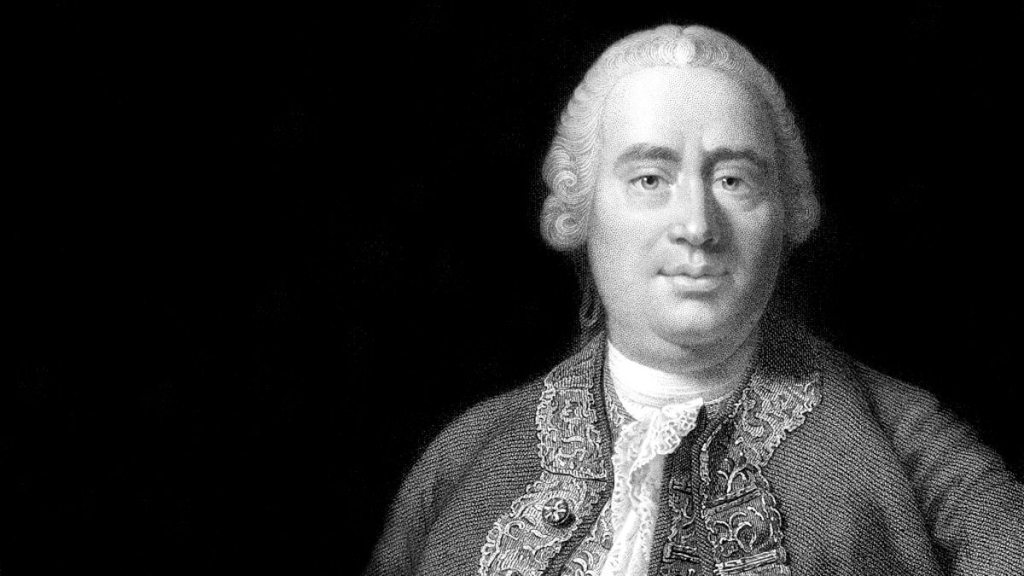
    In David Hume’s book A Treatise of Human Nature, he constructs what he calls the science of man. One cannot rightly understand any other species of science before this foundational science. The most radical and paradigm-shifting realization, for Hume, is that if all that exists are impressions and ideas, there are no grounds to truly justify putting any two impressions together causally, no matter how we might be inclined or disposed to do so, either by vulgar habit or through any rational means. This profound insight — that impressions are singular moments of a particular feeling with no relation except that of imagination — forced philosophers (including critics such as Reid) to deeply re-evaluate theories of knowledge acquisition and general epistemic concerns.

    Reid says this in his dedication for An Inquiry into the Human Mind, “His reasoning appeared to me to be just: there was therefore a necessity to call in question the principles upon which it was founded, or to admit the conclusions.” However, there are more reasons than the mere founding principles to reject Hume’s rationale. Drawing on a recent and rigorous debate, here are the five major critiques that make me skeptical of Hume’s skeptical conclusions.

    1. Circular Reasoning (The Problem of Induction)

    Hume uses causal reasoning (observing past regularities and inferring principles about human nature) to undermine the rational basis of causal reasoning. Suppose Hume justifies the separation of cause and correlation from experience, and he uses the distinction to describe and also argue against cause-and-effect as existing outside the mind (outside a relation/idea). In that case, he is making a circular argument. The implications of this circular reasoning are profound, as it challenges the very basis of our understanding of cause and effect. If belief in necessary connection is understood apart from reason, then there is equally no reason to undermine causal reasoning. The basis for an essential connection is reason and logical deduction. Thus, we can infer it from particular impressions, or it is not, and thus we can infer it based on specific impressions. Nothing falls on his skeptical rebuttal. You cannot easily conceive of a cause without an effect, any more than a premise without a conclusion.

    2. The Self-Refutation of Assertion and Communication

    The fact that Hume is making an argument refutes his point entirely. On what grounds can Hume either 1. make a distinction between kinds of necessity or 2. place either relations or matters of fact squarely into one category? Unthinkable things are equivalent to non-existent things, according to Hume. Therefore, you cannot make claims about external reality with reference to non-existent concepts. Even concepts of the imagination must exist by virtue of real impressions that have newly associated connections. Where are the impressions for a law such as non-contradiction?

    Hume believes we cannot know a table exists, so this is not simply descriptive. His outward attempts to convince others, and the fact that he has followers who support his theory, testify against him. Psychological interpretations of reality are false simply because meaning exists apart from the mechanical goings-on of the mind, and that meaning is communicable. The very fact that Hume is articulating his theory indicates such. Even a phenomenological view is better than psychologism.

    3. The Ad Hoc Assumption of External Existence

    Hume asks for the impression that gives rise to the idea of continuation and external existence separate from our perception, but where does he get the idea of continuation and external existence in the first place? If everything is sense impressions, how is he arguing against anything contrary to sense impressions? This is all very ad hoc. Calling concepts fabrications of the imagination and such. Does he not realize that by doing so, he’s condemning his very principles, which allowed him to condemn continuation and external existence?

    4. The Active Nature of Impressions, Not Raw Data

    There is also another popular critique of Hume. That is the notion of the tree falling in the woods. The tree falls without making a sound. A sound is something that can only be heard. The point being, Hume’s impressions already imply cause-and-effect before they are even interpreted or registered. Here is another thing. If two people hear a recording of an orchestra, but one of them has finely tuned ears for orchestration while the other does not, then, on first glance, the one with finely tuned ears will hear the counter-melody played on the violin. The one that does not is not surprising. However, Hume would have to acknowledge this as an impression reflected, interpreted by relation (all of which in a near-instant), yet that implies a higher acuity has been granted to the one in the realm of a particular sense. If sense is raw data, and therefore something that you receive and not create, it stands to reason that you should not be able to improve in the tacit reception of raw data. This analogy highlights the inherent contradictions in Hume’s argument, suggesting that our senses are not passive receptors of information but active interpreters that can improve over time.

    5. The Flawed Equivalence of Conceivability and Possibility

    A rigorous philosophical objection to Hume’s conclusion on necessity centers on his premise that what is conceivable is logically possible. Hume argues that because we can conceive of a cause without its usual effect (e.g., imagining the sun not rising) without contradiction, the necessary connection is not a truth of reason, but of habit. However, this conflates a psychological possibility (what we can imagine) with a metaphysical possibility (what could actually happen in reality). Contemporary critics argue that our inability to conceive of a contradiction in a causal break may reflect our epistemic limitations —our ignorance of deep, non-obvious natural laws —rather than a statement about the world itself. Therefore, the supposed “freedom” of the imagination that underpins his skepticism is merely a function of our ignorance of actual natural necessity, and his argument fails to prove that the necessity is truly absent from the objects themselves.

  • The Pagan Can Be Saved?

    The Pagan Can Be Saved?

    Wesley Coleman

    In Søren Kierkegaard’s Concluding Unscientific Postscript to Philosophical Fragments, Johannes Climacus breaks down notions, based on objective and speculative interpretations, of Christianity, arguing instead that authentic religious truth is fundamentally subjective. As exemplified in his assertion on page 201 regarding truth in prayer, Climacus posits that the manner of an individual’s infinite, passionate relation to the eternal—even in the face of objective uncertainty or perceived untruth—is paramount, superseding intellectual assent to dogma or historical fact and revealing the inherent limitations of any detached, disinterested approach to faith. This stance foregrounds the lived reality of faith as a personal, strenuous endeavor, fundamentally separate from and perhaps at odds with objective inquiry.

    Kierkegaard, through Climacus, opens the Postscript by challenging what he identifies as problematic approaches to understanding Christianity: the historical, the speculative, and the superficial religiousness prevalent in his time. From the very start, Kierkegaard has separated the objective issue of the truth of Christianity from the subjective issue of the subjective individual’s relation to the truth of Christianity (Kierkegaard 22). Climacus contends that the objective point of view, whether focusing on historical or philosophical truth, is inherently flawed when applied to Christianity. An objective inquiry is characterized as “disinterested,” seeking to establish truth through critical consideration of reports or the relation of doctrine to eternal truth. However, for an individual concerned with their eternal happiness, historical certainty, being merely an “approximation,” is profoundly insufficient. This is because “an approximation is too little to build his happiness on and is so unlike an eternal happiness that no result can ensue” (Kierkegaard 22). The scholarly pursuit, while commendable in its erudition, ultimately “distracts” from the issue of an individual’s faith (Kierkegaard 14) and “suppresses” the vital dialectical clarity required for true understanding (Kierkegaard 11).

    The fundamental problem with objectivity, as Climacus elaborates, is its inherent detachment from the individual’s existence. The “objective subject” is too “modest” and “immodest” to include himself in the inquiry; he is interested but “not infinitely, personally, impassionedly interested in his relation to this truth concerning his own eternal happiness” (Kierkegaard 22). This detachment leads to a comical self-deception: “Precisely this is the basis of the scholar’s elevated calm and the parroter’s comical thoughtlessness” (Kierkegaard 22). Christianity, Climacus asserts, is spirit; spirit is inwardness; inwardness is subjectivity; subjectivity is essentially passion, and at its maximum an infinite, personally interested passion for one’s eternal happiness. Therefore, as soon as subjectivity is taken away, and passion from subjectivity, and infinite interest from passion, there is no decision whatsoever. The objective approach, by sacrificing this infinite, personal, impassioned interestedness, paradoxically makes one too objective to have eternal happiness. The speculative point of view fares no better, attempting to permeate Christianity with thought and and make it eternal thought. Yet, if Christianity is truly subjectivity, a matter of inward deepening, then objective indifference cannot come to know anything whatsoever. Like is understood only by like; thus, the knower must be in the requisite state of infinite, passionate interest. Speculative thought, in its objectivity, is “totally indifferent to his and my and your eternal happiness” (Kierkegaard 55), making its “happiness” an illusion as it attempts to be “exclusively eternal within time” (Kierkegaard 56).

    This critique of objective and speculative approaches, which Climacus gradually unfolds finally builds to a climax on page 201 with the passage at hand to be dealt with. The chapter titled “Subjective Truth, Inwardness; Truth Is Subjectivity” in Part Two directly introduces the core concept that “truth becomes appropriation, inwardness, subjectivity, and the point is to immerse oneself, existing, in subjectivity” (Kierkegaard 192). Climacus establishes that for an existing person, “the question about truth persists” not as an abstract definition, but as something to “exist in” (Kierkegaard 191). He dismisses mediation and the abstract “subject-object” as reverting to abstraction (Kierkegaard 192), emphasizing that “an existing person cannot be in two places at the same time, cannot be subject-object” (Kierkegaard 199). The “I-I” is explicitly called a “mathematical point that does not exist at all” (Kierkegaard 197), making it clear, for Climacus, that it is an impossibility for an existing human being to transcend their individual, passionate existence and achieve this abstract oneness. For Climacus, “only ethical and ethical-religious knowing is essential knowing” (Kierkegaard 198), and such knowing is always essentially related to the knower’s own existence.

    The critical distinction, immediately preceding the paragraph in question, is articulated as: “When the question about truth is asked objectively, truth is reflected upon objectively as an object to which the knower relates himself…When the question about truth is asked subjectively, the individual’s relation is reflected upon subjectively. If only the how of this relation is in truth, the individual is in truth, even if he in this way were to relate himself to untruth” (Kierkegaard 199). This prioritizes the mode of relation over the object of relation in its abstracted form separate from engagement.

    Then, the force of Climacus’s argument is finally catalyzed. He starts with an aggressive remark, “now, if the problem is to calculate where there is more truth…then there can be no doubt about the answer for anyone who is not totally botched by scholarship and science” (Kierkegaard 201). The harsh remark is true, it is intuitive for all those not steeped in abstraction. Those who are incapable of grasping the truth are those which have been immersed in a harmful way of thinking, and Climacus’s words are meant to provoke that truth. The phrase “botched by scholarship and science” in particular is reminiscent of the “infinite, personal, impassioned interestedness” which exists in the person practicing the objective issue (Kierkegaard 27).

    Climacus then explicitly rules out any notion of a neutral, balanced approach: “(and, as stated, simultaneously to be on both sides equally is not granted to an existing person but is only a beatifying delusion for a deluded I-I)” (Kierkegaard 201). This re-emphasizes that an existing human being cannot inhabit the abstract “subject-object” or “I-I,” which is a phantom of pure thought (Kierkegaard 192). To attempt such a mediation between objective and subjective approaches is a “delusion,” a fantastical escape from the concrete reality of existing. An existing person is always in a process of becoming (Kierkegaard 192), and this inherent motion precludes the static, all-encompassing view of the “I-I” (Kierkegaard 199).

    The core of the paragraph is the deep dichotomy presented: “whether on the side of the person who only objectively seeks the true God and the approximating truth of the God-idea or on the side of the person who is infinitely concerned that he in truth relate himself to God with the infinite passion of need” (Kierkegaard 201). The dichotomy is on one hand, “the true God” and “approximating truth of the God-idea” and on the other, “infinite passion of need.” The objective seeker remains stuck in approximate knowledge, which, as established earlier, is insufficient for eternal happiness. In contrast, the “infinite passion of need” signifies the highest subjectivity, where the individual’s “eternal happiness” is at stake. This passion brings true existential importance to the individual which is impossible through speculation.

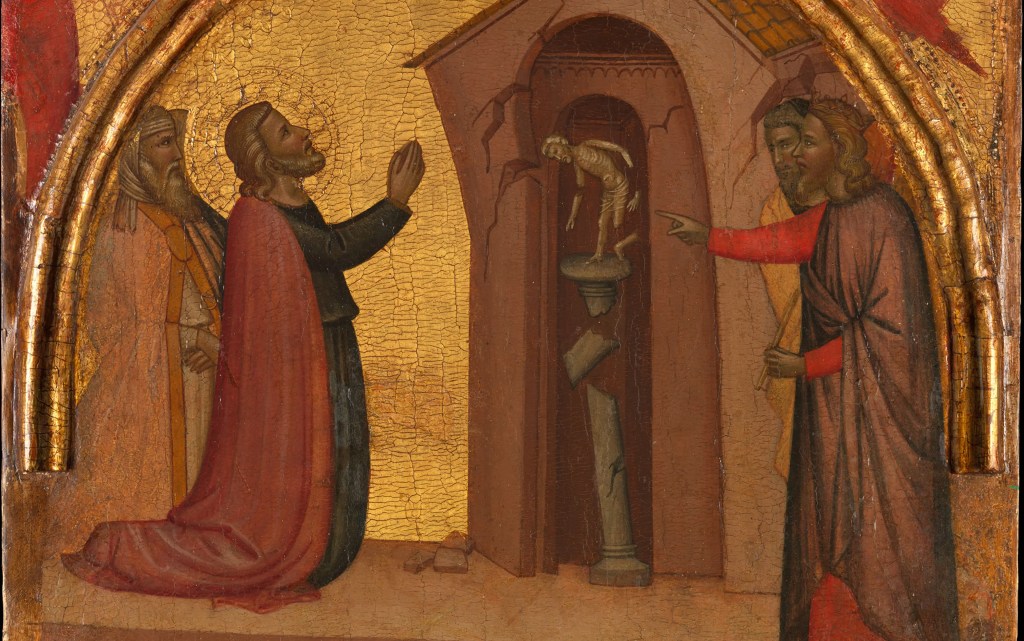
    The paragraph then presents a provocative thought experiment: “If someone who lives in the midst of Christianity enters, with knowledge of the true idea of God, the house of God, the house of the true God, and prays, but prays in untruth, and if someone lives in an idolatrous land but prays with all the passion of infinity, although his eyes are resting upon the image of an idol—where, then, is there more truth?” (Kierkegaard 201). This scenario is incredibly hard for many who view Christianity as something true that one believes about God. This analogy turns that presumption on its head drawing a distinction between the “what” and the “how” of faith (Kierkegaard 199). The person who is a Christian by birth or culture or even intellectually “knows the true idea of God” and prays in the “house of the true God” (Kierkegaard 201) represents the objective approach that assumes faith is an afterthought and something that can be taken for granted. Such an individual may possess all the outward forms and correct doctrines, but their prayer is “in untruth” if it lacks the “infinite passion of inwardness” (Kierkegaard 201). This coincides with Climacus’s earlier assertion that objective Christianity is pagan (Kierkegaard 43), and to know a creed by rote is paganism, because Christianity is inwardness. Their knowledge, being disinterested, is merely a vanishing, unrecognizable atom of objective understanding, not transformative truth.

    Conversely, the individual in an “idolatrous land” who prays “with all the passion of infinity” to an idol, despite the objective untruth of the object, possesses “more truth” (Kierkegaard 201). The passion itself, the subjective “how” of their relation, is the determining factor. This is because the passion of the infinite is the very truth. Their worship, even of an objectively false god, carries the weight of authentic, boundless engagement.

    The conclusion of the paragraph drives the point home: “The one prays in truth to God although he is worshiping an idol; the other prays in untruth to the true God and is therefore in truth worshiping an idol” (Kierkegaard 201). This is not a relativistic dismissal of God’s objective existence, but a radical redefinition of what constitutes truth in the context of an individual’s religious life. The person who prays passionately to an idol is, in their inwardness, genuinely seeking the divine, and this “infinite passion of need” (Kierkegaard 201) creates a true “God-relation” (Kierkegaard 199). Their relation, despite the objective error, is in truth. This is, perhaps, a shocking revelation to the one who calls the heretic ‘unsaved’. Conversely, the person who prays to the true God without this infinite passion effectively turns the true God into an “idol”—an object of detached, intellectual assent rather than a living, transforming presence. This intellectual understanding without passionate inwardness is merely an illusion. It reduces the divine to an object for intellectual scrutiny, precisely what objective thought does to Christianity (Kierkegaard 52).

    Other possible interpretations of this passage, primarily objective or speculative, fail to grasp its radical thrust. An objective interpretation would likely focus on the factual untruth of idol worship, concluding that the idolater is in untruth regardless of their passion. This perspective, however, completely misses Climacus’s central argument that objective knowledge is “indifferent” to the knower’s existence and thus cannot engage with the truth of the infinite (Kierkegaard 193). For an objective approach, the truth is merely “an object to which the knower relates himself” (Kierkegaard 199), failing to recognize that “the individual’s relation is reflected upon subjectively” and the “how” is truth (Kierkegaard 199). This kind of detached, “disinterested” knowledge simply “distracts” from the issue of faith (Kierkegaard 28).

    A speculative interpretation might attempt to mediate between the two positions, arguing that the true understanding lies in a higher synthesis where both the object and the subjective relation are reconciled. However, Climacus explicitly rejects such mediation for an existing person, stating that to be in mediation is to be finished; to exist is to become. Speculative thought, in its quest for a “system” (Kierkegaard 14), “promises everything and keeps nothing at all” for the existing individual. It assumes a “presuppositionless” beginning and ultimately “dissolves into a make-believe” of understanding faith (Kierkegaard 14). By attempting to “explain and annul” the paradox, speculative thought implicitly “corrects” Christianity instead of explaining it. The absolute paradox, which is the eternal truth coming into existence in time, cannot be understood but only believed “against the understanding” (Kierkegaard 217). Any attempt to rationally encompass or explain it is “volatilization” and a return to paganism (Kierkegaard 217). The speculative thinker, in trying to become “objective” and “disappear from himself” (Kierkegaard 56), cannot grasp the existential truth of faith, which is grounded in passion and the “utmost exertion” of the existing self (Kierkegaard 55).

    Furthermore, the interpretation that reduces Christianity to a set of doctrines or a historical phenomenon, implicitly adopted by the “Christian in the midst of Christianity” who prays “in untruth” (Kierkegaard 201), is also rejected. Christianity is not a doctrine but a relational act. The relation to a doctrine is merely intellectual, whereas the relation to Christianity is one of faith, an infinite interestedness. To be a Christian by name only is a serious danger due to the fact that it removes the necessary “infinite passion” (Kierkegaard 16). Such individuals, by “praying in untruth” (Kierkegaard 201), effectively transform the true God into an “idol” (Kierkegaard 201), stripped of the demanding, transformative power that calls for infinite inwardness.

    In conclusion, the paragraph on page 201 profoundly encapsulates Climacus’s core thesis: Christianity’s truth is existentially actualized not through objective knowledge or speculative comprehension, but through the subjective individual’s absolute, infinite passion. This passion, born of an “infinite need” and held fast against “objective uncertainty” (Kierkegaard 203), is the very essence of faith, a “contradiction between the infinite passion of inwardness and the objective uncertainty” (Kierkegaard 204). The example of the passionate idolater versus the dispassionate Christian reveals that the intensity and truthfulness of the subjective relation far outweighs the objective accuracy of the object of worship when it comes to genuine religiousness. This radical emphasis on the “how” of faith over the “what” forces the reader to confront the demanding, terrifying, and deeply personal nature of becoming and being a Christian, a path that rejects the easy and fragmentary reassurances of objective certainty and speculative systems in favor of a lived, passionate existence with a holistic commitment. The radical conclusion that one can have objective error and be in real relationship with God. The radical conclusion that the pagan can be saved. Not because their idol is the true God, but because they have true faith.

    Climacus, Johannes. Concluding Unscientific Postscript to Philosophical Fragments. Edited and translated by Howard V. Hong and Edna H. Hong, Princeton UP, 1992.

  • The Creation, the Fall, and the Problem of Suffering

    The Creation, the Fall, and the Problem of Suffering

    The problem of evil, death, and suffering has plagued humanity for millennia. How can a loving, all-powerful God allow such things? Many Christians have proposed scenarios suggesting that suffering helps us truly value goodness, or that our need for redemption demonstrates God’s great love. However, these explanations often fall short. Wouldn’t it be better to never experience sickness at all? And what about animal suffering, like a doe trapped in a forest fire?

    These challenging questions have a clear biblical explanation that is often overlooked when Christians disregard the evidence for a young creation perspective. From a biblical creationist viewpoint, the answers to suffering and death lie in three key areas:

    • The original perfect creation
    • The exercise of human free will
    • God’s righteous judgment following sin

    Genesis 1:31 states that God declared His creation “very good.” This description implies a state of perfection—a world without the decay and suffering we see today. This perfect state is fundamentally incompatible with the presence of death, disease, and suffering as original features of creation.

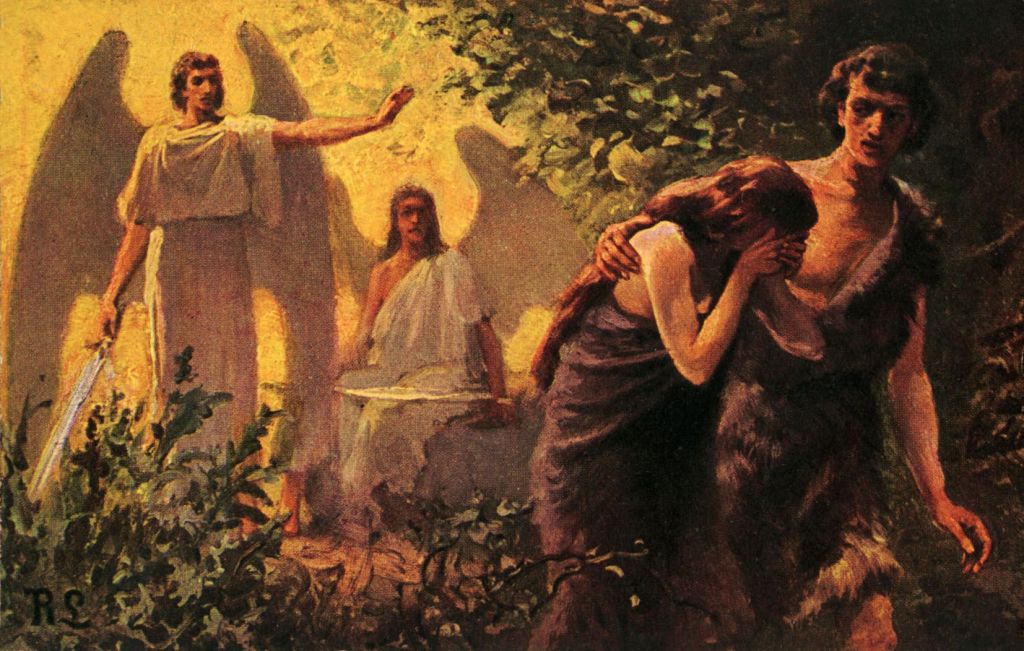
    The pivotal moment occurs in Genesis 2:17, where God warns Adam: “but of the tree of the knowledge of good and evil you shall not eat, for in the day that you eat of it you shall surely die.”

    The Hebrew text provides important insights:

    • Young’s Literal Translation renders “you shall surely die” as “dying thou dost die,” capturing the Hebrew infinitive absolute that emphasizes both the certainty and the process of death
    • The Hebrew word “בְּי֛וֹם” (be-yohm, “in the day”) with its prefix typically refers to an age or time period, indicating the consequences would begin in the age they ate the fruit, not necessarily instantaneously

    When Adam and Eve disobeyed, God’s judgment was pronounced in Genesis 3:19: “By the sweat of your face you shall eat bread, till you return to the ground, for out of it you were taken; for you are dust, and to dust you shall return.” This confirmed that physical death entered the world, alongside the spiritual death that had already occurred at the moment of disobedience.

    The Bible clearly states that both humans and animals were originally vegetarian:

    “And God said, ‘Behold, I have given you every plant yielding seed that is on the face of all the earth, and every tree with seed in its fruit. You shall have them for food. And to every beast of the earth and to every bird of the heavens and to everything that creeps on the earth, everything that has the breath of life, I have given every green plant for food.’ And it was so.” (Genesis 1:29-30)

    This passage reveals a world initially free from predation and animal suffering before the Fall.

    An important distinction exists between plant life and animal life. After the Flood, God permitted humans to eat animal flesh: “Every moving thing that lives shall be food for you. And as I gave you the green plants, I give you everything. But you shall not eat flesh with its life, that is, its blood” (Genesis 9:3-4).

    The Hebrew term “nephesh chayyah” (living soul) applies to animals and humans, but not to plants, indicating a significant difference in the biblical concept of “life.” This distinction explains why the consumption of plants does not constitute death in the same sense as animal or human death.

    The ability to choose between good and evil is fundamental to human nature and dignity. Adam and Eve’s decision to disobey God was a deliberate exercise of free will with profound consequences. This choice introduced sin, death, and suffering into the world, demonstrating the reality and weight of moral responsibility.

    God valued human freedom enough to allow the possibility of wrong choices, even knowing the devastating consequences that would follow. This perspective highlights both God’s respect for human agency and the seriousness with which He views our moral decisions.

    The biblical creation account directly contradicts the evolutionary narrative, which posits death and competition as essential drivers of biological change. The biblical view presents:

    • A “very good” original creation
    • The introduction of death after the Fall
    • A fundamentally different understanding of Earth’s history

    If death existed before Adam’s sin, this would undermine the biblical connection between sin and death, and by extension, the necessity of Christ’s sacrificial death to overcome sin.

    The biblical account clearly states that death entered the world through Adam’s sin. 1 Corinthians 15:21-22, “For as by a man came death, by a man has come also the resurrection of the dead. For as in Adam all die, so also in Christ shall all be made alive.”  

    Conclusion

    The creation account, coupled with the concepts of free will and God’s judgment, provides a comprehensive explanation for the presence of evil, death, and suffering in our world. While these issues remain complex and deeply personal, the biblical narrative offers a framework for understanding them within the context of:

    • God’s original perfect creation
    • Humanity’s fall into sin
    • God’s redemptive plan

    By embracing the creationist perspective, we gain a deeper appreciation for the profound implications of the Fall and the hope offered through God’s promise of restoration. Rather than attempting to reconcile death and suffering as part of God’s original “very good” creation, we recognize them as intruders in a once-perfect world—intruders that will ultimately be defeated through Christ’s redemptive work.

  • Ologies,ologies, everywhere, Nor any drop to drink…

    Ologies,ologies, everywhere, Nor any drop to drink…

    So, you’re telling me that every field of study, from the submicroscopic quarks of quantum physics to the grand cosmic spirals of astrophysics, can’t help but stumble over the God question? Metaphysics? Yes. Phenomenology? Check. Cosmology? Double-check. Epistemology? What do you know! Even dear old biology, with all its little proteins and DNA, can’t resist a good teleological head-scratcher.

    Now, I’m not saying this proves anything. I’m just saying, if you walk into a library and every book has a page on Bigfoot, you might start to wonder if there’s really something to that hairy fellow lurking in the woods. And when every intellectual pursuit is pondering about the divine, maybe, just maybe, He’s not a mere figment of our collective imagination.

    In an interview on the Soul Boom podcast, the well-known agnostic skeptic Alex O’Connor was asked what the best argument for the existence of God was. He said, “There are so many, I think there’s even an argument for the existence of God that can be made just from the number of arguments for the existence of God. The fact that there’s an argument from beauty, and argument from contingency, from ontology, from maths… Anywhere you look, there’s an argument for God, so you could always make an argument for God’s existence from the sheer number of arguments for God’s existence.”

    So in your honour, Alex, here is a little syllogism (albeit tongue and cheek):

    Let’s get logical for a second:

    1. Premise 1: Multiple independent disciplines (across diverse “ologies”) converge on arguments that point to or require a transcendent foundation resembling theistic conceptions.
    2. Premise 2: When independent intellectual traditions across diverse cultures and disciplines converge on similar conclusions despite different methodologies and starting assumptions, this convergence provides strong evidence for the validity of those conclusions.
    3. Premise 3: This convergence pattern exists regarding arguments that point to a transcendent foundation for reality, knowledge, consciousness, morality, etc.
    4. Conclusion: Therefore, there is strong evidence for the validity of a transcendent foundation (resembling theistic conceptions) for reality.

    Boom. Check mate, atheists.

    Of course, the skeptics will say, “But correlation doesn’t equal causation!” And to that, I say, “Sure, but it’s a heck of a coincidence, isn’t it?” It’s like finding a universal remote that works on every TV in the world. You might start to suspect someone is behind all these converging coincidences.

    The Information Age and the Divine Download

    Think about it: information theory tells us that complex information requires an intelligent source. Biological systems scream design, the fine-tuning of the universe is downright suspicious, and even our own brains’ consciousness hint at something beyond the purely material. As Dr. Stephen C. Meyer argues in his book “Signature in the Cell“, the digital code within DNA points to an intelligent cause.

    And if our brains can conjure up these elaborate arguments for God, maybe, just maybe, they’re picking up a signal from the ultimate source code. A divine download, if you will.

    A Gentle Nudge

    Maybe this is what Blaise Pascal thinking when he made his wager? We all must make a choice about believing in God’s existence or not with incomplete information, and the potential gains for accepting Him far outweigh the negatives. Perhaps the next time you’re investigating an obscure ‘ology’, and you find yourself pondering the God question, remember: in the end it comes down to a subjective decision. And the universe, in all its vastness and complexity, seems to be whispering which path to choose.

    Now, I’m not saying you have to believe any of this. But maybe, just maybe, it’s worth a second thought?

    Video: “Alex O’Connor Explores the Mysteries of God | Soul Boom” Soul Boom w/ Rainn Wilson (2025)

  • The Paradox of Free Will

    The Paradox of Free Will

    The question of free will has perplexed theologians and philosophers for centuries. For one concerned with a proper exegesis of the Bible, the concept of free will is crucial for understanding human responsibility, divine justice, and the nature of God’s relationship with humanity.

    The Bible consistently presents humans as moral agents capable of making choices. Several passages highlight this:  

    • Deuteronomy 30:19: “I call heaven and earth to witness against you today, that I have set before you life and death, blessing and curse. Therefore choose life, that you and your offspring may live.”
    • Joshua 24:15: “And if it is evil in your eyes to serve the Lord, choose this day whom you will serve, whether the gods your fathers served in the region beyond the River, or the gods of the Amorites in whose land you dwell. But as for me and my house, we will serve the Lord.”
    • Revelation 3:20: “Behold, I stand at the door and knock. If anyone hears my voice and opens the door, I will come in to him and eat with him, and he with me.”
    • 2 Peter 3:9: “The Lord is not slow to fulfill his promise as some count slowness, but is patient toward you, not wishing that any should perish, but that all should reach repentance.”

    These verses establish that God has instilled in his image-bearing creation an ability to make moral choices. God has made these choices available to us and we are culpable for our sin in disobedience. This is, at the very least, a strong indication that mankind is accountable to God. Therefore, ruling out any form of determinism that denies human accountability.

    Theological Considerations

    The tension between God’s sovereignty and human free will is a central theological challenge. There is not a simple yes or no that we can give to the question of free will, because it exists in the particular. While God is omniscient and omnipotent, the Bible also affirms human accountability. Further, God can intercede in human activity, even moral activity.

    A common example of this is God’s hardening of the Pharaoh’s heart in Exodus. God foreknew Pharaoh’s hardened heart, but Pharaoh’s initial choices were what led to divine hardening. God’s foreknowledge does not negate Pharaoh’s agency. This is what’s called prescience. God knowing the future, but did not cause the future.

    God is in total control of how he behaves and interacts with his creation. That does not mean he has to necessarily micromanage every aspect such that this world then becomes, “the greatest of all possible worlds.” If you take the view that God plays a direct role in every particular, you will run into a few problems.

    Take the popular analogy of God as an author and humans as characters. This is often used to argue against free will. It goes like this: imagine all of humankind and the universe, itself, are figures of the imagination of God. Sure, in the narrative a certain character may act in this or that way based on their motivations and choices, yet these motivations and choices were all designed by the author. The author can write the characters in whatever way is pleasing.

    However, this analogy breaks down when considering God’s desire for genuine relationship. This view results in the rather absurd conclusion that God must have created us solely for the entertainment value. If humans are merely puppets, their love for God is not authentic. True love requires reciprocal choice which requires free will. Therefore, a world without free will results in a parasitic phantasy in the mind of God.

    There are two counters to this perspective that I encounter often. They have to do with the power of God and the will of God. I will address, first, the will of God.

    It is indeed the case that nothing can happen apart from God’s will. So when this criticism gets brought up the framing is such that it appears, therefore, God wills for all the choices which you have made in your life to have happened and in the manner in which they happened. However, there is a hidden assumption. Does God actually will that, or is what God values a more nuances proposition. I argue that God’s will can be to permit free agency. This is suggested heavily in scripture any time that God calls for a response from his creation. When God says “sin no more,” he is calling man to action. Why is it necessary for God to say this, if God is the only active agent in the process of who sins and who does not? Does it make sense for me to say to my bicycle, “stop pedaling.” According to some, it is not the bike doing the pedaling and, likewise, it is not the man doing the sinning (although the bike is moving and the man is acting they are not casually powerful).

    So does man having free will to choose actions that move away from God’s set path make God less powerful? This claim is often made against those who endorse a free-will-agency view. It is suggested that, if man can act apart from God’s purpose for their life (even if it’s not against God’s will) there still arises a problem in which God could plausibly create a world where every freewill agent he created would freely choose him. God can rig the game in his favor, so to speak. Apart from the fact that if this counterexample is true, it has graver consequence on the validity of a reformed view, there is a logical error in this understanding of the nature of free will.

    If God were to guarantee a specific outcome, such as every human freely choosing him, then the choice would no longer be truly free. It would be a predetermined response, a mere illusion of choice. True free will necessitates the genuine possibility of choosing otherwise, including the potential for rejection. To remove this possibility is to remove the essence of free will itself, rendering it meaningless. Therefore, to argue that God’s power is diminished by allowing genuine free will is to misunderstand that genuine free will requires the possibility of choosing against God.

    Three Main Arguments For Free Will:

    1. If God ordains every human action, including evil ones, then God becomes the author of evil. For the young earth creationist there is a clear perspective which attributes evil to the misuse of free will, consistent with the Genesis narrative of the Fall. God allows evil, but he does not create it.
    2. As Dr. Michael S. Heiser argues, humans are created in God’s image, which includes attributes like intelligence, emotion, and creativity. It is consistent that free will is also a component of this image. To deny free will is to diminish human dignity and responsibility. It is also rather arbitrary to leave out a significant part of man’s God-image for no apparent reason. 
    3. The sacrifice of Jesus Christ is presented as sufficient for all humanity. If salvation is not universally applied, it is due to individual rejection, not divine limitation. God’s desire that none shall perish, is a strong argument for free will.

    Conclusion

    In conclusion, the biblical narrative, particularly the passages emphasizing human choice and accountability, strongly supports the concept of free will. While the tension between divine sovereignty and human agency presents a complex theological challenge, the young-Earth creationist perspective offers a coherent framework for understanding this relationship. By recognizing God’s permissive will, acknowledging the importance of genuine relationship, and affirming the image of God in humanity, we can reconcile these seemingly contradictory truths. The rejection of a deterministic worldview, which reduces humans to mere puppets, underscores the significance of free will in the context of divine justice and love. Potentially, the concept of created heterozygosity and information theory can provide a scientific framework and biological basis for understanding the inherent capacity for diverse moral choices within the created order (although this is speculation). Ultimately, the existence of free will, while a mystery in some respects, is essential for understanding human responsibility, the nature of God’s relationship with humanity, and the very essence of love itself.

  • My Top 5 Favorite Creation Podcasts

    My Top 5 Favorite Creation Podcasts

    As a creation enthusiast, I’m always on the lookout for resources that delve into the fascinating intersection of science and the biblical narrative. Podcasts have become a fantastic avenue for exploring these topics in depth, and I’ve curated a list of my top five favorites that consistently deliver insightful and engaging content.

    1. Let’s Talk Creation:

    This podcast is a gem for anyone seeking thoughtful and accessible discussions on creation science. Hosted by two PhD creationists, Todd Wood (baraminology) and Paul Garner (geology), “Let’s Talk Creation” offers bimonthly episodes that are both informative and easy to digest. What I appreciate most is their level-headed approach and their ability to break down complex scientific concepts into understandable terms. You’ll walk away from each episode with new insights and a deeper appreciation for the creation model.

    2. Standing For Truth:

    “Standing For Truth” is a powerhouse of creation content. With a vast database of interviews featuring subject experts from every relevant field, this podcast provides a comprehensive exploration of creation science. While it can get a little technical at times, the in-depth discussions and expert perspectives make it a valuable resource for those seeking a more rigorous understanding of the evidence.

    3. Creation Ministries International:

    For high-quality production and a wide variety of topics, “Creation Ministries International” delivers. Their videos are visually engaging and provide digestible explanations of creation science concepts including a wide range of scientists, philosophers, and theologians. While they may not always delve into the deepest technical details, their content is perfect for those seeking a solid overview of the evidence and its implications.

    4. Creation Unfolding:

    If you’re particularly interested in geology and paleontology, “Creation Unfolding” is a must-listen. The main host, Dr. K. P. Coulson, a well-researched geologist, brings a wealth of knowledge to the table, and the recurring guests provide diverse perspectives on these fascinating subjects. The laser-focused approach of this podcast makes it an invaluable resource for those seeking a deeper understanding of Earth’s history from a creationist perspective.

    5. Biblical Genetics:

    Dr. Robert Carter’s personal podcast, “Biblical Genetics,” is a treasure trove of information for anyone interested in the intersection of genetics and creation science. Dr. Carter, a renowned geneticist, tackles complex topics with clarity and precision, responding to popular-level content creators and professors with detailed explanations and analysis of technical papers. He skillfully guides listeners through intricate genetic concepts, making them accessible to a wider audience.


    These five podcasts represent a diverse range of perspectives and approaches to creation science. Whether you’re a seasoned creationist or just beginning to explore these topics, you’re sure to find valuable insights and engaging discussions within these podcasts.

  • Embryonic Similarities – Common Design, Not Common Descent

    Embryonic Similarities – Common Design, Not Common Descent

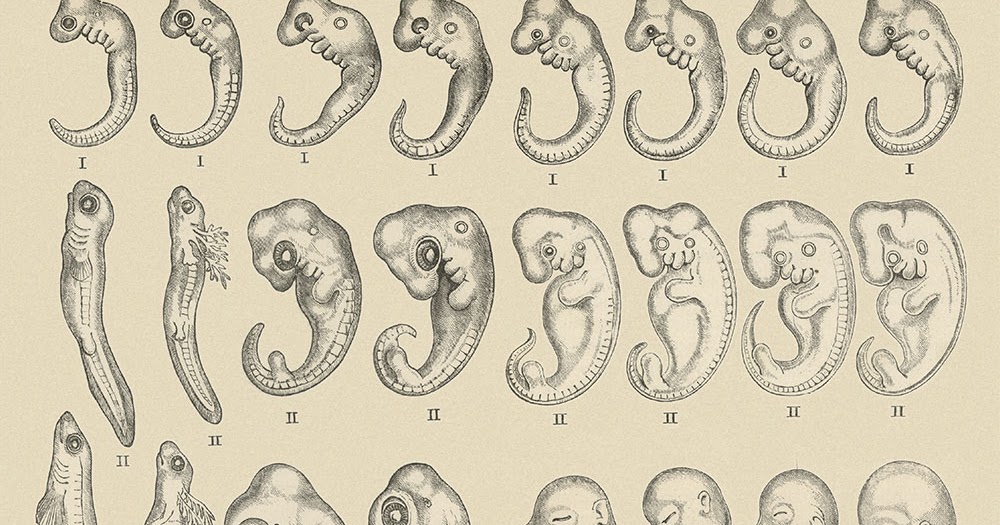
    For decades, textbook illustrations of Haeckel’s Embryos have been presented as a compelling visual argument for evolution. These side-by-side comparisons of vertebrate embryos, purportedly showing striking similarities in early developmental stages, have been used to argue for a shared evolutionary ancestry. However, a closer look reveals a story of misrepresentation and manipulation, rather than an accurate depiction of embryological evidence.

    Ernst Haeckel, a fervent supporter of Darwin’s theory, produced these drawings in the late 19th century. Yet, his illustrations were not faithful representations of actual embryos. He exaggerated similarities, omitted or altered developmental stages, and even used the same woodcut to represent different species. This deliberate manipulation aimed to bolster the concept of “recapitulation,” the now-discredited idea that embryonic development mirrors evolutionary history.

    The reality is that vertebrate embryos are far more distinct in their early stages than Haeckel portrayed. His illustrations were exposed as fraudulent even in his own time, yet they persisted in textbooks for generations, a testament to the power of visual propaganda in shaping scientific narratives.

    The argument that similarities in vertebrate embryos indicate a shared evolutionary history is challenged by several points.

    Challenging the “Recapitulation” Narrative

    One of the central tenets of the evolutionary argument is that embryonic development (“ontogeny”) reflects an organism’s evolutionary history (“phylogeny”). However, this concept, often summarized as “ontogeny recapitulates phylogeny,” is deeply flawed.

    • Embryonic Structures vs. Adult Structures: Embryonic features like pharyngeal slits and tails do not simply recapitulate the adult forms of ancestral organisms. Instead, they serve specific functions within the embryonic stage, often disappearing or transforming into entirely different structures in the adult. The embryonic mode of life is distinct from the adult mode.
    • “Recapitulation” is a Creationist Concept: The recognition of embryonic similarities predates Darwin. Creationists viewed these similarities as a “God-given ‘pattern of unification’ that reflected the unity of nature,” emphasizing a common Creator’s design rather than evolutionary lineage.
    • Unique Development: The unique eye development in lampreys, transitioning from larval eyespots to adult camera eyes, demonstrates that developmental pathways do not always follow a simple, linear evolutionary progression.
    • Order of Development: The occasional appearance of later-stage developmental features earlier in the embryonic process further complicates the evolutionary narrative.

    Genetic and Developmental Complexity

    The genetic and developmental complexity underlying embryonic similarities points to intelligent design:

    • Genetic Similarity: The fact that damage to the pax6 gene cascade results in the loss of a functional eye across diverse animal groups highlights a fundamental genetic similarity, but this similarity does not necessitate a shared evolutionary history. It speaks to a common design blueprint.
    • Complex Regulatory Systems: The development of complex structures like the eye involves thousands of interacting genes and intricate regulatory systems. Such complexity is more consistent with intelligent design than with random evolutionary processes.
    • Common Design: The similarities observed in vertebrate embryos can be readily explained as a reflection of a common design by an intelligent Creator. Just as an engineer might use similar design principles in different models, a Creator might employ common developmental strategies across various organisms.

    A Creationist Interpretation

    From a creationist perspective, the similarities in vertebrate embryos are not evidence of evolutionary transitions but rather manifestations of a unified design plan. The Creator used common design elements to achieve diverse functions in different organisms. This approach aligns with the concept of baraminology, which studies created kinds and acknowledges variations within those kinds.

    The argument that embryonic similarities exclusively support evolution overlooks the possibility of intelligent design. By recognizing the complexity of developmental processes and the historical context of these observations, we can appreciate the power of a creationist explanation.

  • Beyond Naturalism and Towards True Knowledge

    Beyond Naturalism and Towards True Knowledge

    The very definition of science has undergone a subtle yet significant shift. Historically, science was understood as the pursuit of knowledge, a quest to understand the world around us through observation and reason. This pursuit inherently necessitates certain presuppositions: that the universe operates with causal connections, that truth is knowable, and that we can have confidence in our ability to discern it. However, modern science has often become synonymous with methodological naturalism, a philosophy that restricts scientific inquiry to natural causes, excluding any possibility of non-natural or supernatural agency. The RationalWiki page on Methodological Naturalism introduces the concept like so:

    Methodological naturalism is the label for the required assumption of philosophical naturalism when working with the scientific method. Methodological naturalists limit their scientific research to the study of natural causes, because any attempts to define causal relationships with the supernatural are never fruitful, and result in the creation of scientific “dead ends” and God of the gaps-type hypotheses. To avoid these traps, scientists assume that all causes are empirical and naturalistic, which means they can be measured, quantified, and studied methodically.

    However, this assumption of naturalism need not extend beyond an assumption of methodology. This is what separates methodological naturalism from philosophical naturalism — the former is merely a tool and makes no truth claim, while the latter makes the philosophical — essentially atheistic — claim that only natural causes exist.

    The distinction between methodological and ontological naturalism, while often presented as this clear boundary, is, in practice, a strategic rhetorical move. Methodological naturalism purports to be a neutral, non-ontological framework for scientific inquiry. It claims to be a mere rule of engagement—that science should only investigate natural phenomena using natural explanations. Yet, in its application, it inexorably leads to ontological conclusions. By systematically excluding the possibility of non-natural causes a priori, science creates a worldview in which naturalism appears to be the only viable explanation for everything. This isn’t a discovery; it’s a foregone conclusion derived from the very rules of the game.


    The assumptions underpinning science are the most glaring example of this flawed logic. Science demands that phenomena be testable, repeatable, and observable, yet it rests on a foundation of unproven, non-empirical assumptions. We must assume logic, order, and consistency in nature—presuppositions that are not themselves testable by the scientific method. This creates a paradox: science, in its pursuit of knowledge, relies on foundational truths that are, by its own criteria, unscientific.


    This arbitrary limitation is particularly problematic when we consider the concept of agent causation. In fields like forensics, we readily distinguish between natural and volitional causes. We can conclude, based on empirical evidence, that an event was caused by an agent’s intent or will, even though that intent is not a physical object we can measure. There is already a precedent for including non-material causes in our models of reality. Science, as a system for making models that account for data, should be open to all potential causal explanations, not just those that fit within a pre-approved, naturalist box. By artificially fixing its scope to exclude supernatural causes, science pre-determines its own conclusions and, in doing so, sacrifices the pursuit of a more complete truth about reality. It becomes a system for confirming its own biases, rather than an open-ended quest for knowledge.


    Further, this limitation creates a profound epistemological problem. Consider the analogy of a painting: while analyzing the physical components of the paint and canvas can provide valuable information, it does not explain the origin or intent of the artwork. Even if we limit the inquiry to all natural processes and we found how the components could have been put together in this fashion through totally naturalistic processes, that doesn’t mean that this is the only explanation nor the most parsimonious explanation.
    Again forensics, but not just forensics, but archaeology, information theory, search for extraterrestrial intelligence (SETI), and geography. We routinely investigate both natural and non-natural causes. Embedded within these fields is the idea of agent causation, intentionality, and will. Archaeology examines artifacts to understand the cultural and intellectual agency of past civilizations. Information theory can examine material, in respect to its environment, which is high in free energy. This is usually simply described as complex and specified information. The Search for Extraterrestrial Intelligence (SETI) demonstrates that science can test for non-natural causes, such as intelligent signals from distant galaxies. Geography can also seek an understanding of how humans have impacted the natural processes and landforms of their environments through various farming and infrastructure.


    Why, then, is natural science uniquely restricted?


    The claim that science will eventually explain all phenomena through natural processes creates a logical contradiction. Methodological naturalism, by its very nature, cannot detect non-natural causes. Therefore, any conclusions drawn from this limited methodology are inherently incomplete. Scientific methodology is rooted in epistemological assumptions, and flawed assumptions lead to incomplete or inaccurate conclusions. Pragmatism, while useful, is insufficient for pursuing truth if it ignores potential causal factors.


    Counterexamples abound, highlighting that science is not always confined to strict naturalism. Studies on prayer and near-death experiences, for instance, explore non-natural influences. These examples underscore the fact that the a priori rejection of non-natural causes is a philosophical position that requires justification, especially given the prevalence of dual-causal investigations in other fields.


    From a creationist perspective, excluding supernatural processes as potential causal explanations is not only unscientific but also detrimental to the pursuit of true knowledge. The goal of science should be to determine the causes and mechanisms underlying observed phenomena, regardless of whether they are natural or involve intelligent agency. The term “supernatural” refers to causes that are not due to physical laws and chemistry, such as programming or other information input. Excluding these potential causes compromises the integrity of scientific inquiry.


    A true scientist must follow all leads and consider all possibilities to ensure that the most accurate and comprehensive model is upheld. Science is grounded in the principles of evidence-based reasoning, and the evidence may lead to non-natural or supernatural causes. If naturalism is to be a consistent and reliable methodology, it must be applied across all scientific disciplines, including forensics and historical sciences.


    In conclusion, the pursuit of knowledge should not be constrained by arbitrary philosophical limitations. By embracing a broader definition of science that includes the possibility of non-natural causes, we can move closer to a more complete and accurate understanding of the universe. This approach aligns with the creationist worldview, which recognizes the intelligent design and purpose inherent in the natural world.