Creation Questions

Tag: Philosophy

  • The Pagan Can Be Saved?

    The Pagan Can Be Saved?

    Wesley Coleman

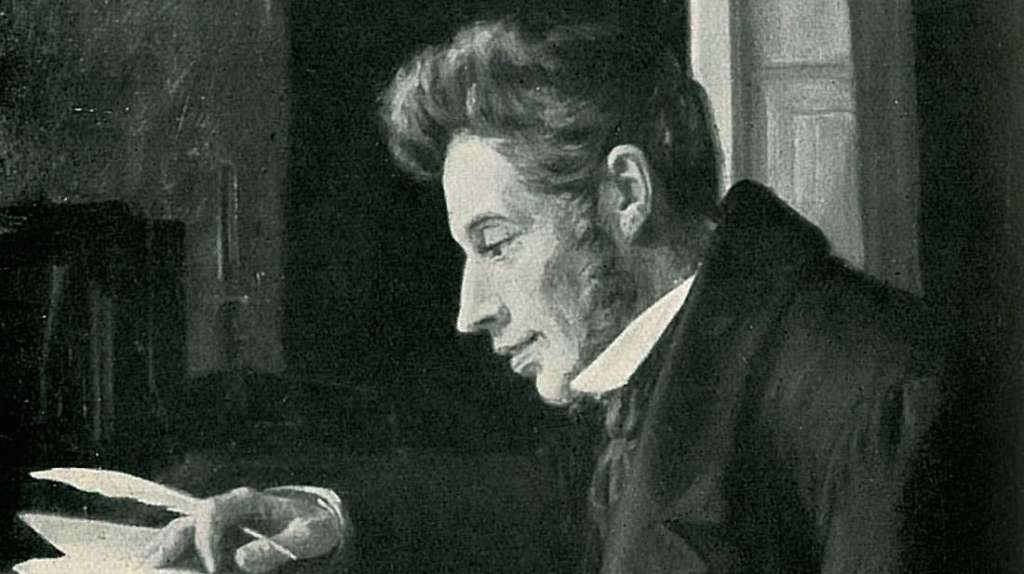
    In Søren Kierkegaard’s Concluding Unscientific Postscript to Philosophical Fragments, Johannes Climacus breaks down notions, based on objective and speculative interpretations, of Christianity, arguing instead that authentic religious truth is fundamentally subjective. As exemplified in his assertion on page 201 regarding truth in prayer, Climacus posits that the manner of an individual’s infinite, passionate relation to the eternal—even in the face of objective uncertainty or perceived untruth—is paramount, superseding intellectual assent to dogma or historical fact and revealing the inherent limitations of any detached, disinterested approach to faith. This stance foregrounds the lived reality of faith as a personal, strenuous endeavor, fundamentally separate from and perhaps at odds with objective inquiry.

    Kierkegaard, through Climacus, opens the Postscript by challenging what he identifies as problematic approaches to understanding Christianity: the historical, the speculative, and the superficial religiousness prevalent in his time. From the very start, Kierkegaard has separated the objective issue of the truth of Christianity from the subjective issue of the subjective individual’s relation to the truth of Christianity (Kierkegaard 22). Climacus contends that the objective point of view, whether focusing on historical or philosophical truth, is inherently flawed when applied to Christianity. An objective inquiry is characterized as “disinterested,” seeking to establish truth through critical consideration of reports or the relation of doctrine to eternal truth. However, for an individual concerned with their eternal happiness, historical certainty, being merely an “approximation,” is profoundly insufficient. This is because “an approximation is too little to build his happiness on and is so unlike an eternal happiness that no result can ensue” (Kierkegaard 22). The scholarly pursuit, while commendable in its erudition, ultimately “distracts” from the issue of an individual’s faith (Kierkegaard 14) and “suppresses” the vital dialectical clarity required for true understanding (Kierkegaard 11).

    The fundamental problem with objectivity, as Climacus elaborates, is its inherent detachment from the individual’s existence. The “objective subject” is too “modest” and “immodest” to include himself in the inquiry; he is interested but “not infinitely, personally, impassionedly interested in his relation to this truth concerning his own eternal happiness” (Kierkegaard 22). This detachment leads to a comical self-deception: “Precisely this is the basis of the scholar’s elevated calm and the parroter’s comical thoughtlessness” (Kierkegaard 22). Christianity, Climacus asserts, is spirit; spirit is inwardness; inwardness is subjectivity; subjectivity is essentially passion, and at its maximum an infinite, personally interested passion for one’s eternal happiness. Therefore, as soon as subjectivity is taken away, and passion from subjectivity, and infinite interest from passion, there is no decision whatsoever. The objective approach, by sacrificing this infinite, personal, impassioned interestedness, paradoxically makes one too objective to have eternal happiness. The speculative point of view fares no better, attempting to permeate Christianity with thought and and make it eternal thought. Yet, if Christianity is truly subjectivity, a matter of inward deepening, then objective indifference cannot come to know anything whatsoever. Like is understood only by like; thus, the knower must be in the requisite state of infinite, passionate interest. Speculative thought, in its objectivity, is “totally indifferent to his and my and your eternal happiness” (Kierkegaard 55), making its “happiness” an illusion as it attempts to be “exclusively eternal within time” (Kierkegaard 56).

    This critique of objective and speculative approaches, which Climacus gradually unfolds finally builds to a climax on page 201 with the passage at hand to be dealt with. The chapter titled “Subjective Truth, Inwardness; Truth Is Subjectivity” in Part Two directly introduces the core concept that “truth becomes appropriation, inwardness, subjectivity, and the point is to immerse oneself, existing, in subjectivity” (Kierkegaard 192). Climacus establishes that for an existing person, “the question about truth persists” not as an abstract definition, but as something to “exist in” (Kierkegaard 191). He dismisses mediation and the abstract “subject-object” as reverting to abstraction (Kierkegaard 192), emphasizing that “an existing person cannot be in two places at the same time, cannot be subject-object” (Kierkegaard 199). The “I-I” is explicitly called a “mathematical point that does not exist at all” (Kierkegaard 197), making it clear, for Climacus, that it is an impossibility for an existing human being to transcend their individual, passionate existence and achieve this abstract oneness. For Climacus, “only ethical and ethical-religious knowing is essential knowing” (Kierkegaard 198), and such knowing is always essentially related to the knower’s own existence.

    The critical distinction, immediately preceding the paragraph in question, is articulated as: “When the question about truth is asked objectively, truth is reflected upon objectively as an object to which the knower relates himself…When the question about truth is asked subjectively, the individual’s relation is reflected upon subjectively. If only the how of this relation is in truth, the individual is in truth, even if he in this way were to relate himself to untruth” (Kierkegaard 199). This prioritizes the mode of relation over the object of relation in its abstracted form separate from engagement.

    Then, the force of Climacus’s argument is finally catalyzed. He starts with an aggressive remark, “now, if the problem is to calculate where there is more truth…then there can be no doubt about the answer for anyone who is not totally botched by scholarship and science” (Kierkegaard 201). The harsh remark is true, it is intuitive for all those not steeped in abstraction. Those who are incapable of grasping the truth are those which have been immersed in a harmful way of thinking, and Climacus’s words are meant to provoke that truth. The phrase “botched by scholarship and science” in particular is reminiscent of the “infinite, personal, impassioned interestedness” which exists in the person practicing the objective issue (Kierkegaard 27).

    Climacus then explicitly rules out any notion of a neutral, balanced approach: “(and, as stated, simultaneously to be on both sides equally is not granted to an existing person but is only a beatifying delusion for a deluded I-I)” (Kierkegaard 201). This re-emphasizes that an existing human being cannot inhabit the abstract “subject-object” or “I-I,” which is a phantom of pure thought (Kierkegaard 192). To attempt such a mediation between objective and subjective approaches is a “delusion,” a fantastical escape from the concrete reality of existing. An existing person is always in a process of becoming (Kierkegaard 192), and this inherent motion precludes the static, all-encompassing view of the “I-I” (Kierkegaard 199).

    The core of the paragraph is the deep dichotomy presented: “whether on the side of the person who only objectively seeks the true God and the approximating truth of the God-idea or on the side of the person who is infinitely concerned that he in truth relate himself to God with the infinite passion of need” (Kierkegaard 201). The dichotomy is on one hand, “the true God” and “approximating truth of the God-idea” and on the other, “infinite passion of need.” The objective seeker remains stuck in approximate knowledge, which, as established earlier, is insufficient for eternal happiness. In contrast, the “infinite passion of need” signifies the highest subjectivity, where the individual’s “eternal happiness” is at stake. This passion brings true existential importance to the individual which is impossible through speculation.

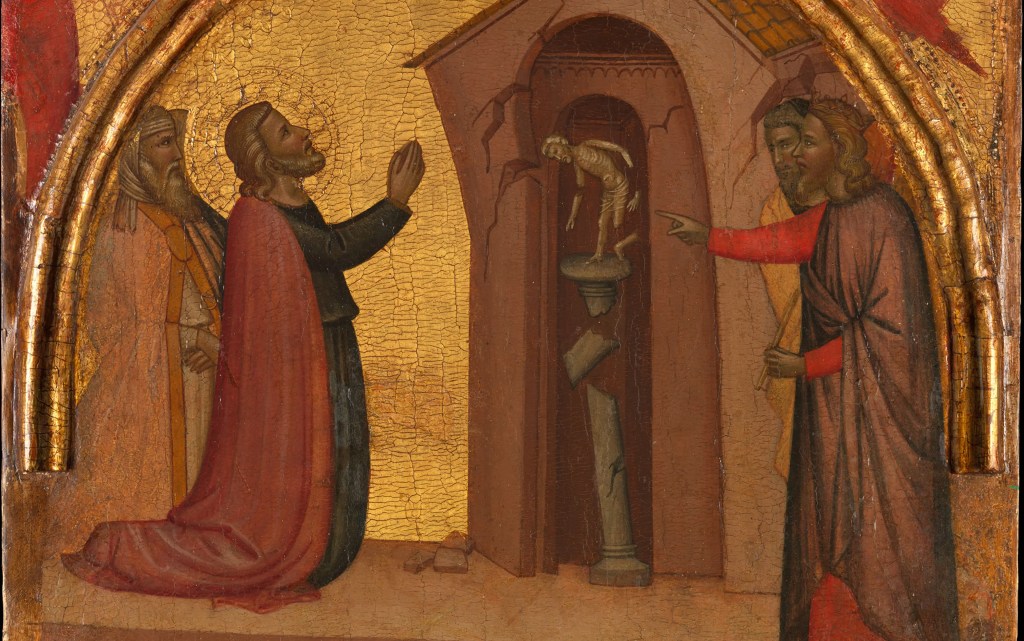
    The paragraph then presents a provocative thought experiment: “If someone who lives in the midst of Christianity enters, with knowledge of the true idea of God, the house of God, the house of the true God, and prays, but prays in untruth, and if someone lives in an idolatrous land but prays with all the passion of infinity, although his eyes are resting upon the image of an idol—where, then, is there more truth?” (Kierkegaard 201). This scenario is incredibly hard for many who view Christianity as something true that one believes about God. This analogy turns that presumption on its head drawing a distinction between the “what” and the “how” of faith (Kierkegaard 199). The person who is a Christian by birth or culture or even intellectually “knows the true idea of God” and prays in the “house of the true God” (Kierkegaard 201) represents the objective approach that assumes faith is an afterthought and something that can be taken for granted. Such an individual may possess all the outward forms and correct doctrines, but their prayer is “in untruth” if it lacks the “infinite passion of inwardness” (Kierkegaard 201). This coincides with Climacus’s earlier assertion that objective Christianity is pagan (Kierkegaard 43), and to know a creed by rote is paganism, because Christianity is inwardness. Their knowledge, being disinterested, is merely a vanishing, unrecognizable atom of objective understanding, not transformative truth.

    Conversely, the individual in an “idolatrous land” who prays “with all the passion of infinity” to an idol, despite the objective untruth of the object, possesses “more truth” (Kierkegaard 201). The passion itself, the subjective “how” of their relation, is the determining factor. This is because the passion of the infinite is the very truth. Their worship, even of an objectively false god, carries the weight of authentic, boundless engagement.

    The conclusion of the paragraph drives the point home: “The one prays in truth to God although he is worshiping an idol; the other prays in untruth to the true God and is therefore in truth worshiping an idol” (Kierkegaard 201). This is not a relativistic dismissal of God’s objective existence, but a radical redefinition of what constitutes truth in the context of an individual’s religious life. The person who prays passionately to an idol is, in their inwardness, genuinely seeking the divine, and this “infinite passion of need” (Kierkegaard 201) creates a true “God-relation” (Kierkegaard 199). Their relation, despite the objective error, is in truth. This is, perhaps, a shocking revelation to the one who calls the heretic ‘unsaved’. Conversely, the person who prays to the true God without this infinite passion effectively turns the true God into an “idol”—an object of detached, intellectual assent rather than a living, transforming presence. This intellectual understanding without passionate inwardness is merely an illusion. It reduces the divine to an object for intellectual scrutiny, precisely what objective thought does to Christianity (Kierkegaard 52).

    Other possible interpretations of this passage, primarily objective or speculative, fail to grasp its radical thrust. An objective interpretation would likely focus on the factual untruth of idol worship, concluding that the idolater is in untruth regardless of their passion. This perspective, however, completely misses Climacus’s central argument that objective knowledge is “indifferent” to the knower’s existence and thus cannot engage with the truth of the infinite (Kierkegaard 193). For an objective approach, the truth is merely “an object to which the knower relates himself” (Kierkegaard 199), failing to recognize that “the individual’s relation is reflected upon subjectively” and the “how” is truth (Kierkegaard 199). This kind of detached, “disinterested” knowledge simply “distracts” from the issue of faith (Kierkegaard 28).

    A speculative interpretation might attempt to mediate between the two positions, arguing that the true understanding lies in a higher synthesis where both the object and the subjective relation are reconciled. However, Climacus explicitly rejects such mediation for an existing person, stating that to be in mediation is to be finished; to exist is to become. Speculative thought, in its quest for a “system” (Kierkegaard 14), “promises everything and keeps nothing at all” for the existing individual. It assumes a “presuppositionless” beginning and ultimately “dissolves into a make-believe” of understanding faith (Kierkegaard 14). By attempting to “explain and annul” the paradox, speculative thought implicitly “corrects” Christianity instead of explaining it. The absolute paradox, which is the eternal truth coming into existence in time, cannot be understood but only believed “against the understanding” (Kierkegaard 217). Any attempt to rationally encompass or explain it is “volatilization” and a return to paganism (Kierkegaard 217). The speculative thinker, in trying to become “objective” and “disappear from himself” (Kierkegaard 56), cannot grasp the existential truth of faith, which is grounded in passion and the “utmost exertion” of the existing self (Kierkegaard 55).

    Furthermore, the interpretation that reduces Christianity to a set of doctrines or a historical phenomenon, implicitly adopted by the “Christian in the midst of Christianity” who prays “in untruth” (Kierkegaard 201), is also rejected. Christianity is not a doctrine but a relational act. The relation to a doctrine is merely intellectual, whereas the relation to Christianity is one of faith, an infinite interestedness. To be a Christian by name only is a serious danger due to the fact that it removes the necessary “infinite passion” (Kierkegaard 16). Such individuals, by “praying in untruth” (Kierkegaard 201), effectively transform the true God into an “idol” (Kierkegaard 201), stripped of the demanding, transformative power that calls for infinite inwardness.

    In conclusion, the paragraph on page 201 profoundly encapsulates Climacus’s core thesis: Christianity’s truth is existentially actualized not through objective knowledge or speculative comprehension, but through the subjective individual’s absolute, infinite passion. This passion, born of an “infinite need” and held fast against “objective uncertainty” (Kierkegaard 203), is the very essence of faith, a “contradiction between the infinite passion of inwardness and the objective uncertainty” (Kierkegaard 204). The example of the passionate idolater versus the dispassionate Christian reveals that the intensity and truthfulness of the subjective relation far outweighs the objective accuracy of the object of worship when it comes to genuine religiousness. This radical emphasis on the “how” of faith over the “what” forces the reader to confront the demanding, terrifying, and deeply personal nature of becoming and being a Christian, a path that rejects the easy and fragmentary reassurances of objective certainty and speculative systems in favor of a lived, passionate existence with a holistic commitment. The radical conclusion that one can have objective error and be in real relationship with God. The radical conclusion that the pagan can be saved. Not because their idol is the true God, but because they have true faith.

    Climacus, Johannes. Concluding Unscientific Postscript to Philosophical Fragments. Edited and translated by Howard V. Hong and Edna H. Hong, Princeton UP, 1992.


  • The Nature of Society: Where We Stand as Individuals

    The Nature of Society: Where We Stand as Individuals

    From my perspective, society isn’t some grand, top-down invention or a purely artificial construct. Instead, it’s a natural outgrowth of human interaction, an organic creation. This organic origin gives society a fascinating, dualistic nature: it’s both a source of conflict and a fertile ground for cooperation, a necessary evil, and a crucial tool for individual flourishing. I see these seemingly opposing ideas not as separate or contradictory, but as deeply intertwined.

    The inherent conflict within society comes from the undeniable reality of human imperfection. As fallen creatures, individuals will always have competing interests, differing desires, and a natural lean toward self-interest and corruption. This doesn’t mean we’re in a constant state of overt warfare, but rather a perpetual tension over resources, values, and the direction we take as a collective. Yet, our natural inclination to interact also fosters cooperation. Things like specialization, security, the pursuit of knowledge, and companionship make a collective invaluable. Society, then, emerges from this very tension—the delicate balance between individual will and collective order.


    Our Place as Individuals in the Social Fabric

    An individual’s relationship to society is equally nuanced. In my view, the paramount command for each of us is to love our neighbor and orient our lives toward God. This core Christian ethical responsibility dictates an outward-looking concern for others, yet it critically anchors responsibility within our own sphere of influence. While the collective good is undeniably important and should be prioritized when we can genuinely affect change, our ultimate responsibility isn’t to the totality of society—what Dostoevsky called ‘general love of humanity’—but for what we can directly control: the self.

    This means cultivating personal virtue, making ethical choices in daily interactions, and contributing positively within our own communities. Society, in turn, has a duty to its members, but this duty is reciprocal. It flows from the recognition that individuals have responsibilities toward each other. It’s not a top-down benevolence, but a framework of mutual obligation.


    Understanding Freedom and Authority

    Freedom, in this context, isn’t absolute license. All freedom is either freedom from or freedom to. We should possess freedom from things that cause harm—whether it’s physical violence, coercive manipulation, or the unjust suppression of conscience. Equally, we should have the freedom to choose things that benefit us, to pursue our vocations, and to act on good impulses. Crucially, to exercise these freedoms, we must also be free to express our perceptions about what’s beneficial and harmful, and to act on the former while restricting the latter.

    Broader, or higher, societal authority should be clearly codified into law, discriminating against no one group. These laws should ideally be general rules of conduct, equally applicable to all, providing a predictable framework for individual action rather than dictating specific outcomes.

    This idea comes from a fundamental principle of governance, which I derive from thinkers like Hayek and Mill: broader authority—the state or collective institutions—should err on the side of fewer restrictions and regulations. Its role is to establish and enforce the rules of the game, not to direct the play itself. Conversely, narrower authority, extending to its most narrow point in the self, should err on the side of being too restricted. This means exercising personal moral discipline and self-governance.

    This plays out with a clear distinction: the king declares that murder is forbidden, establishing a universal legal boundary, while the individual forbids hate in his own heart, engaging in the continuous, internal struggle for virtue. The former creates external order; the latter cultivates internal righteousness. The moment this moral hierarchy is dismembered is likely the same moment society begins to decline.


    The Unending Struggle

    Human beings are fallen creatures, and none of this will ever play out as a utopian vision. We’re not so malleable, in a Marxist sense, that our nature can be entirely shaped by policy or environmental conditions; there are inherent tendencies and proclivities that resist perfect social engineering. Nor are humans so inherently good that they don’t tend toward corruption when power is consolidated or accountability is removed. While humans are capable of immense wonders, they are equally capable of great atrocities. It’s not wrong to call humanity bad in its fallen state, but to call us irredeemable would be antithetical to the Christian ethos that informs my worldview.

    The telos of man, our ultimate purpose, is to obey God’s commands. Ideally, institutions should facilitate that process, creating an environment conducive to moral flourishing. However, due to human imperfection and the inherent limitations of collective structures, institutions are, perhaps, not capable of reaching that ideal state in their earthly manifestation.

    In many ways, I identify strongly with Friedrich Hayek’s arguments in The Road to Serfdom. His critique of collectivist policies and central planning resonates with my understanding of human nature and the necessary boundaries of societal authority. Hayek meticulously demonstrates how attempts to centrally plan society toward specific, desirable ends, even with the best intentions, inevitably lead to a loss of individual liberty and an escalation of coercive power and totalitarianism. I maintain a tentative rule-of-law position while I wait for the Lawmaker.

    Further Reading:

    • Dostoevsky, Fyodor. The Brothers Karamazov
    • Hayek, F. A. The Road to Serfdom
    • Marx, Karl, and Engels, Friedrich. The Communist Manifesto
    • Mill, John Stuart. On Liberty
  • The Incoherence of Naturalism

    The Incoherence of Naturalism

    Introduction

    Naturalism—the philosophical position that reality consists entirely of natural entities governed by natural laws—presents itself as the most rational and empirically grounded worldview. Yet despite its scientific veneer, naturalism suffers from foundational incoherence that undermines its viability as a comprehensive philosophy.

    This critique demonstrates that naturalism is self-defeating, arbitrarily restrictive, explanatorily inadequate, and internally inconsistent. Each of these failings stems not from temporary limitations in scientific knowledge but from structural contradictions within naturalism itself. Together, they render naturalism philosophically untenable and point toward the necessity of a more pluralistic metaphysical framework.

    Premise 1: Self-Defeating Foundations

    Naturalism’s first fatal flaw lies in its inability to justify its own foundations without circularity or special pleading.

    Scientific inquiry rests on several non-empirical assumptions that cannot be empirically verified: the reliability of human reason, the uniformity of nature, the correspondence between our perceptions and external reality, and principles like logical consistency and parsimony. These assumptions cannot be proven through scientific methods—they are preconditions for scientific inquiry itself.

    This creates an insurmountable problem for naturalism. If reality consists entirely of natural entities governed by natural laws, then human cognition is merely the product of evolutionary processes that selected for survival value, not truth-tracking capacity. As philosopher Alvin Plantinga argues, if our cognitive faculties evolved primarily for reproductive fitness rather than truth detection, we have no reason to trust them for accurately grasping metaphysical truths like naturalism itself.

    The naturalist might counter that evolutionary adaptiveness correlates with truth-tracking, particularly regarding immediate environmental threats. But this defense fails to bridge the gap between adaptive perceptual reliability and justified abstract metaphysical beliefs. There is no evolutionary advantage to having accurate beliefs about quantum mechanics, consciousness, or cosmic origins. Natural selection has no mechanism to select for metaphysical accuracy.

    This creates what philosopher Thomas Nagel calls an “intolerable conflict” in naturalism—it relies on rational faculties that, by its own account, evolved for survival rather than metaphysical accuracy. The naturalist faces what Barry Stroud terms “irrecoverable circularity”: they must presuppose the reliability of faculties whose reliability they then try to explain through evolutionary processes.

    Even sophisticated attempts to escape this circularity through epistemic externalism merely shift the problem. Reliabilism claims beliefs formed through reliable processes are justified regardless of whether we can prove their reliability. But this begs the question: how do we establish which processes are reliable without presupposing their reliability? At some point, non-empirical axioms must be accepted on non-natural grounds.

    If naturalists retreat to pragmatism, accepting these axioms as “useful fictions” rather than truths, they have conceded that naturalism cannot justify its foundations within its own framework. This pragmatism is itself a non-empirical philosophical commitment that naturalism can neither justify nor dispense with.

    Premise 2: Arbitrary Restriction of Inquiry

    Naturalism’s second critical flaw lies in its arbitrary restriction of legitimate inquiry to natural causes alone.

    Philosophical naturalism makes an unwarranted leap from methodological naturalism (the practical scientific approach of seeking natural causes) to a metaphysical claim that only natural causes exist. This represents a category error—moving from a useful methodological heuristic to an ontological assertion without sufficient justification.

    By defining reality exclusively in terms of what natural science can study, naturalism creates a self-fulfilling prophecy: it finds only natural causes because it defines all discoverable causes as natural by definition. This circular approach prejudices investigation rather than allowing evidence to determine the boundaries of reality.

    The most powerful demonstration of this limitation is consciousness. Despite tremendous advances in neuroscience, the qualitative character of subjective experience—what philosopher Thomas Nagel calls the “what it is like” aspect of consciousness—resists reduction to physical processes. Neuroscience can correlate neural activity with reported experiences but cannot explain why these physical processes are accompanied by subjective experience at all.

    This limitation isn’t temporary but structural—scientific methods are designed to study third-person observable phenomena, not first-person subjectivity. The scientific method, by its very nature, abstracts away subjective qualities to focus on quantifiable properties. This creates what philosopher David Chalmers calls the “hard problem” of consciousness—explaining how and why physical processes give rise to subjective experience.

    Naturalists often respond by incorporating consciousness as a “fundamental” feature of an expanded natural framework—what Chalmers calls “naturalistic dualism.” But this semantic maneuver doesn’t resolve the ontological problem. If consciousness is fundamental and irreducible to physical processes, then reality includes non-physical properties—precisely what traditional naturalism denies. This exhibits what philosopher William Hasker calls “naturalism of the gaps”—expanding the definition of “natural” to encompass whatever resists reduction.

    Unlike historical examples like electromagnetism or vitalism, which were unexplained physical phenomena eventually incorporated into expanded physical frameworks, consciousness presents a categorically different challenge—explaining how subjective experience arises from objective processes. This isn’t merely an unexplained mechanism but a conceptual chasm between fundamentally different categories of reality.

    Premise 3: Explanatory Gaps

    Naturalism’s third major flaw lies in its persistent failure to explain fundamental aspects of human experience, despite centuries of scientific progress.

    Beyond consciousness, naturalism struggles to account for several phenomena central to human existence:

    Intentionality: The “aboutness” of mental states—the fact that thoughts, beliefs, and desires are about something beyond themselves—resists physical reduction. Physical states aren’t intrinsically “about” anything; they simply are. Yet our mental states exhibit this irreducible directedness toward objects, concepts, and possibilities. Philosopher Franz Brentano identified intentionality as the defining characteristic of mental phenomena, creating an explanatory gap that naturalism has failed to bridge.

    Rationality: Logical relationships between propositions aren’t physical connections but normative ones—they describe how we ought to reason, not merely how matter behaves. The laws of logic and mathematics exhibit a necessity that natural laws lack. Natural laws describe contingent regularities that could theoretically be otherwise; logical laws express necessary truths that couldn’t possibly be different. This modal difference creates another category distinction that naturalism struggles to accommodate.

    Morality: Moral imperatives involve inherent “ought” claims that cannot be derived from purely descriptive “is” statements. As philosopher G.E. Moore identified, any attempt to define moral properties in natural terms commits the “naturalistic fallacy.” Evolutionary accounts may explain the origins of moral psychology but cannot justify moral claims as true or authoritative. If moral judgments are merely evolutionary adaptations, their normative force is undermined, creating what philosopher Sharon Street calls the “Darwinian Dilemma.”

    Naturalists often respond to these gaps through eliminativism or emergentism. Eliminativism denies the reality of these phenomena, claiming they are illusions or folk-psychological confusions. But this approach is self-defeating—an illusion of consciousness must be experienced by someone, making consciousness inescapable. As philosopher John Searle notes, “Where consciousness is concerned, the appearance is the reality.”

    Emergentism fares no better. To claim consciousness “emerges” from physical processes without explaining the mechanism of emergence merely restates the mystery. Unlike other emergent properties (like liquidity emerging from H₂O molecules), consciousness involves a transition from objective processes to subjective experience—a categorical leap, not a continuous spectrum. The naturalist must explain how arrangement of non-conscious particles yields consciousness, a challenge philosopher Colin McGinn calls “cognitive closure.”

    These explanatory gaps aren’t temporary limitations in scientific knowledge but principled barriers arising from naturalism’s restricted ontology. After centuries of scientific progress, these gaps remain as profound as ever, suggesting a fundamental inadequacy in naturalism’s conceptual resources.

    Premise 4: Inconsistent Verification

    Naturalism’s fourth fatal flaw lies in its criterion for knowledge, which cannot justify itself without inconsistency.

    The naturalist privileges empirical verification—the idea that meaningful claims must be empirically testable. Yet this verification principle itself cannot be empirically verified. It is a philosophical position, not a scientific discovery. This creates an internal contradiction: if we accept only what can be demonstrated through scientific methods, we must reject the very principle that demands such verification.

    Even if naturalists reject strict verificationism, they still privilege empirical evidence above all else. Yet this privileging itself cannot be empirically justified. It’s a meta-empirical value judgment about what counts as legitimate evidence—precisely the kind of non-empirical philosophical commitment that naturalism struggles to account for.

    Attempts to resolve this inconsistency through naturalized epistemology (following Quine) don’t solve the problem—they institutionalize it. Treating epistemology as a branch of psychology assumes the reliability of the psychological methods used to study epistemology. This creates what philosopher Laurence BonJour calls “meta-justification”—how do we justify our justificatory framework? Naturalized epistemology ultimately relies on pragmatic success, but this pragmatism itself requires non-empirical criteria for what constitutes “success.”

    Even if we accept Quine’s web of belief, some strands in the web must be anchored independently of empirical verification. These include logical principles, mathematical truths, and the assumption that reality is comprehensible. These principles aren’t empirically derived but are preconditions for empirical inquiry. Their necessity reveals naturalism’s dependence on non-natural foundations.

    Naturalism thus faces an inescapable dilemma: either it consistently applies its verification standards and undermines its own foundations, or it makes special exceptions for its core principles and thereby acknowledges limits to its explanatory scope.

    The Inescapable Dilemma of Naturalism

    These four premises reveal that naturalism faces an inescapable dilemma:

    1. Strict naturalism maintains a coherent ontology (only physical entities exist) but fails to account for consciousness, intentionality, rationality, and its own foundations.
    2. Expanded naturalism accommodates these phenomena but sacrifices coherence by stretching “natural” to include fundamentally non-physical properties.

    This isn’t merely a limitation of current knowledge but a structural impossibility within naturalism’s framework. The problem isn’t that naturalism hasn’t yet explained consciousness; it’s that consciousness is categorically different from physical processes, requiring explanatory principles that transcend physical causation.

    A “richer naturalism” that embraces consciousness as fundamental, accepts non-empirical axioms pragmatically, and incorporates abstract objects has abandoned naturalism’s core thesis that reality consists entirely of natural entities subject to natural laws. This isn’t evolution of inquiry but conceptual surrender.

    Beyond Naturalism: The Case for Metaphysical Pluralism

    The most coherent alternative to naturalism is metaphysical pluralism—recognizing that reality includes physical processes, conscious experience, abstract entities, and normative truths, without reducing any to the others.

    This pluralistic approach acknowledges that different domains of reality require appropriate methods of investigation:

    1. Physical phenomena are best studied through empirical scientific methods
    2. Conscious experience requires phenomenological approaches that honor subjectivity
    3. Logical and mathematical truths demand rational analysis independent of empirical verification
    4. Normative questions involve philosophical reflection on values, not merely empirical facts

    Unlike naturalism, pluralism doesn’t face self-defeat (it can ground rational faculties non-circularly), doesn’t arbitrarily restrict inquiry (it allows appropriate methods for different domains), and doesn’t face explanatory gaps (it acknowledges irreducible categories without eliminating them).

    Naturalists often appeal to Ockham’s Razor (parsimony) and the practical success of science (pragmatism) as reasons to prefer naturalism over more metaphysically rich views like pluralism. However, as your text implicitly and explicitly argues, these critiques are problematic when leveled by the naturalist themselves, given the internal difficulties naturalism faces.

    1. Problems with the Parsimony Critique:

    • False Parsimony: Naturalism’s claim to parsimony often amounts to ontological stinginess achieved by explanatory inadequacy. It claims to be simpler by positing only one fundamental kind of “stuff” (natural/physical). However, as your text details, this simplicity is bought at the cost of being unable to adequately account for or integrate crucial aspects of reality like consciousness, intentionality, rationality, and normativity (Premises 2 & 3). A theory that is simple but leaves vast swathes of reality unexplained is not genuinely more parsimonious than a theory that posits more fundamental categories but can actually explain or accommodate all the relevant phenomena. True parsimony should be measured not just by the number of types of entities posited, but by the overall complexity of the explanatory framework required to account for the data. Pluralism, by assigning different phenomena to different appropriate categories, might require a more diverse ontology but arguably a less strained and more comprehensive explanatory structure than naturalism, which must resort to eliminativism, mysterious emergence, or redefining terms to handle outliers.
    • Redefining “Natural” Undermines Parsimony: Your text notes that naturalists trying to accommodate phenomena like consciousness might resort to calling it a “fundamental feature” within an “expanded naturalism” or “naturalistic dualism.” This is an attempt to absorb irreducible phenomena by broadening the definition of “natural.” But this move itself adds fundamental categories or properties to the naturalist ontology. If “natural” now includes irreducible subjective experience or fundamental abstract objects, the initial claim to radical simplicity (“only physical stuff”) is surrendered. This “naturalism of the gaps” (as your text puts it) demonstrates that naturalists, when pressed, do feel the need to add fundamental categories, thereby undermining their own parsimony argument against pluralism.
    • Parsimony Itself is a Non-Empirical Principle: Ockham’s Razor is a meta-scientific or philosophical principle guiding theory choice. It’s not something discovered through empirical science. As your text argues in Premise 4, naturalism struggles to justify such non-empirical principles within its own framework. If the naturalist insists that all legitimate knowledge must be empirically verifiable or grounded, they face a difficulty in appealing to a principle like parsimony, which is a criterion of theoretical virtue, not an empirical fact. Using parsimony to critique pluralism requires the naturalist to step outside their own purported empirical-only standard, or at least rely on a principle they cannot ground naturally.  

    2. Problems with the Pragmatism Critique:

    • Conflation of Methodological and Metaphysical Pragmatism: Naturalists often point to the undeniable success of science (which operates using methodological naturalism – seeking natural explanations within its domain) as evidence for metaphysical naturalism (the philosophical claim that only natural things exist). As your text argues in Premise 2, this is a category error. Methodological naturalism is pragmatic for the specific goal of studying the physical world empirically. Metaphysical naturalism is a comprehensive worldview claim. The pragmatism of the former doesn’t automatically transfer to the latter. Pluralism fully embraces methodological naturalism for understanding the physical realm but recognizes that other realms (subjective experience, logic, morality) require different, though equally valid, approaches.  
    • Pragmatism for What Purpose? If pragmatism means “what works as a comprehensive worldview,” then naturalism is arguably not pragmatic because it fails to provide a coherent or satisfactory account of fundamental aspects of human reality (consciousness, meaning, values, reason’s validity), as detailed in Premise 3. It might be pragmatic for building bridges or predicting planetary motion, but it’s arguably deeply unpragmatic for understanding what it means to be a conscious, rational, moral agent in a world with objective truths. Pluralism, by acknowledging different domains and methods, is arguably more pragmatically successful as a philosophical framework because it provides conceptual resources to engage meaningfully with the full spectrum of human experience and inquiry, not just the physically quantifiable parts.
    • Naturalism May Rely on Pragmatism for its Own Foundations: Your text suggests (Premises 1 & 4) that naturalists, when pushed on how they justify the reliability of reason or the empirical method itself, might retreat to a pragmatic defense (“these methods just work”). If naturalism must ultimately appeal to pragmatism to ground its own core principles, it’s in a weak position to then turn around and critique pluralism solely on pragmatic grounds, especially when pluralism can argue it is more pragmatically successful in making sense of all of reality. This creates a kind of “pragmatism of the gaps” where pragmatism is invoked precisely where naturalism’s internal justification fails.

    In summary, the naturalist critiques of pluralism based on parsimony and pragmatism often miss the mark. Naturalism’s parsimony is frequently achieved by ignoring significant data or by subtly expanding its ontology, undermining the claim to unique simplicity. Its appeal to pragmatism often confuses the success of scientific method (which pluralism utilizes) with the philosophical adequacy of metaphysical naturalism as a total worldview, and ignores naturalism’s own potential reliance on pragmatic grounds it cannot fully justify. Pluralism, while positing a richer ontology, can argue it offers a more genuinely explanatory parsimony and a more comprehensive pragmatism by acknowledging the irreducible complexity of reality.

    Metaphysical pluralism doesn’t entail supernaturalism or theism by necessity. One can reject both naturalism and supernaturalism by acknowledging that reality may include non-physical aspects (consciousness, mathematical truths, values) without positing supernatural entities. Philosophers like Thomas Nagel, John Searle, and David Chalmers have developed non-materialist frameworks that don’t entail theism.

    Conclusion

    Naturalism fails as a comprehensive worldview. Its success in explaining physical phenomena doesn’t justify its extension to all aspects of reality. Its persistent explanatory gaps in consciousness, rationality, and value—coupled with its inability to justify its own foundations—reveal its fundamental inadequacy.

    A truly rational approach follows evidence where it leads, even when it points beyond the boundaries of naturalistic explanation. This isn’t an abandonment of rationality but its fulfillment—acknowledging that different aspects of reality may require different modes of understanding.

    Metaphysical pluralism offers a more coherent framework that honors the multidimensional character of reality. It maintains the empirical rigor of science within its proper domain while recognizing that human experience encompasses dimensions that transcend physical reduction. In doing so, it avoids both the reductionism of strict naturalism and the supernaturalism it rightly criticizes, providing a middle path that better accounts for the full spectrum of human knowledge and experience.

  • An Argument for Agent Causation in the Origin of DNA’s Information

    An Argument for Agent Causation in the Origin of DNA’s Information

    NOTE: This is a design argument inspired by Stephen Meyer‘s design argument from DNA. Importantly, specified complexity is changed for semiotic code (which I feel is more precise) and intelligent design is changed to agent causation (which is more preferencial).

    This argument posits that the very nature of the information encoded in DNA, specifically its structure as a semiotic code, necessitates an intelligent cause in its origin. The argument proceeds by establishing two key premises: first, that semiotic codes inherently require intelligent (agent) causation for their creation, and second, that DNA functions as a semiotic code.

    Premise 1: The Creation of a Semiotic Code Requires Agent Causation (Intelligence)

    A semiotic code is a system designed for conveying meaning through the use of signs. At its core, a semiotic code establishes a relationship between a signifier (the form the sign takes, e.g., a word, a symbol, a sequence) and a signified (the concept or meaning represented). Crucially, in a semiotic code, this relationship is arbitrary or conventional, not based on inherent physical or chemical causation between the signifier and the signified. This requires an interpretive framework – a set of rules or a system – that is independent of the physical properties of the signifier itself, providing the means to encode and decode the meaning. The meaning resides not in the physical signal, but in its interpretation according to the established code.

    Consider examples like human language, musical notation, or traffic signals. The sound “stop” or the sequence of letters S-T-O-P has no inherent physical property that forces a vehicle to cease motion. A red light does not chemically or physically cause a car to stop; it is a conventionally assigned symbol that, within a shared interpretive framework (traffic laws and driver understanding), signifies a command to stop. This is distinct from a natural sign, such as smoke indicating fire. In this case, the relationship between smoke and fire is one of direct, necessary physical causation (combustion produces smoke). While an observer can interpret smoke as a sign of fire, the connection itself is a product of natural laws, existing independently of any imposed code or interpretive framework.

    The capacity to create and utilize a system where arbitrary symbols reliably and purposefully convey specific meanings requires more than just physical processes. It requires the ability to:

    Conceive of a goal: To transfer specific information or instruct an action.

    Establish arbitrary conventions: To assign meaning to a form (signifier) where no inherent physical link exists to the meaning (signified).

    Design an interpretive framework: To build or establish a system of rules or machinery that can reliably encode and decode these arbitrary relationships.

    Implement this system for goal-directed action: To use the code and framework to achieve the initial goal of information transfer and subsequent action based on that information.

    This capacity to establish arbitrary, rule-governed relationships for the purpose of communication and control is what we define as intelligence in this context. The creation of a semiotic code is an act of imposing abstract order and meaning onto physical elements according to a plan or intention. Such an act requires agent causation – causation originating from an entity capable of intentionality, symbolic representation, and the design of systems that operate based on abstract rules, rather than solely from the necessary interactions of physical forces (event causation).

    Purely natural, undirected physical processes can produce complex patterns and structures driven by energy gradients, chemical affinities, or physical laws (like crystal formation, which is a direct physical consequence of electrochemical forces and molecular structure, lacking arbitrary convention, an independent interpretive framework, or symbolic representation). However, they lack the capacity to establish arbitrary conventions where the link between form and meaning is not physically determined, nor can they spontaneously generate an interpretive framework that operates based on such non-physical rules for goal-directed purposes. Therefore, the existence of a semiotic code, characterized by arbitrary signifier-signified links and an independent interpretive framework for goal-directed information transfer, provides compelling evidence for the involvement of intelligence in its origin.

    Premise 2: DNA Functions as a Semiotic Code

    The genetic code within DNA exhibits the key characteristics of a semiotic code as defined above. Sequences of nucleotides (specifically, codons on mRNA) act as signifiers. The signifieds are specific amino acids, which are the building blocks of proteins.

    Crucially, the relationship between a codon sequence and the amino acid it specifies is not one of direct chemical causation. A codon (e.g., AUG) does not chemically synthesize or form the amino acid methionine through a direct physical reaction dictated by the codon’s molecular structure alone. Amino acid synthesis occurs through entirely separate biochemical pathways involving dedicated enzymes.

    Instead, the codon serves as a symbolic signal that is interpreted by the complex cellular machinery of protein synthesis – the ribosomes, transfer RNAs (tRNAs), and aminoacyl-tRNA synthetases. This machinery constitutes the interpretive framework.

    Here’s how it functions as a semiotic framework:

    • Arbitrary/Conventional Relationship: The specific assignment of a codon triplet to a particular amino acid is largely a matter of convention. While there might be some historical or biochemical reasons that biased the code’s evolution, the evidence from synthetic biology, where scientists have successfully engineered bacteria with different codon-amino acid assignments, demonstrates that the relationship is not one of necessary physical linkage but of an established (and in this case, artificially modified) rule or convention. Different codon assignments could work, but the system functions because the cellular machinery reliably follows the established rules of the genetic code.
    • Independent Interpretive Framework: The translation machinery (ribosome, tRNAs, synthetases) is a complex system that reads the mRNA sequence (signifier) and brings the correct amino acid (signified) to the growing protein chain, according to the rules encoded in the structure and function of the tRNAs and synthetases. The meaning (“add this amino acid now”) is not inherent in the chemical properties of the codon itself but resides in how the interpretive machinery is designed to react to that codon. This machinery operates independently of direct physical causation by the codon itself to create the amino acid; it interprets the codon as an instruction within the system’s logic.
    • Symbolic Representation: The codon stands for an amino acid; it is a symbol representing a unit of meaning within the context of protein assembly. The physical form (nucleotide sequence) is distinct from the meaning it conveys (which amino acid to add). This is analogous to the word “cat” representing a feline creature – the sound or letters don’t physically embody the cat but symbolize the concept.

    Therefore, DNA, specifically the genetic code and the translation system that interprets it, functions as a sophisticated semiotic code. It involves arbitrary relationships between signifiers (codons) and signifieds (amino acids), mediated by an independent interpretive framework (translation machinery) for the purpose of constructing functional proteins (goal-directed information transfer).

    Conclusion: Therefore, DNA Requires Agent Causation in its Origin

    Based on the premises established:

    1. The creation of a semiotic code, characterized by arbitrary conventions, an independent interpretive framework, and symbolic representation for goal-directed information transfer, requires the specific capacities associated with intelligence and agent causation (intentionality, abstraction, rule-creation, system design).
    2. DNA, through the genetic code and its translation machinery, functions as a semiotic code exhibiting these very characteristics.

    It logically follows that the origin of DNA’s semiotic structure requires agent causation. The arbitrary nature of the code assignments and the existence of a complex system specifically designed to read and act upon these arbitrary rules, independent of direct physical necessity between codon and amino acid, are hallmarks of intelligent design, not the expected outcomes of undirected physical or chemical processes.

    Addressing Potential Objections:

    • Evolution and Randomness: While natural selection can act on variations in existing biological systems, it requires a self-replicating system with heredity – which presupposes the existence of a functional coding and translation system. Natural selection is a filter and modifier of existing information; it is not a mechanism for generating a semiotic code from scratch. Randomness, by definition, lacks the capacity to produce the specified, functional, arbitrary conventions and the integrated interpretive machinery characteristic of a semiotic code. The challenge is not just sequence generation, but the origin of the meaningful, rule-governed relationship between sequences and outcomes, and the system that enforces these rules.
    • “Frozen Accident” and Abiogenesis Challenges: Hypotheses about abiogenesis and early life (like the RNA world) face significant hurdles in explaining the origin of this integrated semiotic system. The translation machinery is a highly complex and interdependent system (a “chicken-and-and egg” problem where codons require tRNAs and synthetases to be read, but tRNAs and synthetases are themselves encoded by and produced through this same system). The origin of the arbitrary codon-amino acid assignments and the simultaneous emergence of the complex machinery to interpret them presents a significant challenge for gradual, undirected assembly driven solely by chemical or physical affinities.
    • Biochemical Processes vs. Interpretation: The argument does not claim that a ribosome is a conscious entity “interpreting” in the human sense. Instead, it argues that the system it is part of (the genetic code and translation machinery) functions as an interpretive framework because it reads symbols (codons) and acts according to established, arbitrary rules (the genetic code’s assignments) to produce a specific output (amino acid sequence), where this relationship is not based on direct physical necessity but on a mapping established by the code’s design. This rule-governed, symbolic mapping, independent of physical causation between symbol and meaning, is the defining feature of a semiotic code requiring an intelligence to establish the rules and the system.
    • God-of-the-Gaps: This argument is not based on mere ignorance of a natural explanation. It is a positive argument based on the nature of the phenomenon itself. Semiotic codes, wherever their origin is understood (human language, computer code), are the products of intelligent activity involving the creation and implementation of arbitrary conventions and interpretive systems for goal-directed communication. The argument posits that DNA exhibits these defining characteristics and therefore infers a similar type of cause in its origin, based on a uniformity of experience regarding the necessary preconditions for semiotic systems.

    In conclusion, the sophisticated, arbitrary, and rule-governed nature of the genetic code and its associated translation machinery point to it being a semiotic system. Based on the inherent requirements for creating such a system—namely, the capacities for intentionality, symbolic representation, rule-creation, and system design—the origin of DNA’s information is best explained by the action of an intelligent agent.

  • Examining Claims of Macroevolution and Irreducible Complexity:

    Examining Claims of Macroevolution and Irreducible Complexity:

    A Creationist Perspective

    The debate surrounding the origin and diversification of life continues, with proponents of neo-Darwinian evolution often citing observed instances of speciation and adaptations as evidence for macroevolution and the gradual development of complex biological systems. A recent “MEGA POST” on Reddit’s r/DebateEvolution presented several cases purported to demonstrate these processes, challenging the creationist understanding of life’s history. This article will examine these claims from a young-Earth creationist viewpoint.

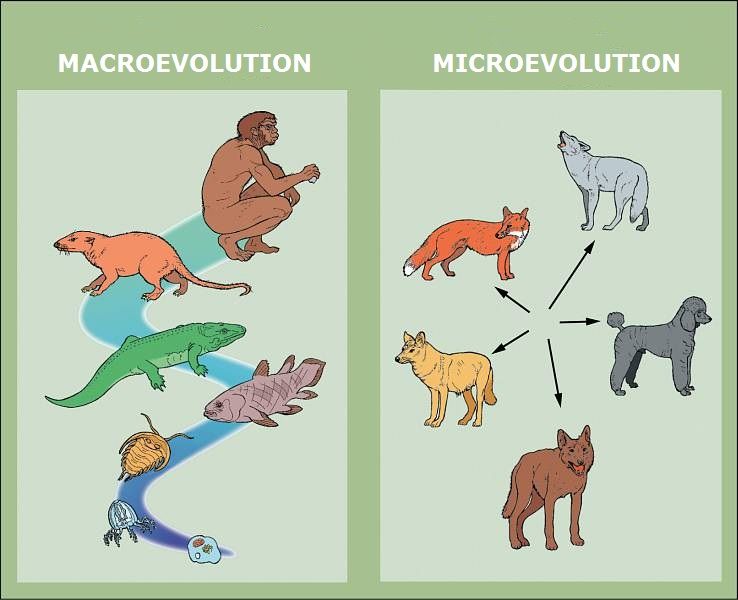
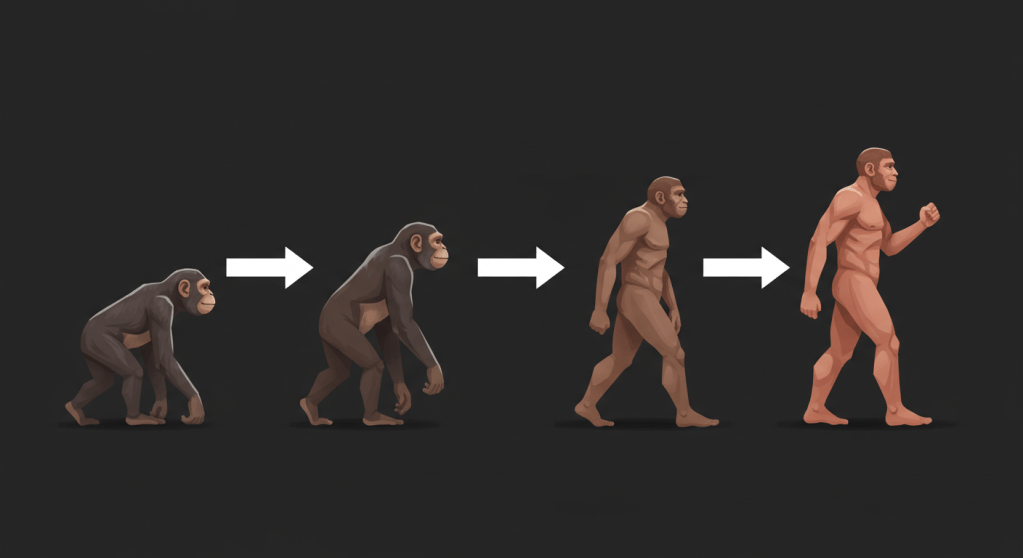
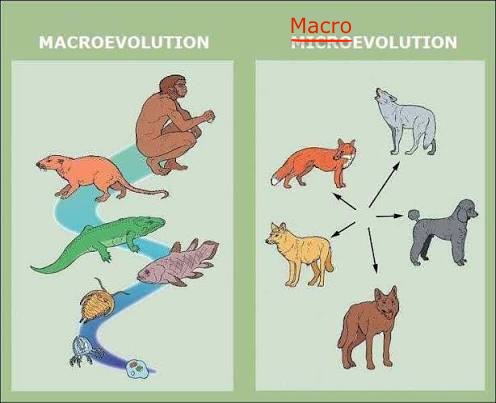
    The original post defined key terms, stating, “Macroevolution ~ variations in heritable traits in populations with multiple species over time. Speciation marks the start of macroevolution.” However, creationists distinguish between microevolution – variation and speciation within a created kind – and macroevolution – the hypothetical transition between fundamentally different kinds of organisms. While the former is observable and acknowledged, the latter lacks empirical support and the necessary genetic mechanisms.

    Alleged Cases of Macroevolution:

    The post presented eleven cases as evidence of macroevolution.

    1. Lizards evolving placentas: The observation of reproductive isolation in Zootoca vivipara with different modes of reproduction was highlighted. The author noted, “(This is probably my favourite example of the bunch, as it shows a highly non-trivial trait emerging, together with isolation, speciation and selection for the new trait to boot.)” From a creationist perspective, the development of viviparity within lizards likely involves the expression or modification of pre-existing genetic information within the lizard kind. This adaptation and speciation do not necessitate the creation of novel genetic information required for a transition to a different kind of organism.

    2. Fruit flies feeding on apples: The divergence of the apple maggot fly (Rhagoletis pomonella) into host-specific groups was cited as sympatric speciation. This adaptation to different host plants and the resulting reproductive isolation are seen as microevolutionary changes within the fruit fly kind, utilizing the inherent genetic variability.  

    3. London Underground mosquito: The adaptation of Culex pipiens f. molestus to underground environments was presented as allopatric speciation. The observed physiological and behavioral differences, along with reproductive isolation, are consistent with diversification within the mosquito kind due to environmental pressures acting on the existing gene pool.  

    4. Multicellularity in Green Algae: The lab observation of obligate multicellularity in Chlamydomonas reinhardtii under predation pressure was noted. The author stated this lays “the groundwork for de novo multicellularity.” While this is an interesting example of adaptation, the transition from simple coloniality to complex, differentiated multicellularity, as seen in plants and animals, requires a significant increase in genetic information and novel developmental pathways. The presence of similar genes across different groups could point to a common designer employing similar modules for diverse functions.  

    5. Darwin’s Finches, revisited 150 years later: Speciation in the “Big Bird lineage” due to environmental pressures was discussed. This classic example of adaptation and speciation on the Galapagos Islands demonstrates microevolutionary changes within the finch kind, driven by natural selection acting on existing variations in beak morphology.  

    6 & 7. Salamanders and Greenish Warblers as ring species: These examples of geographic variation leading to reproductive isolation were presented as evidence of speciation. While ring species illustrate gradual divergence, the observed changes occur within the salamander and warbler kinds, respectively, and do not represent transitions to fundamentally different organisms.  

    8. Hybrid plants and polyploidy: The formation of Tragopogon miscellus through polyploidy was cited as rapid speciation. The author noted that crossbreeding “exploits polyploidy…to enhance susceptibility to selection for desired traits.” Polyploidy involves the duplication of existing chromosomes and the combination of genetic material from closely related species within the plant kingdom. This mechanism facilitates rapid diversification but does not generate the novel genetic information required for macroevolutionary transitions.  

    9. Crocodiles and chickens growing feathers: The manipulation of gene expression leading to feather development in these animals was discussed. The author suggested this shows “how birds are indeed dinosaurs and descend within Sauropsida.” Creationists interpret the shared genetic toolkit and potential for feather development within reptiles and birds as evidence of a common design within a broader created kind, rather than a direct evolutionary descent in the Darwinian sense.  

    10. Endosymbiosis in an amoeba: The observation of a bacterium becoming endosymbiotic within an amoeba was presented as analogous to the origin of organelles. Creationists propose that organelles were created in situ with their host cells, designed for symbiotic relationships from the beginning. The observed integration is seen as a function of this initial design.

    11. Eurasian Blackcap: The divergence in migratory behavior and morphology leading towards speciation was highlighted. This represents microevolutionary adaptation within the bird kind in response to environmental changes.

    Addressing “Irreducible Complexity”:

    The original post also addressed the concept of irreducible complexity with five counter-examples.

    1. E. Coli Citrate Metabolism in the LTEE: The evolution of citrate metabolism was presented as a refutation of irreducible complexity. The author noted that this involved “gene duplication, and the duplicate was inserted downstream of an aerobically-active promoter.” While this demonstrates the emergence of a new function, it occurred within the bacterial kind and involved the modification and duplication of existing genetic material. Therefore, is no evidence here to suggest an evolutionary pathway for the origin of citrate metabolism.

    2. Tetherin antagonism in HIV groups M and O: The different evolutionary pathways for overcoming tetherin resistance were discussed. Viruses, with their rapid mutation rates and unique genetic mechanisms, present a different case study than complex cellular organisms. This is not analogous in the slightest.

    3. Human lactose tolerance: The evolution of lactase persistence was presented as a change that is “not a loss of regulation or function.” This involves a regulatory mutation affecting the expression of an existing gene within the human genome. Therefore, it’s not a gain either. This is just a semantic game.

    4. Re-evolution of bacterial flagella: The substitution of a key regulatory protein for flagellum synthesis was cited. The author noted this is “an incredibly reliable two-step process.” While this demonstrates the adaptability of bacterial systems, the flagellum itself remains a complex structure with numerous interacting components – none of said components have gained or lost the cumulative necessary functions.

    5. Ecological succession: The development of interdependent ecosystems was presented as a challenge to irreducible complexity. However, ecological succession describes the interactions and development of communities of existing organisms, not the origin of the complex biological systems within those organisms.  

    Conclusion:

    While the presented cases offer compelling examples of adaptation and speciation, we interpret these observations as occurring within the boundaries of created kinds, utilizing the inherent genetic variability designed within them. These examples do not provide conclusive evidence for macroevolution – the transition between fundamentally different kinds of organisms – nor do they definitively refute the concept of irreducible complexity in the origin of certain biological systems. The fact that so many of these are, if not neutral, loss-of-function or loss-of-information mutations creates a compelling case for creation as the inference to the best explanation. The creationist model, grounded in the historical robustness of the Biblical account and supported by scientific evidence (multiple cross-disciplinary lines), offers a coherent alternative explanation for the diversity and complexity of life. As the original post concluded,

    “if your only response to the cases of macroevolution are ‘it’s still a lizard’, ‘it’s still a fly you idiot’ etc, congrats, you have 1) sorely missed the point and 2) become an evolutionist now!”

    However, the point is not that change doesn’t occur (we expect that on our model), but rather the kind and extent of that change, which, from a creationist perspective, remains within divinely established explanatory boundaries of the creation model and contradicts a universal common descent model.

    References:

    Teixeira, F., et al. (2017). The evolution of reproductive isolation during a rapid adaptive radiation in alpine lizards. Proceedings of the National Academy of Sciences, 114(12), E2386-E2393. https://doi.org/10.1073/pnas.1635049100

    Fonseca, D. M., et al. (2023). Rapid Speciation of the London Underground Mosquito Culex pipiens molestus. ResearchGate. https://doi.org/10.13140/RG.2.2.23813.22247

    Grant, P. R., & Grant, B. R. (2017). Texas A&M professor’s study of Darwin’s finches reveals species can evolve in two generations. Texas A&M Today. https://stories.tamu.edu/news/2017/12/01/texas-am-professors-study-of-darwins-finches-reveals-species-can-evolve-in-two-generations/

    Feder, J. L., et al. (1997). Allopatric host race formation in sympatric hawthorn maggot flies. Proceedings of the National Academy of Sciences, 94(15), 7761-7766. https://doi.org/10.1073/pnas.94.15.7761

    Tishkoff, S. A., et al. (2013). Convergent adaptation of human lactase persistence in Africa and Europe. Nature Genetics, 45(3), 233-240. https://doi.org/10.1038/ng.2529 (Note: While the URL provided redirects to PMC, the original publication is in Nature Genetics. I have cited the primary source.)

  • Ologies,ologies, everywhere, Nor any drop to drink…

    Ologies,ologies, everywhere, Nor any drop to drink…

    So, you’re telling me that every field of study, from the submicroscopic quarks of quantum physics to the grand cosmic spirals of astrophysics, can’t help but stumble over the God question? Metaphysics? Yes. Phenomenology? Check. Cosmology? Double-check. Epistemology? What do you know! Even dear old biology, with all its little proteins and DNA, can’t resist a good teleological head-scratcher.

    Now, I’m not saying this proves anything. I’m just saying, if you walk into a library and every book has a page on Bigfoot, you might start to wonder if there’s really something to that hairy fellow lurking in the woods. And when every intellectual pursuit is pondering about the divine, maybe, just maybe, He’s not a mere figment of our collective imagination.

    In an interview on the Soul Boom podcast, the well-known agnostic skeptic Alex O’Connor was asked what the best argument for the existence of God was. He said, “There are so many, I think there’s even an argument for the existence of God that can be made just from the number of arguments for the existence of God. The fact that there’s an argument from beauty, and argument from contingency, from ontology, from maths… Anywhere you look, there’s an argument for God, so you could always make an argument for God’s existence from the sheer number of arguments for God’s existence.”

    So in your honour, Alex, here is a little syllogism (albeit tongue and cheek):

    Let’s get logical for a second:

    1. Premise 1: Multiple independent disciplines (across diverse “ologies”) converge on arguments that point to or require a transcendent foundation resembling theistic conceptions.
    2. Premise 2: When independent intellectual traditions across diverse cultures and disciplines converge on similar conclusions despite different methodologies and starting assumptions, this convergence provides strong evidence for the validity of those conclusions.
    3. Premise 3: This convergence pattern exists regarding arguments that point to a transcendent foundation for reality, knowledge, consciousness, morality, etc.
    4. Conclusion: Therefore, there is strong evidence for the validity of a transcendent foundation (resembling theistic conceptions) for reality.

    Boom. Check mate, atheists.

    Of course, the skeptics will say, “But correlation doesn’t equal causation!” And to that, I say, “Sure, but it’s a heck of a coincidence, isn’t it?” It’s like finding a universal remote that works on every TV in the world. You might start to suspect someone is behind all these converging coincidences.

    The Information Age and the Divine Download

    Think about it: information theory tells us that complex information requires an intelligent source. Biological systems scream design, the fine-tuning of the universe is downright suspicious, and even our own brains’ consciousness hint at something beyond the purely material. As Dr. Stephen C. Meyer argues in his book “Signature in the Cell“, the digital code within DNA points to an intelligent cause.

    And if our brains can conjure up these elaborate arguments for God, maybe, just maybe, they’re picking up a signal from the ultimate source code. A divine download, if you will.

    A Gentle Nudge

    Maybe this is what Blaise Pascal thinking when he made his wager? We all must make a choice about believing in God’s existence or not with incomplete information, and the potential gains for accepting Him far outweigh the negatives. Perhaps the next time you’re investigating an obscure ‘ology’, and you find yourself pondering the God question, remember: in the end it comes down to a subjective decision. And the universe, in all its vastness and complexity, seems to be whispering which path to choose.

    Now, I’m not saying you have to believe any of this. But maybe, just maybe, it’s worth a second thought?

    Video: “Alex O’Connor Explores the Mysteries of God | Soul Boom” Soul Boom w/ Rainn Wilson (2025)

  • Presuppositionalism: A Tool for Christian Apologetics?

    Presuppositionalism: A Tool for Christian Apologetics?

    In the landscape of Christian apologetics, presuppositional apologetics presents a distinctive approach to understanding knowledge, reality, and belief. This philosophical method, pioneered by thinkers like Cornelius Van Til in the 1920s, challenges fundamental assumptions about epistemology and seeks to demonstrate the unique explanatory power of a biblical worldview.

    Understanding Presuppositionalism

    Presuppositional apologetics advances a bold claim: Christian theism provides the only coherent framework for understanding logic, morality, and the nature of knowledge itself. Unlike classical apologetic approaches that seek to prove God’s existence through external evidence, this method argues that the very possibility of rational thought depends on acknowledging a divine foundation.

    The core principle is that every individual, consciously or unconsciously, operates from a set of foundational beliefs about reality. These presuppositions shape how we interpret evidence, understand causality, and construct meaning. Presuppositionalists argue that a naturalistic worldview ultimately fails to provide a stable ground for rational inquiry.

    The Philosophical Challenge of Solipsism

    At the heart of this approach lies a profound philosophical challenge: the problem of solipsism. If we cannot definitively prove the existence of anything beyond our own mind, how can we claim to know anything with certainty? This epistemological dilemma threatens to reduce all knowledge to a subjective, potentially illusory experience.

    Traditional empiricist approaches, as critiqued by philosophers like David Hume, struggle to overcome this fundamental uncertainty. Empiricism, which relies solely on sensory experience and observation, cannot conclusively escape the possibility that our perceptions are merely internal constructs with no correspondence to an external reality.

    The Divine Foundation of Knowledge

    The presuppositional argument proposes a radical solution: God’s existence as the transcendent Creator provides the necessary foundation for objective knowledge. This perspective argues that:

    1. An objective reality exists independent of human perception
    2. Universal principles of logic and morality are grounded in God’s unchanging nature
    3. Human reasoning gains its validity from a divine source of rationality

    By positioning God as the ultimate source of knowledge, this approach attempts to resolve the solipsistic dilemma. The created world, according to this view, is not a mental construct but a real, intentionally designed system that reflects divine intelligence.

    Scientific and Philosophical Implications

    While traditional creation science is often criticized, presuppositional apologetics seeks to integrate philosophical reasoning with scientific inquiry. Concepts like baraminology (the study of created kinds) and catastrophic plate tectonics are presented as attempts to provide alternative explanatory frameworks for natural phenomena.

    However, it is crucial to recognize that these arguments remain contentious within the broader scientific community. The strength of the presuppositional approach lies not in its empirical evidence but in its philosophical critique of naturalistic epistemology.

    Critiques and Limitations

    The presuppositional method is not without significant challenges:

    1. It can appear circular, assuming the very thing it seeks to prove
    2. It may not convincingly engage with those who do not share its initial theological premises
    3. It risks oversimplifying complex philosophical and scientific questions

    Despite these limitations, the approach offers a provocative challenge to purely materialistic worldviews, forcing a deeper examination of the foundations of knowledge.

    Conclusion

    Presuppositional apologetics represents a sophisticated attempt to ground human understanding in a transcendent perspective. By challenging the foundations of knowledge and highlighting the limitations of naturalistic epistemology, it invites a more nuanced conversation about the nature of reality, reason, and belief.

    While not universally convincing, this approach provides a thought-provoking framework for those seeking to understand the relationship between faith, philosophy, and scientific inquiry.

  • How Created Heterozygosity Explains Genetic Variation

    How Created Heterozygosity Explains Genetic Variation

    A Conceptual Introduction:

    The study of genetics reveals a stunning tapestry of diversity within the living world. While evolutionary theory traditionally attributes this variation to random mutations accumulated over vast stretches of time, a creationist perspective offers a compelling alternative: Created Heterozygosity. This hypothesis proposes that God designed organisms with pre-existing genetic variability, allowing for adaptation and diversification within created kinds. This concept not only aligns with biblical accounts but also provides a more coherent explanation for observed genetic phenomena.

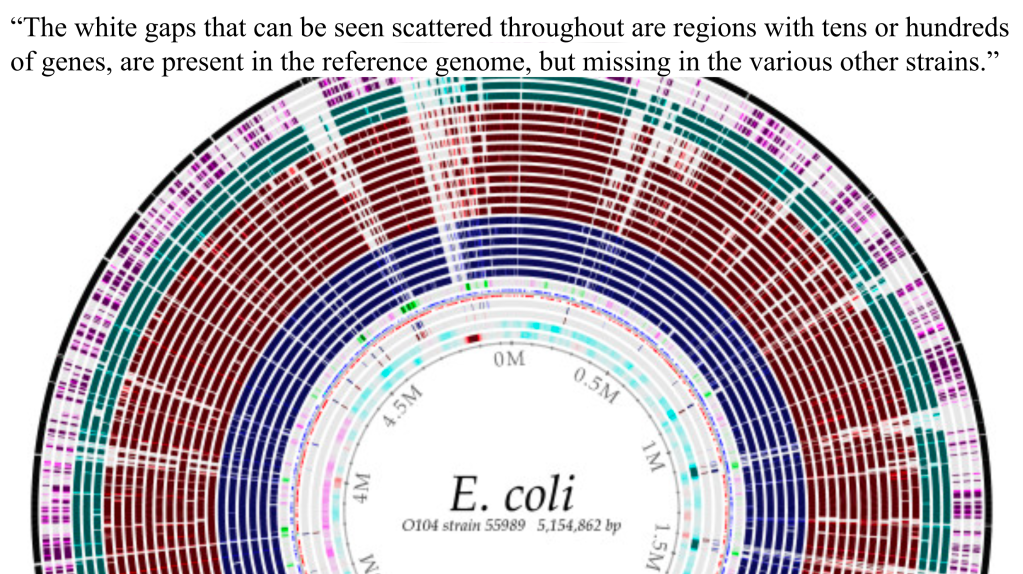
    The evolutionary narrative hinges on the power of mutations to generate novel genetic information. However, the overwhelming evidence points to the deleterious nature of most mutations. This can be seen in the famous Long-Term Evolutionary Experiments with E. coli. Notice, in the graphic below (Hofwegen, 2016), just how much information gets lost due to selection pressures and mutation. This is known as genetic entropy, the gradual degradation of the genome due to accumulated harmful mutations, poses a significant challenge to the idea that random mutations can drive the complexification of life. Furthermore, the sheer number of beneficial mutations required to explain the intricate design of living organisms strains credulity.

    “Genomic DNA sequencing revealed an amplification of the citT and dctA loci and DNA rearrangements to capture a promoter to express CitT, aerobically. These are members of the same class of mutations identified by the LTEE. We conclude that the rarity of the LTEE mutant was an artifact of the experimental conditions and not a unique evolutionary event. No new genetic information (novel gene function) evolved.”

    In contrast, Created Heterozygosity suggests that God, the master engineer, imbued organisms with a pre-programmed potential for variation. Just as human engineers design systems with built-in flexibility, God equipped his creation with the genetic resources necessary to adapt to diverse environments. This concept resonates with the biblical affirmation that God created organisms “according to their kinds,” implying inherent boundaries within which variation can occur. Recent research, such as the ENCODE project and studies on the dark proteome, has revealed an astonishing level of complexity and functionality within the genome, further supporting the idea of a designed system.

    Baraminology, the study of created kinds, provides empirical support for Created Heterozygosity. The rapid diversification observed within baramins, such as the canid or feline kinds, can be readily explained by the expression of pre-existing genetic information. For example, the diverse array of dog breeds can be traced back to the inherent genetic variability within the canine kind, rather than the accumulation of countless beneficial mutations.

    Of course, objections arise. The role of mutations in adaptation is often cited as evidence against Created Heterozygosity. However, certain mutations may represent the expression of designed backup systems or pre-programmed responses to environmental changes. Moreover, the vast majority of observed genetic variation can be attributed to the shuffling and expression of existing genetic information, rather than the creation of entirely new information.

    The implications for human genetics are profound. Created Heterozygosity elegantly explains the high degree of genetic variation within the human population, while remaining consistent with the biblical account of Adam and Eve as the progenitors of all humanity. Research on Mitochondrial Eve and Y-Chromosome Adam/Noah further supports the idea of a recent, common ancestry for all people.

    In conclusion, Created Heterozygosity provides a compelling framework for understanding genetic variation from a creationist perspective. By acknowledging the limitations of mutation-driven evolution and recognizing the evidence for designed diversity, we can appreciate the intricate wisdom of the Creator and the coherence of the biblical narrative. This concept invites us to explore the vastness of genetic diversity with a renewed sense of awe, recognizing the pre-programmed potential inherent in God’s magnificent creation.

    Citation:

    1. Van Hofwegen, D. J., Hovde, C. J., & Minnich, S. A. (2016). Rapid Evolution of Citrate Utilization by Escherichia coli by Direct Selection Requires citT and dctA. Journal of bacteriology, 198(7), 1022–1034.
  • A Personal Reflection on Kierkegaard’s “Leap” of Faith

    A Personal Reflection on Kierkegaard’s “Leap” of Faith

    Reading Kierkegaard’s “Concluding Unscientific Postscript,” particularly his exploration of the “leap” of faith, resonates deeply with my own understanding of what it means to embrace a Christian worldview. It’s not merely about intellectual assent to historical or scientific propositions; it’s a profound, personal relationship that transcends the limitations of objective knowledge.

    Kierkegaard, through Climacus, articulates the “leap” as a radical discontinuity, a “shifting from one genus to another.” This echoes my own experience in realizing that, although science is fascinating, it is not what we’ll get our final grade on. Just as Climacus argues that historical facts, no matter how compelling, cannot generate faith, I’ve found that scientific evidence, while supportive, doesn’t compel belief on its own. Faith is not a matter of knowing the truth or knowing anything–it’s a leap. This leap is a move from the objective to the subjective, from the realm of empirical observation to the domain of personal commitment.

    The “ugly broad ditch” metaphor, about the unbridgeable gap between objective and subjective (relational, personal, i.e., of the subject) truth, illustrates the seemingly insurmountable divide between rational inquiry and the act of faith. No amount of scientific evidence or logical argumentation can bridge this gap. The leap is not a gradual progression but a decisive moment, a qualitative shift that defies rational calculation. It’s not about accumulating evidence until the scale tips; it’s about recognizing the inherent limitations of objective knowledge and choosing to embrace a truth that transcends it.

    Climacus’s critique of “earnestness” is particularly helpful. He argues that intellectual striving is “droll enough” in the context of the leap. I’ve encountered many who seek to intellectualize faith, to reduce it to a system of logical propositions. But faith, as Kierkegaard understands it, is not a product of intellectual prowess. It’s a matter of the will, a subjective commitment that transcends the realm of reason. One cannot “earnestly” approach faith; one either makes the leap or one does not. Yet, that is not to undermine neither the objective world nor the subjective relationship.

    Climacus’ satirical jab at those who attempt to “grab oneself by the neck a la Münchhausen” (a fictional character known for pulling himself out of a swamp by his own hair) speaks to the absurdity of trying to force faith through intellectual gymnastics. It’s a warning against self-deception, against pretending to have made the leap without truly engaging with its radical, personal nature. This resonates with a perspective which acknowledges the limitations of scientific and theological models and the necessity of a personal encounter with the Creator.

    You often here the accusation so and so has “blind faith” or that faith is not based on evidence. For me, the leap of faith is not a blind leap into irrationality. It’s a recognition that objective knowledge, while valuable, is insufficient to grasp the fullness of reality. It’s an acknowledgment that there are truths that transcend empirical observation, truths that can only be apprehended through a subjective act of commitment. In the context of creationism, the leap involves acknowledging the limitations of naturalistic explanations and embracing the possibility of a Creator whose handiwork is evident in the complexity and beauty of the natural world.

    This is valuable because we often feel the pressure to demonstrate the historical or the scientific aspect of our worldview as firmly in the historical or scientific. It is not. It is more. It is a leap into a new genus (Aristotelian category) of reality. It is a new domain of experience in addition to and separate from what we experience in religion, science, and the day-to-day.

    The leap is a deeply personal decision, one that each individual must make for themselves. It’s a journey that involves wrestling with doubt, questioning assumptions, and ultimately choosing to embrace a truth that resonates with the deepest parts of one’s being. It’s a move from stranglehold the “objective” has on our society into a complementary view which includes the “subjective”, a move that is essential for true faith.

    Citation

    1. Kierkegaard, Søren. Concluding Unscientific Postscript to Philosophical Fragments. Edited and translated by Howard V. Hong and Edna H. Hong, Princeton University Press, 1992.
  • The Limits of Evolution

    The Limits of Evolution

    Yesterday, a presentation by Dr. Rob Stadler took place on Dr. James Tour’s Youtube channel which has brought to light a compelling debate about the true extent of evolutionary capabilities. In their conversation, they delve into the levels of confidence in evolutionary evidence, revealing a stark contrast between observable, high-confidence microevolution and the extrapolated, low-confidence claims of macroevolutionary transitions. This distinction, which is based on the levels of evidence as understood in medical science, raises profound questions about the sufficiency of evolutionary mechanisms to explain the vast diversity of life.

    Dr. Stadler, author of “The Scientific Approach to Evolution,” presents a rigorous framework for evaluating scientific evidence. He outlines six criteria for high-confidence results: repeatability, direct measurability, prospectiveness, unbiasedness, assumption-free methodology, and reasonable claims. Applying these criteria to common evolutionary arguments, such as the fossil record, geographic distribution, vestigial organs, and comparative anatomy, Dr. Stadler reveals significant shortcomings. These lines of evidence, he argues, fall short of the high-confidence threshold. They are not repeatable, they cannot be directly measured, there is very little (if any) of predictive value , and most importantly they rely heavily on biased interpretation and assumption.

    However, the interview also highlights examples of high-confidence evolutionary studies. Experiments with E. coli bacteria, for instance, demonstrate the power of natural selection and mutation to drive small-scale changes within a population. These studies, repeatable and directly measurable, provide compelling evidence for microevolution. Yet, as Dr. Stadler emphasizes, extrapolating these observed changes to explain the origin of complex biological systems or the vast diversity of life is a leap of faith, not a scientific conclusion.

    The genetic differences between humans and chimpanzees further illustrate this point. While popular science often cites a 98% similarity, Dr. Stadler points out the significant differences, particularly in “orphan genes” and the regulatory functions of non-protein-coding DNA. These differences, he argues, challenge the notion of a simple, linear evolutionary progression.

    This aligns with the research of Dr. Douglas Axe, whose early work explored the probability of protein evolution. Axe’s findings suggest that the vast divergence between protein structures makes a common ancestor for all proteins highly improbable (Axe, 2000). This raises critical questions about the likelihood of orphan genes arising through random evolutionary processes alone, given the complexity and specificity of protein function.

    The core argument, as presented by Dr. Tour and Dr. Stadler, is not that evolution is entirely false. Rather, they contend that the high-confidence evidence supports only limited, small-scale changes, or microevolution. The leap to macroevolution, the idea that these small changes can accumulate to produce entirely new biological forms, appears to be a category error, based on our best evidence, and remains a low-confidence extrapolation.

    The video effectively presents case studies of evolution, demonstrating the observed limitations of evolutionary change. This evidence strongly suggests that evolutionary mechanisms are insufficient to account for the levels of diversity we observe today. The complexity of biological systems, the vast genetic differences between species, and the improbability of protein evolution challenge the core tenets of Neo-Darwinism and the Modern Synthesis.

    As Dr. Tour and Dr. Stadler articulate, a clear distinction must be made between observable, repeatable microevolution and the extrapolated, assumption-laden claims of macroevolution. While the former is supported by high-confidence evidence, the latter remains a subject of intense debate, demanding further scientific scrutiny.

    Works Cited

    • Tour, James, and Rob Stadler. “Evolution vs. Evidence: Are We Really 98% Chimp?” YouTube, uploaded by James Tour, https://www.youtube.com/watch?v=smTbYKJcnj8&t=2117s.
    • Axe, Douglas D. “Extreme functional sensitivity to conservative amino acid changes on enzyme exteriors.” Journal of Molecular Biology, vol. 301, no. 3, 2000, pp. 585-595.